How to Shorten Batch Cycles Without Rework
A mixing line can lose hours of productive capacity without a single major breakdown. A few extra minutes spent loading ingredients, waiting for a uniform blend, discharging sticky material, or cleaning between batches can compound into missed production targets and higher cost per pound. Knowing how to shorten batch cycles starts with measuring the full operating sequence, not simply increasing mixer speed.
For powder, granule, paste, and bulk-solid applications, the goal is to reduce nonproductive time while preserving blend uniformity, product integrity, sanitation, and operator safety. A faster batch that creates segregation, incomplete dispersion, or extended downstream delays is not a real productivity gain. The most effective improvements align mixer design, material behavior, batch size, and plant workflow.
Start With the Complete Batch Cycle
Many facilities define cycle time as the period from mixer start to mixer stop. That measurement is too narrow. The true batch cycle begins when the mixer is ready to receive material and ends when it is clean, available, and ready for the next charge.
A practical review should account for staging, loading, mixing, sampling, discharge, transfer, inspection, and cleaning. In many operations, the actual mixing period represents only a fraction of the total cycle. A horizontal ribbon mixer may produce a homogeneous blend quickly, yet throughput remains constrained if ingredients arrive late or if the discharge valve cannot clear the vessel efficiently.
Time each phase across several normal production runs. Separate planned time from delays caused by material bridging, manual intervention, quality holds, equipment adjustment, or cleanup. This establishes where the largest opportunity exists. It also prevents teams from making changes to the mixer when the primary bottleneck is upstream handling or downstream packaging.
Match Mixer Capacity to the Real Batch Size
An incorrectly sized mixer creates avoidable cycle losses in both directions. An oversized unit may require a larger minimum fill level to achieve the desired material movement, while an undersized unit forces more batches, longer loading schedules, and more frequent cleaning.
Ribbon mixers depend on the interaction between the inner and outer ribbons, vessel geometry, fill level, and material characteristics. The ribbons move material in opposing axial directions while lifting and folding it through the batch. When the working volume is appropriate, this action provides efficient convective mixing and consistent distribution of minor ingredients.
The right capacity is not always the largest available vessel. It depends on production demand, bulk density, ingredient additions, required headspace, and the number of product changeovers. A plant producing several short runs may benefit more from a mixer that discharges quickly and cleans easily than from a large vessel that sits idle while the next formula is staged.
For operations with variable production volumes, configurable equipment can provide a better balance. Features such as interchangeable tooling, high-efficiency discharge designs, and application-specific agitator configurations should be evaluated against the material and schedule rather than selected as standard options.
Avoid Overfilling as a Shortcut
Overfilling a mixer to reduce the number of batches can extend blending time and reduce uniformity. Material circulation becomes restricted, powders can form stagnant zones, and liquid additions may not distribute evenly. The resulting rework, resampling, or rejected product will eliminate any apparent time saved.
Maintain the validated operating range for the mixer and assess whether a larger working volume is truly required. If capacity demand has changed permanently, equipment sizing may be the more reliable solution.
Reduce Loading Time Without Compromising Accuracy
Loading is often one of the most controllable parts of a batch cycle. Manual ingredient handling, scattered staging locations, and sequential additions can leave expensive mixing equipment waiting for material.
Improve the loading process by staging complete kits before the previous batch finishes. Bulk ingredients should be available through reliable conveying or feed systems, while minor ingredients can be preweighed and organized in the required addition order. This reduces operator travel, prevents skipped components, and makes the loading sequence more repeatable.
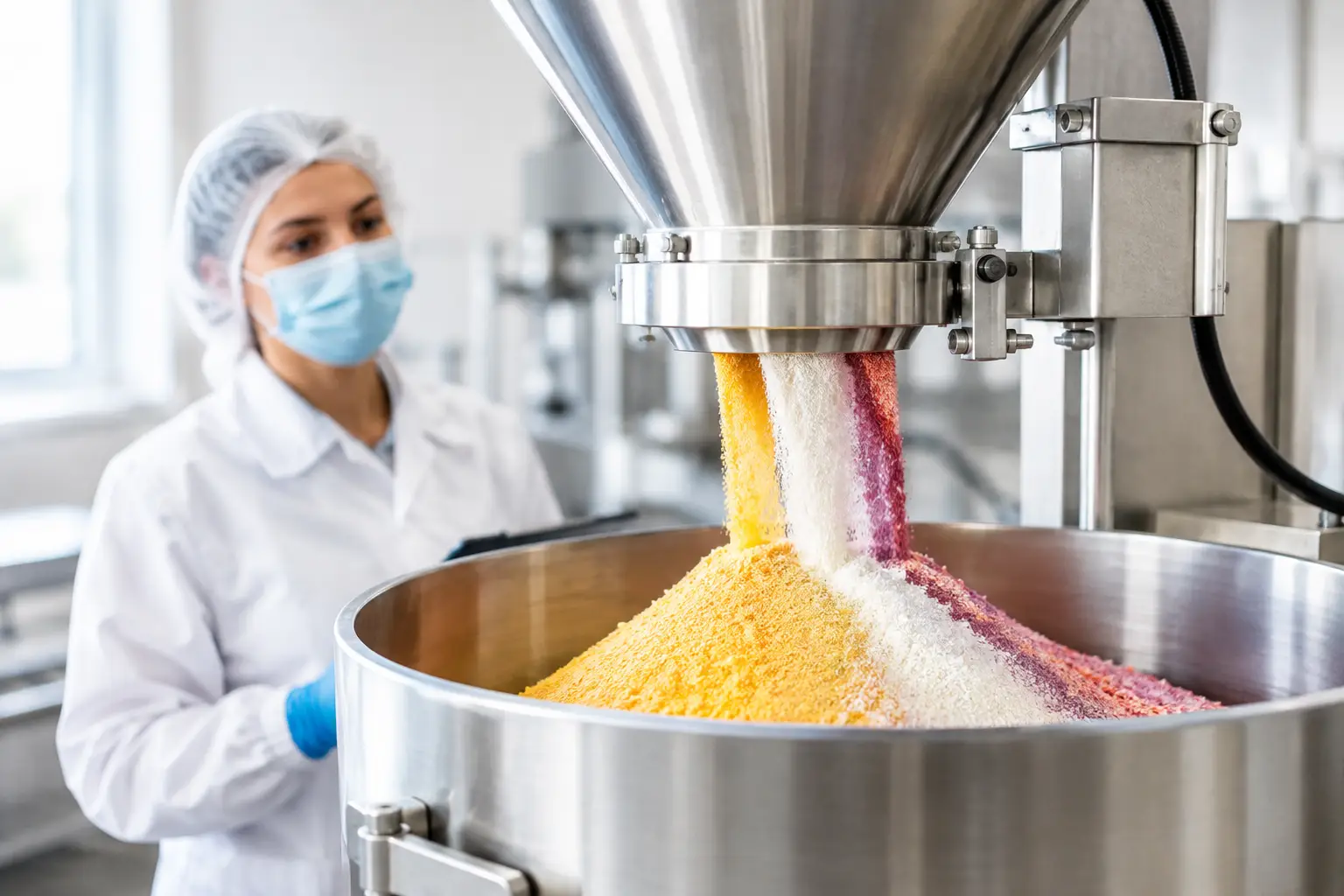
Automated or semi-automated feeding can further shorten loading time, particularly for high-volume materials. However, feed rate must suit the product. Fine powders may create dust or aeration when charged too aggressively, and cohesive materials may bridge in hoppers or transfer lines. A well-designed feed system delivers material consistently without creating a new cleaning or flow problem.
Liquid addition deserves equal attention. Spray bars, injection ports, and controlled dosing systems can distribute binders, flavors, oils, or other liquids more evenly than a single-point manual pour. Better distribution can reduce the time needed to reach homogeneity and lower the risk of wet lumps or localized overconcentration.
Optimize Mixing Time Through Validation, Not Guesswork
Increasing RPM is rarely the best answer to slow production. Higher speed may increase energy use, generate heat, damage fragile particles, or cause fines to segregate. In applications involving powders with different particle sizes or densities, excessive agitation can work against blend consistency.
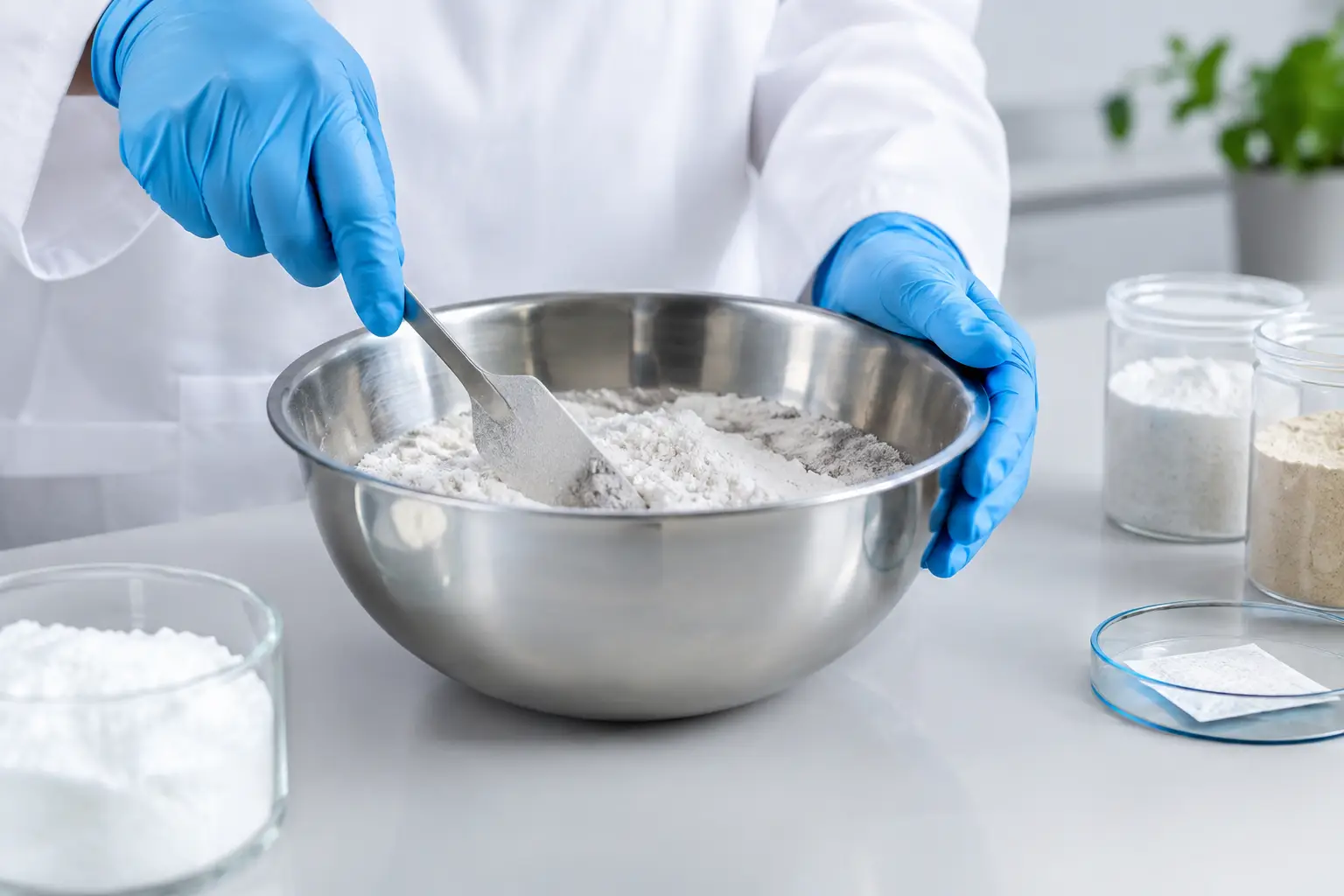
Instead, establish the shortest validated mixing time for each formulation. Take representative samples at defined intervals and test against the quality attributes that matter for the product, such as active ingredient distribution, moisture, color consistency, particle integrity, or bulk density. The target is the earliest point at which the blend consistently meets specification under normal operating conditions.
Mixing time is formulation-specific. A free-flowing dry blend may require only a short cycle, while a cohesive powder, high-viscosity paste, or batch with difficult liquid additions may need a different agitator arrangement, speed profile, or processing sequence. If a product routinely needs excessive mixing, the issue may be material flow or mixer configuration rather than the operator’s cycle setting.
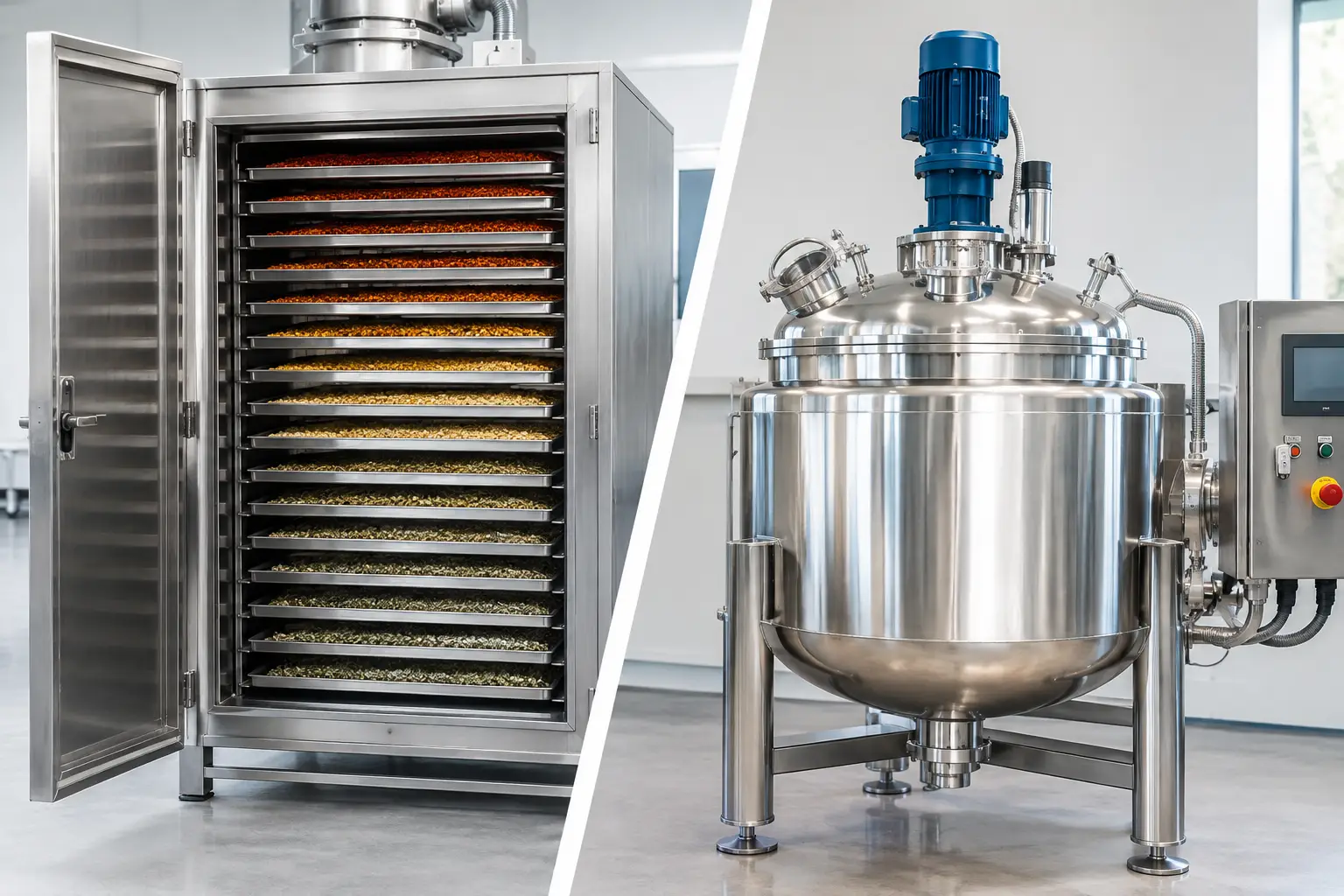
A horizontal ribbon mixer is particularly effective for many dry blends, granules, and pastes because its dual-ribbon action promotes rapid material exchange across the vessel. For specialized applications, a vertical ribbon mixer or vacuum ribbon mixer and dryer may better support the process by combining blending with drying, deaeration, or other controlled conditions. The equipment should fit the process objective, not force the process to fit the equipment.
Make Discharge a Designed Part of Throughput
Discharge is a common hidden constraint. Slow flow from the mixer, retained material around the outlet, or inadequate transfer capacity can add minutes to every batch. With dozens of cycles per week, these minutes become a significant production loss.
The discharge opening, valve design, outlet location, and downstream receiving equipment all affect emptying time. Free-flowing powders may discharge efficiently through a standard outlet, while sticky, cohesive, or high-fat materials may require a larger opening, specialized valve arrangement, or vessel features that minimize hold-up.
Residual material is more than a yield issue. It extends cleaning time, raises cross-contamination concerns, and can interfere with the next formulation. Equipment designed for efficient cleanout supports shorter cycles while improving batch-to-batch control. For regulated food, pharmaceutical, cosmetic, and chemical operations, this is especially valuable during frequent product changeovers.
Do not overlook the transfer step. A mixer can discharge rapidly, but throughput will still suffer if the tote, conveyor, packaging line, or downstream process cannot accept material at the same rate. Coordinate equipment capacities across the entire production path.
Shorten Cleaning and Changeover Time
For multiproduct plants, cleaning often determines the schedule more than mixing. The right cleaning method depends on product risk, regulatory requirements, allergen controls, and the degree of carryover that is acceptable. A dry product line may use validated dry cleaning procedures, while other applications require washdown or more intensive sanitation.
Equipment accessibility matters. Smooth internal surfaces, appropriate access doors, low-retention geometry, and components selected for the process can reduce the labor required to inspect and clean the mixer. A poorly considered sanitary design may save on initial equipment cost but create a permanent operating penalty.
Standardize changeover procedures so operators know the exact sequence for isolation, cleaning, inspection, and release. Clear work instructions reduce variation between shifts and help distinguish a necessary sanitation step from wasted motion. Where applicable, schedule products in a sequence that moves from low-risk to higher-risk formulations or from similar colors and ingredients to more difficult products.
Use Controls and Maintenance to Keep Gains in Place
Once cycle improvements are identified, they need to be sustained. Basic batch controls can record loading, mixing, discharge, and hold times, making it easier to detect recurring deviations. Production data also helps identify whether delays are tied to a particular formula, shift, raw material lot, or equipment condition.
Preventive maintenance is equally important. Worn ribbons, failing seals, misaligned drives, damaged valves, and inconsistent controls can gradually lengthen cycle times before they create an obvious failure. Routine inspection protects mixing performance and reduces unplanned downtime.
PerMix works with industrial processors to evaluate material characteristics, throughput targets, sanitation needs, and installation constraints before recommending a ribbon mixing solution. That application-focused approach helps ensure that faster cycles are supported by reliable, repeatable equipment performance rather than temporary operating workarounds.
The most productive batch operation is not the one with the shortest mixer run time. It is the one where material arrives ready, blends consistently, discharges cleanly, and returns to service with minimal delay. A careful cycle-time review can turn those small, repeatable improvements into meaningful capacity without adding another production shift.