How to Validate Cleaning Procedures
A cleaning failure rarely starts in the washdown step. It usually starts earlier – with equipment that traps residue, a product changeover that was rushed, or a validation plan built around assumptions instead of process data. That is why understanding how to validate cleaning procedures matters so much in regulated and high-performance manufacturing. If your operation handles powders, granules, pastes, allergens, actives, or high-value formulations, cleaning validation is not just a quality exercise. It is a direct control on product safety, uptime, and batch integrity.
For industrial processors, the challenge is practical. You need a cleaning process that works in the real world, not only on paper. That means defining what clean looks like, proving the procedure removes residue to an acceptable level, and showing that the result is repeatable across operators, shifts, and product families. In ribbon mixers and related process equipment, that also means accounting for discharge zones, shaft seals, spray coverage, dead spots, and the physical behavior of the material being processed.
What cleaning validation is really proving
At its core, cleaning validation demonstrates that your documented cleaning method consistently reduces residues, contaminants, and cleaning agents to predefined acceptable limits. Those limits may be driven by safety, product quality, allergen control, regulatory requirements, or all four.
In practice, the standard is rarely universal. A dry chemical blend, a flavored nutrition powder, and a sticky cosmetic paste create very different cleaning risks. The acceptable residue level, the worst-case carryover concern, and the sampling approach will depend on the product, the equipment, and the intended next use. That is why the strongest validation programs are risk-based rather than generic.
For plant managers and process engineers, this has a business dimension as well. An overbuilt cleaning procedure can consume excessive labor, water, solvents, and downtime. An underbuilt one can trigger deviations, product loss, rework, or failed audits. The goal is not maximum cleaning at any cost. The goal is validated cleaning that is effective, efficient, and repeatable.
How to validate cleaning procedures in an industrial plant
The process starts with a documented plan. Before any swabs are taken or rinse samples collected, you need to define the equipment scope, product scope, residue hazards, acceptance criteria, sampling points, analytical methods, and success criteria for the study. Without that structure, the data may not stand up to internal review or external inspection.
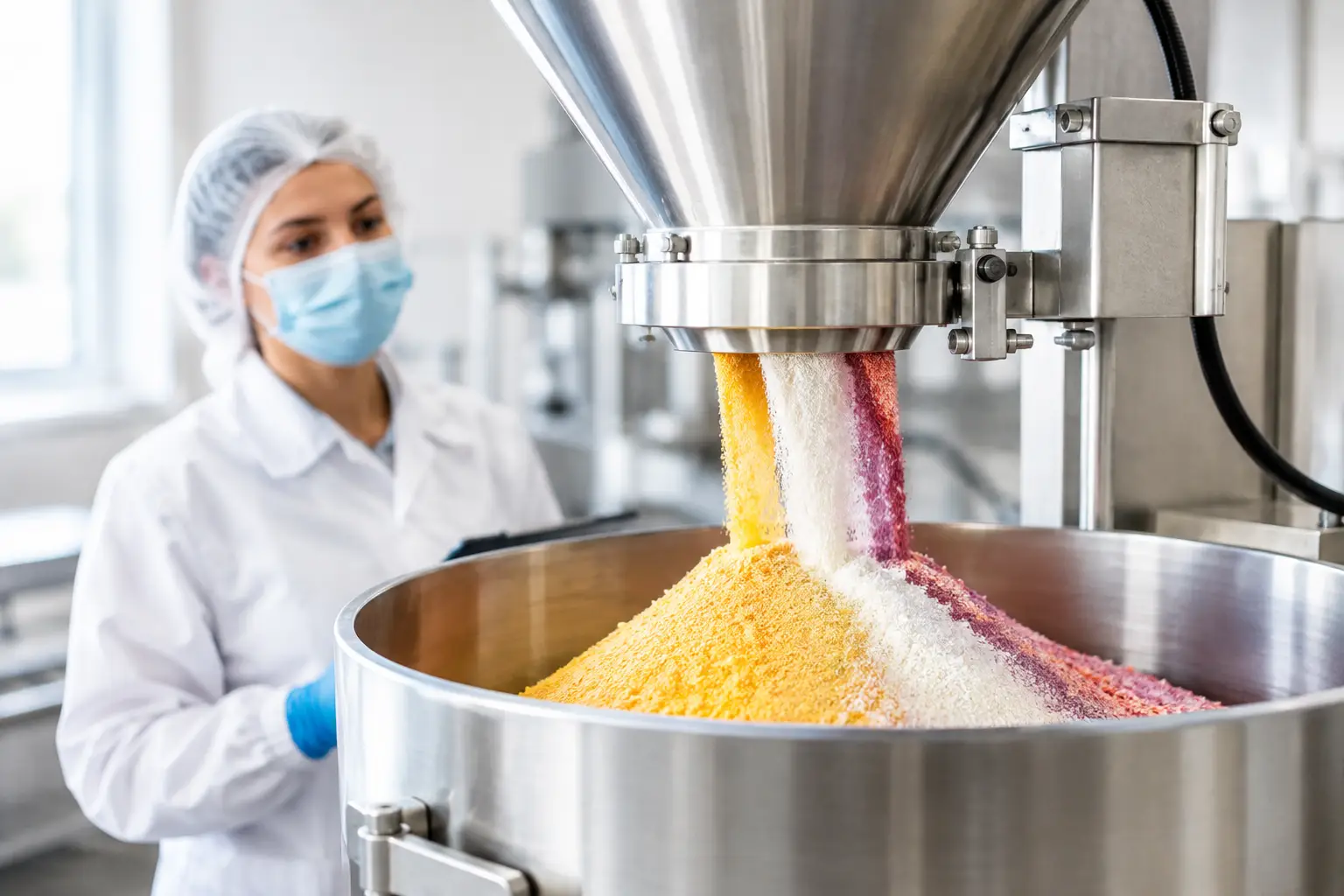
A good validation plan begins by identifying the hardest cleaning case. This is often called the worst-case product or worst-case scenario. In powder and bulk solids processing, worst case might be the most adhesive material, the most potent active, the darkest pigment, the strongest allergen, or the formulation that settles into crevices and seal areas. In some operations, the challenge is not toxicity but visibility and persistence. Fine powders can migrate widely, while oily or hygroscopic materials can cling to internal surfaces and discharge assemblies.
From there, define the cleaning procedure exactly as it will be executed in production. That includes disassembly steps, cleaning agents, water quality, temperatures, contact time, mechanical action, inspection points, and drying requirements. If operators clean the mixer differently on different shifts, validation results will be difficult to reproduce. Precision in the written method is what turns a cleaning routine into a controlled process.
Set limits that make technical and regulatory sense
Acceptance limits are one of the most scrutinized parts of cleaning validation. They should be based on product safety, residue toxicity, allergen risk, process capability, and analytical detectability. Visual cleanliness alone is almost never enough for formal validation, although it remains an important first-line check.
The trade-off is straightforward. Limits that are too loose do not adequately control carryover risk. Limits that are unrealistically tight may force excessive cleaning cycles without improving product protection. In many facilities, limits are set using a combination of health-based exposure logic, process-specific carryover calculations, and achievable analytical thresholds.
For shared equipment, especially mixers used across multiple formulations, the rationale behind those limits should be clear and documented. This is where engineering, quality, and production teams need to align. A limit that looks sound in a spreadsheet still has to be achievable on the plant floor.
Choose sampling methods that fit the equipment
Most cleaning validation programs rely on swab sampling, rinse sampling, or a combination of both. Each method has strengths and limitations.
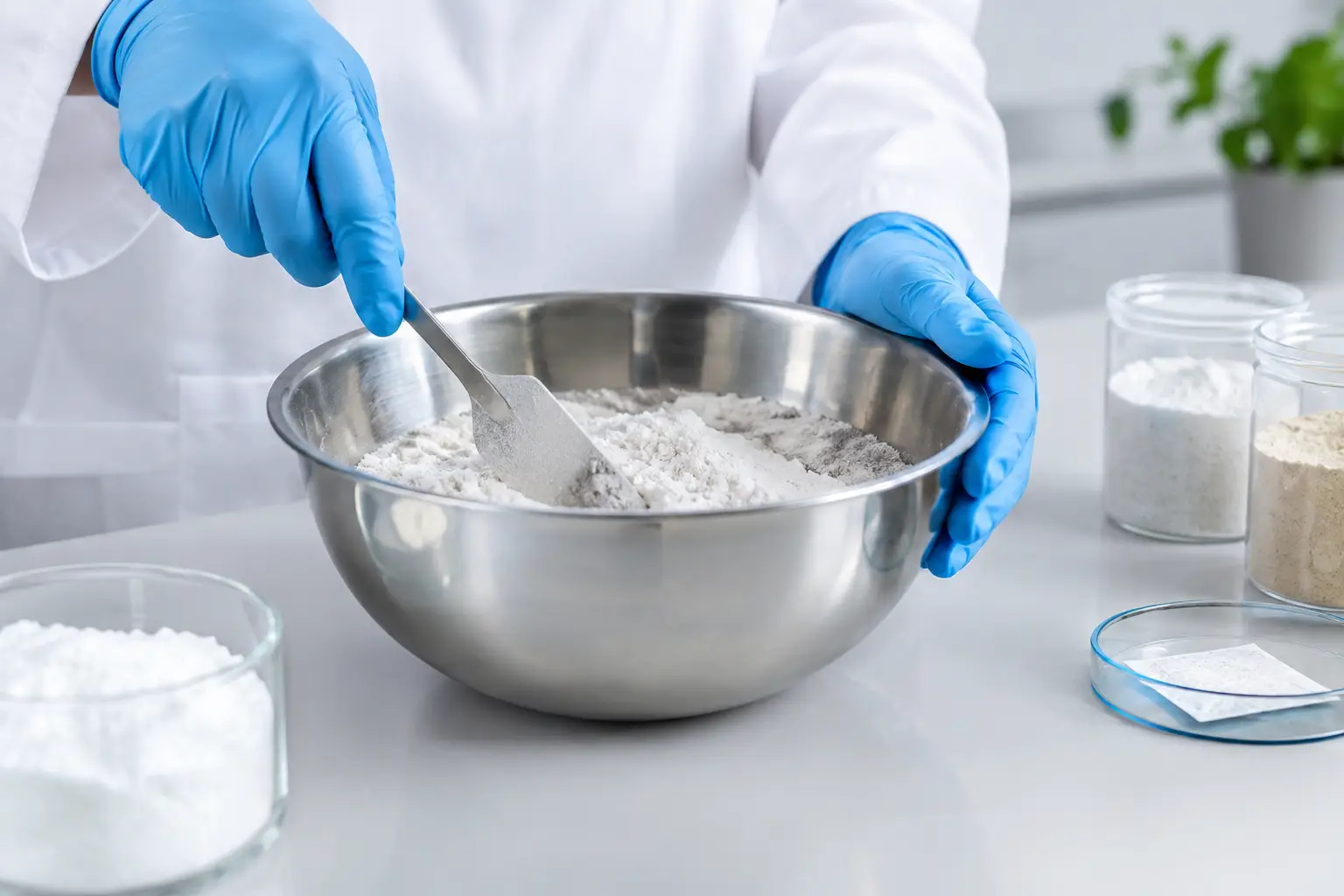
Swab sampling is useful for targeted assessment of defined surfaces, especially hard-to-clean areas such as agitator shafts, discharge valves, lid gaskets, corners, and seal interfaces. It gives location-specific evidence, which is valuable when evaluating ribbon mixers and other equipment with complex internal geometry. The limitation is coverage. A swab only represents the area sampled.
Rinse sampling can help assess broader system exposure, especially where internal access is limited. But it may dilute residues and provide less precision about where contamination remains. In many cases, the most defensible approach is to use swabs on known critical points and rinse samples where full surface access is impractical.
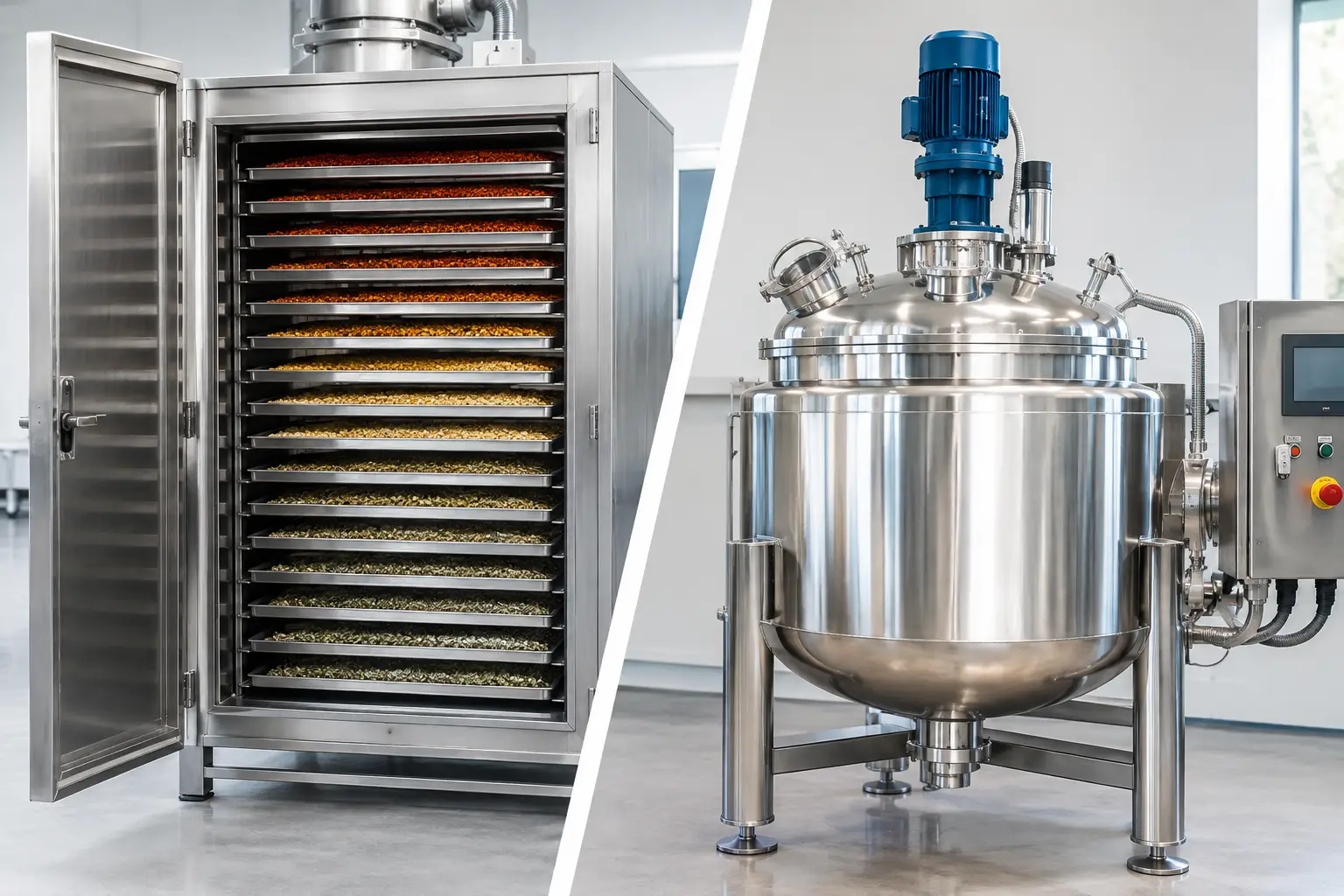
This is also where equipment design matters. Mixers built with smooth finishes, accessible internals, fewer residue traps, and predictable discharge behavior are easier to validate because they are easier to clean and easier to sample consistently. Sanitary design does not eliminate the need for validation, but it can reduce the validation burden and improve repeatability over time.
Focus on the areas most likely to fail
When teams ask how to validate cleaning procedures effectively, the answer is usually not more sampling everywhere. It is better sampling in the right places. Residue does not remain evenly distributed. It collects where flow is poor, where material compresses, or where cleaning action is weakest.
For ribbon mixers, common attention points include the trough corners, ribbon edges, shaft penetrations, end plates, access door seals, spray shadow zones, and the discharge assembly. Product characteristics also change the picture. Fine cohesive powders behave differently from free-flowing granules, and viscous pastes present a different challenge altogether.
A strong protocol explains why each sampling point was selected. That rationale is often as important as the result itself. It shows that the study was built around actual process risk rather than convenience.
Verify the analytical method before relying on the data
Your cleaning validation is only as credible as the test method behind it. The analytical method should be suitable for the target residue, sensitive enough to detect the acceptance limit, and demonstrated to recover residue from the sampled surface.
Recovery studies matter here. If the swab method only recovers a portion of the actual residue, the calculation should account for that. The same goes for rinse methods affected by dilution or incomplete collection. In technical environments, assumptions around recovery can become a weak point if they are not established with data.
Specificity also matters. If multiple products or detergents are involved, the method should distinguish the residue of concern or justify a nonspecific indicator such as total organic carbon where appropriate. There is no single right answer for every plant, but there does need to be a defensible one.
Run the protocol under normal operating conditions
A common mistake is validating a cleaning process under ideal conditions that rarely exist in production. Extra time, extra supervision, and unusually thorough disassembly can make the initial study look successful while routine execution later drifts.
Validation should reflect actual plant conditions as closely as possible. Use trained operators, standard tools, normal shift timing, and realistic batch-to-cleaning intervals. If residue dries and hardens after a delay, that delay should be represented in the study. If the cleaning procedure depends heavily on operator judgment, address that in training and standardization before claiming the process is validated.
Most programs require multiple successful runs to show repeatability. The exact number depends on the quality system and regulatory environment, but the principle is consistent. One clean result is not enough. You are proving control, not luck.
Keep validation current as products and equipment change
Cleaning validation is not a one-time project that can be filed away permanently. New products, modified formulations, replacement seals, altered spray devices, or revised cleaning agents can all affect the original state of control. Even a change that improves throughput may create new residue behavior or harder-to-reach buildup.
That is why change management is essential. Any significant process or equipment change should trigger a review of the cleaning validation impact. In some cases, a documented assessment is enough. In others, partial or full revalidation is the safer path.
This is also where equipment selection can support long-term performance. Process equipment designed for maintainability, access, and application-specific cleaning demands can simplify ongoing validation work. For manufacturers running frequent changeovers or serving regulated markets, that design advantage translates directly into lower downtime and more reliable compliance. PerMix works with processors that need that level of fit between mixer design, product behavior, and cleaning expectations.
Documentation is part of the validation result
Even a technically sound cleaning process can become a problem if the documentation is weak. The protocol, raw data, deviations, analytical records, recovery factors, acceptance criteria, and final report should tell a coherent story. Auditors and internal quality teams are looking for evidence that the process was planned logically, executed as written, and reviewed critically.
That includes failures. If one run misses the limit, the answer is not to hide it. The answer is to investigate what happened, determine whether the root cause was procedural, analytical, operational, or design-related, and decide what corrective action is required. A validation package with thoughtful deviation handling is stronger than one that appears perfect without explanation.
The most effective cleaning validation programs are not built to satisfy a document requirement. They are built to make production more dependable. When your procedure is validated properly, changeovers become more predictable, contamination risk is easier to control, and quality decisions are based on evidence rather than assumptions. That is the kind of control that supports both compliance and throughput – and it starts with treating cleaning as a process worth engineering, not just a task to complete.