How to Mix Hygroscopic Powders Reliably
Hygroscopic powders can turn a routine blending operation into a costly source of rejects, downtime, and cleaning labor. Knowing how to mix hygroscopic powders starts with recognizing that moisture is not just an environmental concern. It changes particle flow, bulk density, agglomeration behavior, and the ability of minor ingredients to distribute evenly through a batch.
For manufacturers in food, pharmaceuticals, chemicals, cosmetics, polymers, and agriculture, the objective is straightforward: achieve a uniform blend before moisture pickup compromises the material. That requires control of the product, the room, the process sequence, and the mixer configuration.
Why Hygroscopic Powders Are Difficult to Blend
A hygroscopic powder absorbs water vapor from the surrounding air. Some materials take on moisture gradually, while others can become tacky or form hard lumps within minutes after exposure. Common examples include sugars, salts, powdered acids, amino acids, certain polymers, detergent ingredients, fertilizer components, and pharmaceutical excipients.
As moisture content rises, the powder may lose its free-flowing character. Fine particles can adhere to one another, coat the vessel walls, or build up in dead zones around shafts, seals, and discharge valves. A blend that looked homogeneous during validation can separate or develop wet pockets during actual production if humidity, loading, or cycle time changes.
The challenge is not solved by simply running the mixer longer. Extended mixing can create more friction, expose the batch to room air for longer, and break fragile agglomerates into fines that absorb moisture even faster. Reliable results come from balancing mixing intensity with exposure time.
How to Mix Hygroscopic Powders With Better Process Control
The most effective approach is to limit moisture pickup at every point where material is stored, transferred, charged, blended, sampled, and discharged. The mixer is central to the process, but it cannot compensate for poorly controlled upstream handling.
Start With Material Characterization
Before selecting a mixing method, document the material properties that affect flow and moisture sensitivity. Moisture content at receipt, equilibrium moisture behavior, particle-size distribution, bulk density, angle of repose, and tendency to cake should all be considered. For multi-component formulations, evaluate the most moisture-sensitive ingredient rather than relying only on average batch behavior.
This data helps determine whether the material can be processed in a standard enclosed mixer or whether it needs dehumidified air, nitrogen blanketing, jacket temperature control, vacuum drying capability, or a fully contained charging and discharge arrangement.
A small change in formulation can matter. Adding a fine active, a liquid flavor, or a high-surface-area carrier may change the moisture response of the entire blend. Pilot testing with actual raw materials is often more informative than relying on generic powder classifications.
Control the Mixing Environment
Room humidity should be treated as a production parameter, especially when handling powders with low moisture tolerance. A dehumidified processing room reduces the moisture gradient between the powder and the air. It also improves consistency from one shift, season, or facility location to another.
Keep containers sealed until they are ready for charging. Use closed conveying systems where practical, and minimize open transfer points. If manual charging is necessary, establish a defined staging time and avoid leaving partially used bags or drums open near the mixer.
For highly sensitive applications, nitrogen blanketing can reduce contact with humid air. The appropriate approach depends on the product, safety requirements, facility utilities, and whether oxidation control is also needed. A blanket gas system adds complexity, but it can be justified when batch value, product stability, or compliance risk is high.
Select a Mixer That Matches the Powder Behavior
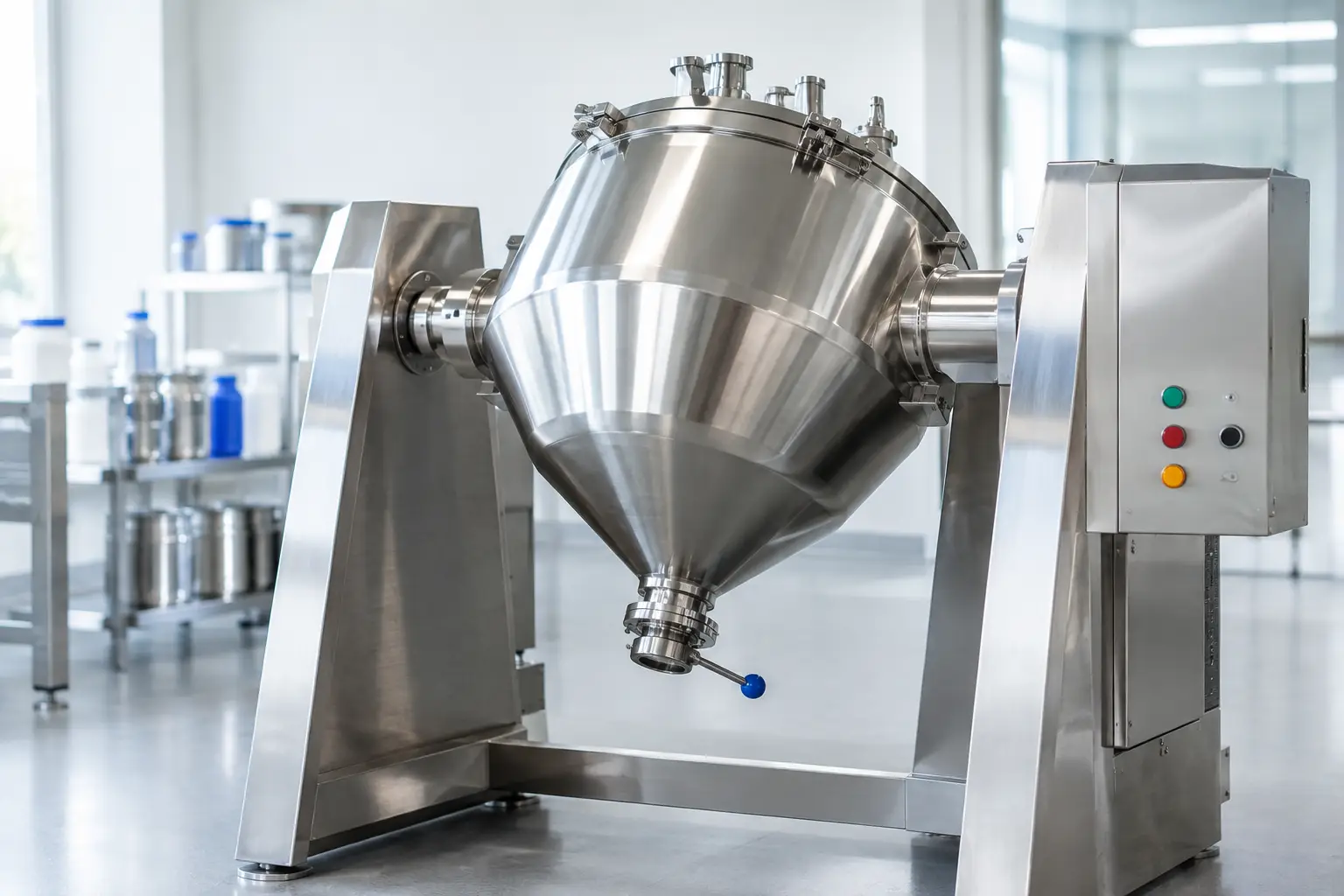
Horizontal ribbon mixers are often a strong choice for hygroscopic powders because they provide broad, convective movement across the vessel. The outer ribbon moves material in one direction while the inner ribbon moves it in the opposite direction, creating a continuous folding action that promotes uniform distribution without excessive localized shear.
A properly sized horizontal ribbon mixer can process a wide range of fill levels and batch sizes while keeping the blend enclosed. Its geometry supports efficient movement of powders that are still free-flowing but may begin to bridge or form soft agglomerates as moisture increases.
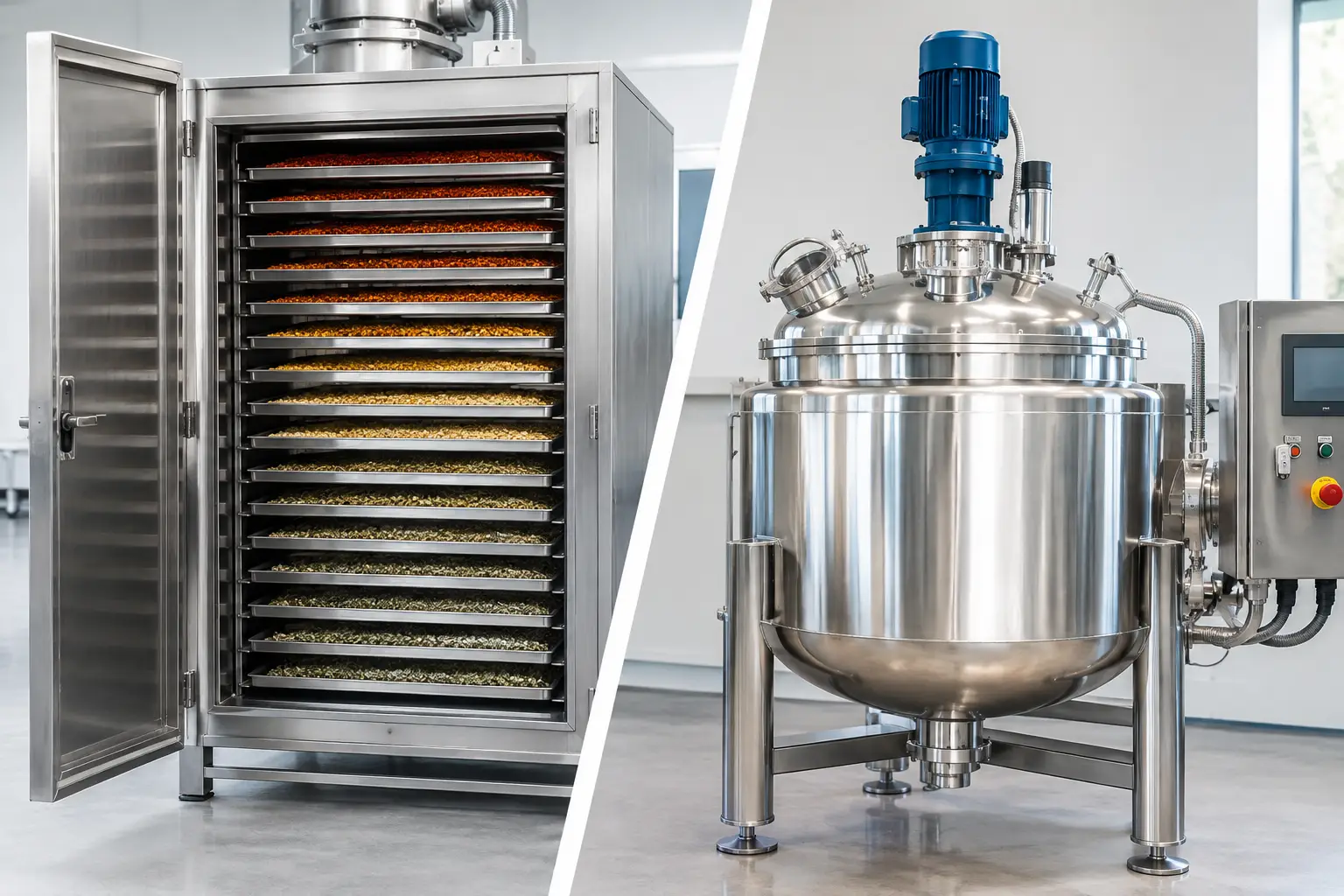
However, mixer selection depends on the actual material condition. If the powder is extremely cohesive, requires simultaneous vacuum drying, or must be processed under controlled pressure, a vacuum ribbon mixer and dryer may provide a more suitable solution. Combining drying and blending in one enclosed vessel can reduce handling steps and lower the risk of atmospheric moisture pickup between operations.
The right equipment is not necessarily the most aggressive mixer. High-intensity mixing may be necessary for difficult dispersion tasks, but it can also generate heat and increase particle attrition. For moisture-sensitive formulations, a controlled, repeatable ribbon mixing action is frequently more valuable than maximum shear.
Manage the Order of Addition
The sequence in which ingredients enter the mixer has a direct effect on blend quality. Large-volume base powders should generally establish a moving bed before fine minor ingredients are introduced. This helps prevent a small, moisture-sensitive component from collecting in one area or adhering to a static vessel surface.
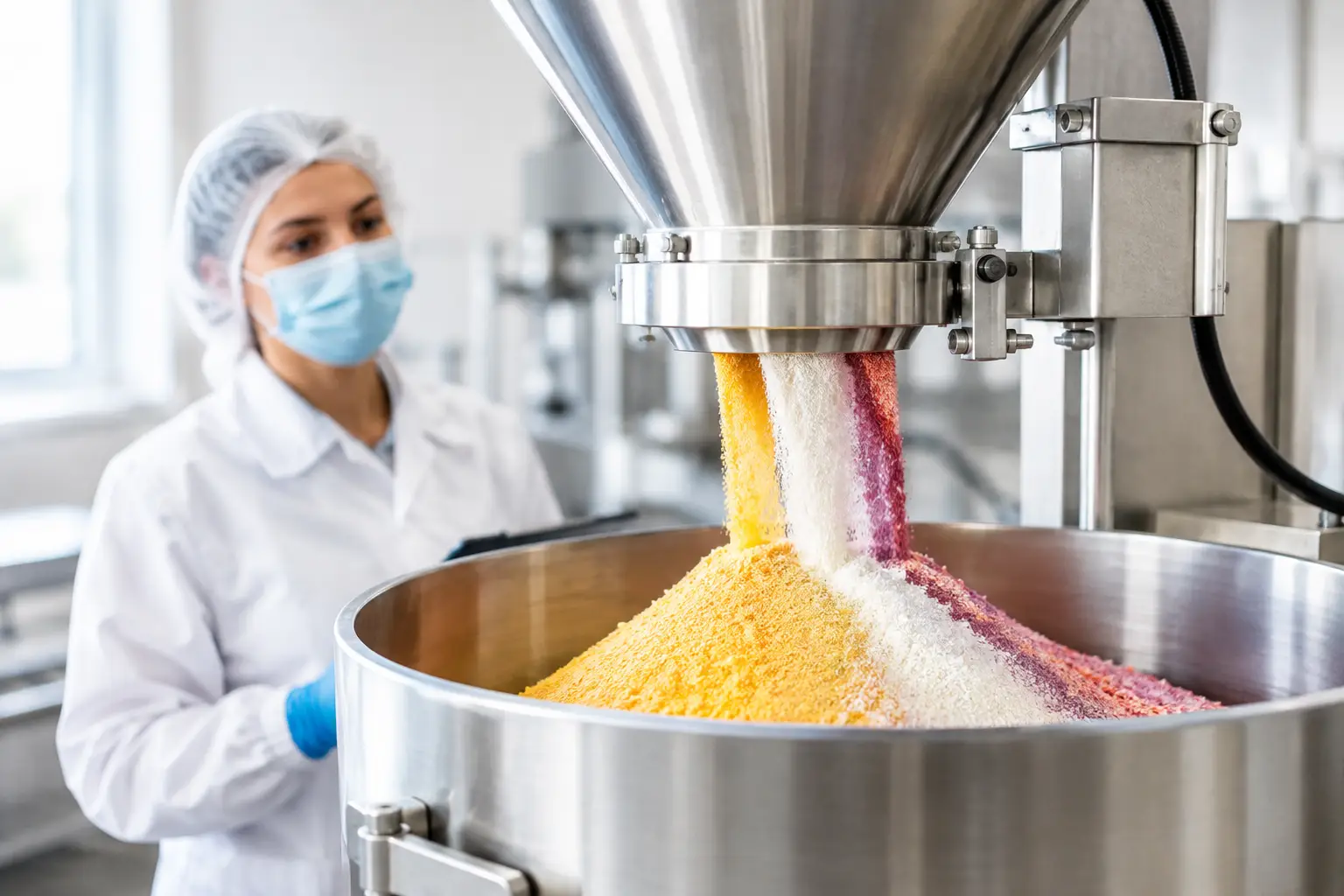
Where practical, add fine ingredients through a controlled inlet or charging port while the ribbons are operating at an appropriate speed. Do not introduce materials in a way that creates airborne dust clouds. Dust has high surface area, absorbs moisture quickly, and may settle unevenly across the batch.
If the formula includes a liquid addition, the process requires additional care. Spray the liquid into a well-moving powder zone rather than pouring it onto a stationary bed. Use an atomizing system suited to the liquid viscosity and required addition rate. A poorly distributed liquid can create localized wet balls that do not break down during normal ribbon mixing.
In some applications, it is better to preblend dry ingredients before adding a moisture-bearing component. In others, an absorbent carrier may need to be charged first to capture the liquid. The best sequence depends on the formulation and should be confirmed through production-scale trials.
Set Mixing Time and Speed From Validation Data
There is no universal cycle time for hygroscopic powders. A batch may reach acceptable uniformity in several minutes, while another requires a longer cycle because of ingredient ratios, particle-size differences, or the location of minor additions. The goal is the shortest validated cycle that consistently meets blend uniformity requirements.
Develop a sampling plan that represents the full vessel. Samples should be taken from multiple locations and, when appropriate, from the beginning, middle, and end of discharge. A top-only sample can hide segregation or dead-zone buildup.
Monitor moisture as well as composition. A blend can meet assay or concentration targets yet still fail downstream because its water content rose enough to affect flow, compression, packaging, dissolution, or shelf life. Recording room humidity, material temperature, mixing duration, and discharge time creates a useful baseline for troubleshooting.
Prevent Build-Up and Cross-Contamination
Hygroscopic residues are more difficult to remove once they have absorbed moisture and hardened. Smooth internal surfaces, accessible cleaning points, and a discharge valve that clears effectively are practical design features, not cosmetic preferences. Material retention becomes especially significant in regulated production and short-run operations.
Clean the mixer promptly after discharge. Delayed cleaning allows residues to draw moisture from the air, making them harder to remove and increasing the chance of cross-contamination in the next batch. For wet or sticky products, confirm that the cleaning method does not introduce moisture that remains trapped in seals, valve cavities, or inaccessible areas.
Dry cleaning may be appropriate for some powders, while others require validated wet cleaning followed by complete drying. The correct method depends on product safety, allergen controls, regulatory requirements, and equipment construction. What matters is that the mixer returns to a verified dry, clean condition before the next hygroscopic batch is charged.
Engineer the Full System, Not Just the Mixer
Consistent blending depends on the interface between equipment. A well-designed ribbon mixer can still experience performance problems if feed hoppers bridge, conveyors leak humid air, or discharge containers remain open too long. Review the full material path from receiving through packaging.
Pay close attention to seals, covers, vent filters, and discharge connections. These are common entry points for humid ambient air. Instrumentation for temperature, humidity, vacuum, and mixer load can also provide early warning when a normally free-flowing powder begins to behave differently.
PerMix Ribbon Mixers can be configured around specific batch capacities, product characteristics, sanitation needs, and containment requirements. Application-focused engineering helps align the vessel, ribbon design, drive system, inlet arrangement, and discharge configuration with the real behavior of the material rather than a generic equipment specification.
The most dependable hygroscopic powder process is one that gives operators clear limits: acceptable room conditions, maximum exposure time, validated charge order, defined mixing parameters, and a cleaning standard that preserves a dry process environment. When those controls are built into the equipment and operating procedure, blend quality becomes repeatable instead of dependent on operator intervention.