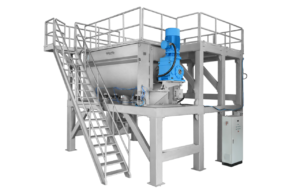
Horizontal Ribbon Mixer for Powders
When a powder blend misses spec, the problem rarely stays in the mixer room. It shows up as rejected batches, uneven downstream performance, added labor, and production schedules that start slipping. A horizontal ribbon mixer for powders is often the right answer when manufacturers need fast, repeatable blending across a wide range of bulk densities, particle sizes, and formulations.
For plant managers and process engineers, the value is straightforward. The right ribbon mixer can improve uniformity, reduce batch times, handle recipe changes with less disruption, and support more predictable scale-up. But that result depends on more than choosing a mixer by volume alone. Powder behavior, sanitation needs, discharge requirements, and operating targets all matter.
Why a horizontal ribbon mixer for powders is widely used
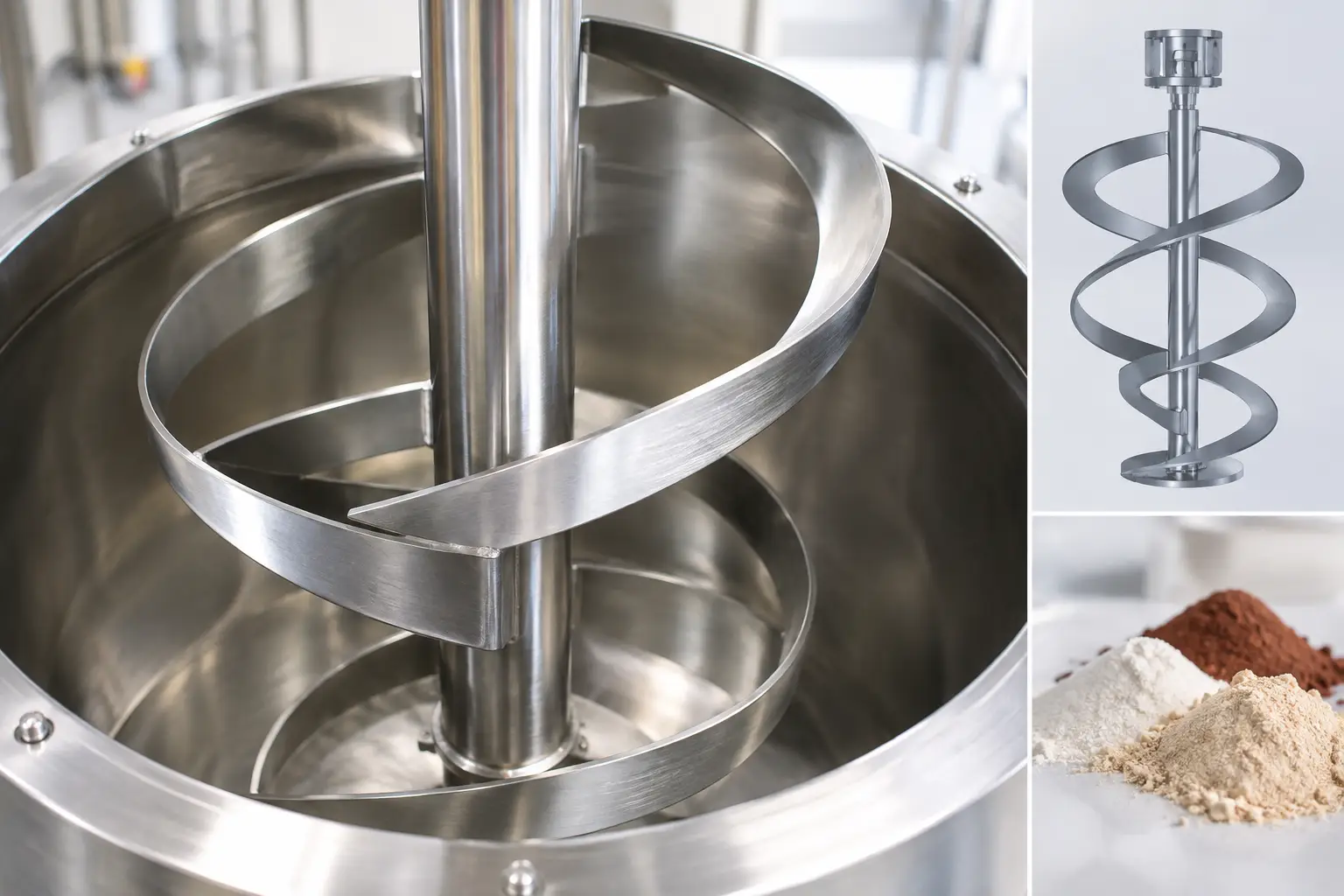
Horizontal ribbon mixers remain a standard choice in powder processing because they balance efficiency, versatility, and mechanical simplicity. Inside the trough, inner and outer ribbons move material in opposing axial directions while also promoting radial movement. That counterflow pattern helps create a consistent blend without relying on high-speed agitation.
In practical terms, this design suits dry powders, granules, and many powder-additive combinations used in food, chemical, pharmaceutical, plastics, and agricultural production. It is especially effective when the process requires batch consistency and gentle but thorough circulation of product through the mixing zone.
That said, no mixer type is universal. Some highly fragile materials, very cohesive powders, or formulations with extreme fill-level constraints may call for a different mixing principle. The strength of the horizontal ribbon design is its broad applicability across industrial blending duties, not that it solves every powder challenge the same way.
How the mixing action affects powder performance
A ribbon mixer is not just moving material from one end of the trough to the other. Its geometry is creating multiple flow paths at once. The outer ribbon typically pushes material in one direction while the inner ribbon moves it back toward the opposite side. The result is continuous turnover across the entire batch.
For powders, that matters because uniformity depends on how well the mixer can expose all particles to the same mixing environment over time. If dead zones develop, or if the powder bridges and channels instead of flowing, blend quality suffers. A properly engineered horizontal ribbon mixer reduces those risks by maintaining active movement through the full working capacity.
Mixing time is another major factor. Running too short can leave concentration variation from one sample point to another. Running too long can be just as problematic for certain products, especially if particle attrition, heat generation, or segregation after overmixing is a concern. The best setup is one that reaches target homogeneity efficiently and repeatably, not simply one that runs the longest.
What to evaluate before selecting a mixer
The first question is usually capacity, but experienced buyers know capacity is only the starting point. Bulk density can dramatically affect how much material the mixer actually handles per batch, and fill level influences ribbon performance. A machine sized correctly for one powder may be inefficient for another if the working volume does not match the process.
Material characteristics should drive the selection process. Free-flowing powders behave very differently from cohesive blends. Fine particles may need tighter sealing and dust control. Abrasive materials may require wear-resistant construction. Hygroscopic products may need enclosed handling or vacuum capability. If minor liquids are introduced during blending, the ribbon design, spray arrangement, and cleanout access become even more important.
Discharge is another area where specifications need careful review. Fast, complete discharge supports throughput and reduces carryover between batches. Valve style, outlet location, and trough geometry all influence how much residual material remains. In industries with strict changeover requirements, discharge efficiency can affect labor, quality, and sanitation just as much as blend performance.
Design details that make a real difference
Two ribbon mixers can look similar on a line drawing and perform very differently in production. Ribbon pitch, clearance, shaft design, drive sizing, and internal finish all affect the outcome. This is why industrial buyers should treat mixer selection as an application engineering decision rather than a catalog exercise.
Construction material matters as well. Stainless steel is common where corrosion resistance, sanitation, or product purity is critical. Carbon steel may be suitable for some industrial applications where cost control is a higher priority and material compatibility is not a concern. Surface finish, weld quality, and internal geometry become especially important in regulated and hygiene-sensitive sectors.
Access features deserve more attention than they often get during early procurement. Inspection ports, full-access covers, spray nozzles, and cleanout design can shorten maintenance time and improve operator confidence during changeovers. If the mixer will process multiple formulations, easier access is not a convenience. It directly affects uptime.
Where horizontal ribbon mixers fit best
A horizontal ribbon mixer for powders is often the preferred choice for batch blending where manufacturers need a consistent result across moderate to high production volumes. In food processing, that may mean seasoning blends, bakery premixes, nutritional powders, or dry ingredient systems. In chemicals, it can include powdered additives, detergents, mineral blends, and specialty compounds.
In pharmaceuticals and cosmetics, the decision usually involves stricter consideration of finish, validation support, containment, and cleanability. The same mixing principle can still be effective, but the equipment configuration must match regulatory expectations and product sensitivity. In plastics and polymers, processors often prioritize durability, reliable discharge, and resistance to wear from abrasive components.
The common thread is the need for controlled, repeatable mixing in a compact and dependable format. When production teams need a machine that can support daily batch work without excessive energy use or frequent downtime, ribbon mixers remain a strong option.
Performance is only part of the business case
Industrial equipment decisions are rarely made on mixing quality alone. Procurement teams and operations leaders also want to know what the machine does for labor efficiency, maintenance planning, and total operating cost.
A well-matched ribbon mixer can support shorter blend cycles, more reliable batch release, and fewer process interruptions. That can translate into better line utilization and less rework. Energy consumption is typically lower than with more aggressive high-speed mixing methods, which matters for facilities looking to control operating costs without sacrificing throughput.
Maintenance simplicity is another advantage when the design is executed well. Straightforward mechanical systems, accessible components, and durable construction reduce the service burden over the long term. For high-volume operations, that reliability often has more value than a small difference in purchase price.
Why application support matters
The most successful mixer installations usually start with detailed process discussions. Suppliers need to understand powder characteristics, target batch size, required blend uniformity, cycle expectations, and the realities of the production environment. That includes upstream feeding, downstream discharge, available floor space, and cleaning procedures.
This is where a manufacturer with focused ribbon mixing experience adds real value. Instead of forcing a standard machine into a specialized process, the equipment can be configured around the application. Options such as intensified choppers, liquid addition systems, vacuum design, heating or cooling jackets, special seals, and custom discharge arrangements may be necessary depending on the product.
PerMix Ribbon Mixers approaches this as a solution decision, not a one-size-fits-all sale. For industrial buyers, that means fewer assumptions and a better chance of getting a mixer that performs as expected once it is on the plant floor.
A better way to think about selection
Choosing a mixer based only on vessel size or motor horsepower often leads to expensive compromises later. A better approach is to define the process result first, then match the machine to the product and the operating conditions. If powder flow is difficult, if sanitation is critical, or if discharge speed determines line efficiency, those factors should shape the specification from the start.
For many manufacturers, the horizontal ribbon mixer remains the most practical and cost-effective answer for powder blending because it combines strong mixing performance with flexible configuration and durable operation. The key is getting the details right.
If your process depends on consistent powder blending, the best next step is not guessing at a model. It is having a technical conversation about what your material needs the mixer to do.