Industrial Mixing for Consistent Batch Quality
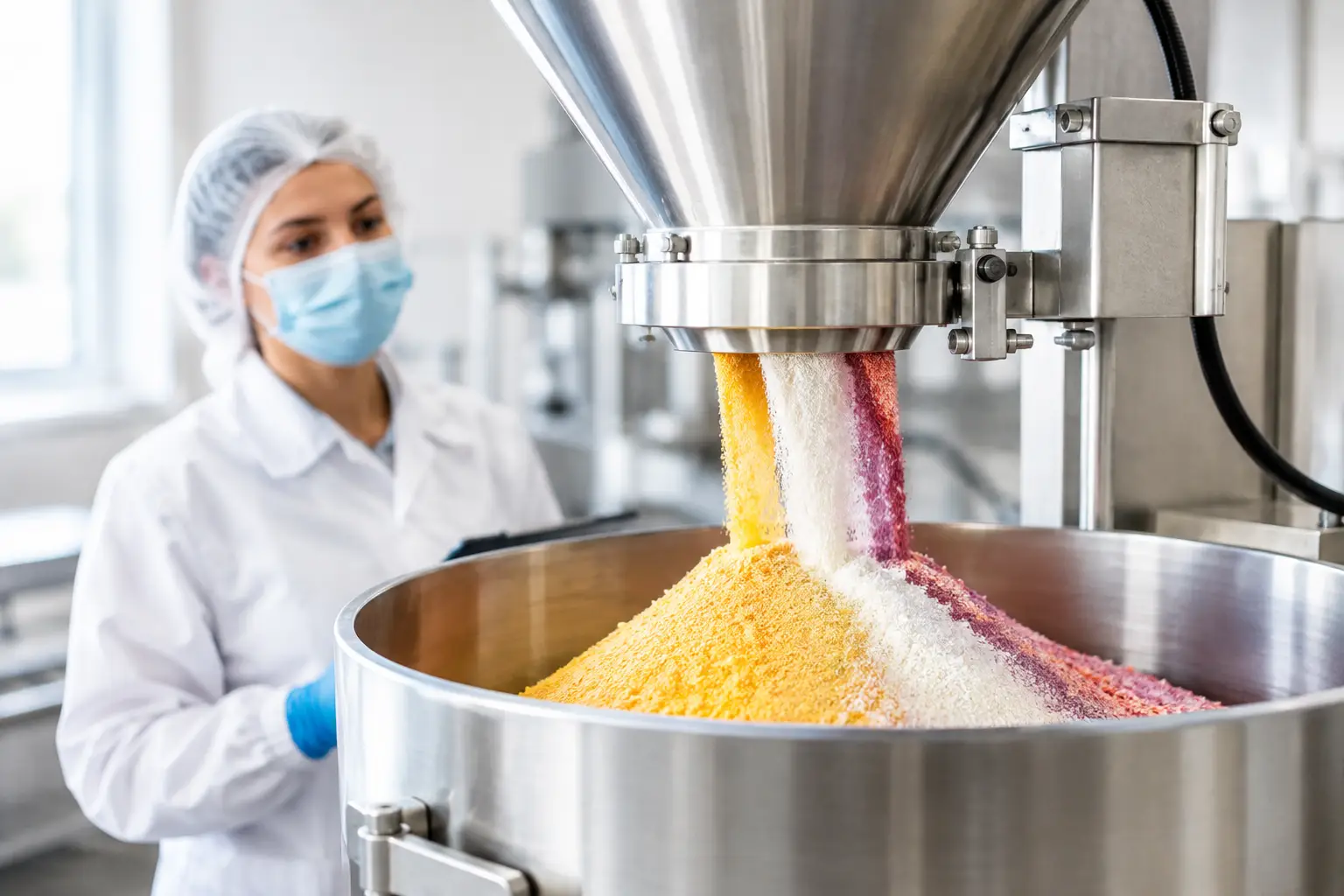
A blend can appear uniform at discharge and still fail where it matters most: at the filling line, in a tablet press, during downstream reaction, or in the customer’s final product. Industrial mixing is therefore not simply a matter of turning a shaft until material looks combined. It is a controlled process that must account for material flow, ingredient ratios, batch size, particle behavior, sanitation requirements, and the realities of production scheduling.
For plant managers and process engineers, the right mixer selection affects far more than blend quality. It influences cycle time, energy use, cleaning labor, maintenance exposure, product loss, and the ability to scale a validated process without creating new variability.
Why Industrial Mixing Requires Application-Specific Design
Powders, granules, fibers, pastes, and wet solids do not respond to agitation in the same way. A free-flowing dry blend may distribute quickly with gentle convective movement. A cohesive powder may form agglomerates that resist dispersion. A high-viscosity paste may require more torque, different blade geometry, or a mixing approach that continuously moves material from the vessel wall back into the active mixing zone.
The practical question is not, “What mixer is best?” It is, “What mixer produces the required result with this material, at this capacity, under these operating conditions?” That distinction prevents costly mismatches between equipment and process requirements.
Material characteristics should be evaluated before a mixer is specified. Bulk density, particle-size distribution, moisture level, flowability, abrasiveness, friability, temperature sensitivity, and tendency to segregate all influence the design. Even ingredients that appear similar can behave differently when combined. Fine powders may migrate through coarse particles during transport, while low-dose additives can require a precise addition sequence to prevent localized concentrations.
A well-engineered ribbon mixer uses a horizontal trough and a dual helical agitator to create countercurrent movement. Material is carried in opposing directions along the vessel while being lifted, folded, and redistributed. This action is highly effective for many dry powders, granules, and pastes because it combines broad vessel circulation with consistent contact throughout the batch.
The Mixing Mechanism Must Match the Material
Horizontal ribbon mixers are a proven choice for applications requiring efficient batch blending, especially where product characteristics range from free-flowing powders to moderately cohesive materials. Their design supports thorough mixing in relatively short cycle times and can be configured with discharge arrangements, drives, seals, and vessel finishes suited to the process.
For applications with limited floor space, vertical ribbon mixers may offer a more compact footprint while delivering effective material movement. Their vertical configuration can be particularly valuable where batch volumes, facility layout, or material handling practices favor top loading and bottom discharge.
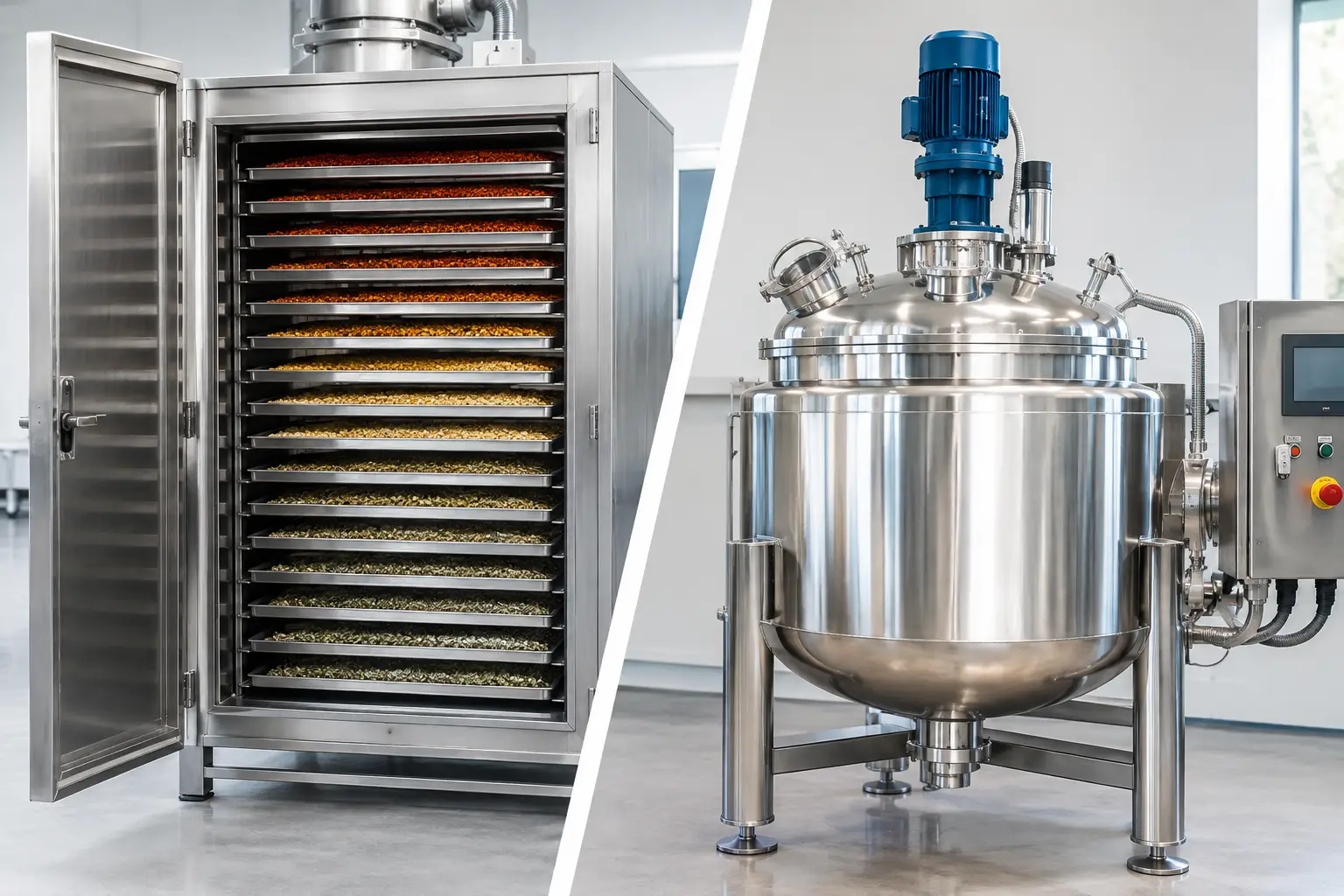
Vacuum ribbon mixers and dryers address a different process need. When mixing must occur alongside moisture removal, solvent recovery, or controlled thermal treatment, vacuum operation can reduce drying temperatures and help protect heat-sensitive products. This can be relevant in pharmaceutical, chemical, food, and specialty materials processing, where product stability and controlled residual moisture are part of the specification.
No configuration is automatically superior in every case. A high-intensity mixing action may shorten a cycle, but it can damage fragile particles or generate heat. Gentle blending can protect the product, but may require more time or a carefully designed addition procedure. The right balance depends on the quality standard, throughput target, and material response.
Batch Uniformity Is Only One Performance Measure
Blend uniformity is essential, but it should not be considered in isolation. A mixer that reaches an acceptable blend result but requires excessive cleaning time, high power consumption, or frequent maintenance can still undermine plant performance.
For example, the discharge system must empty the vessel efficiently and consistently. Product retained in corners, around seals, or beneath the agitator can increase waste and create cross-contamination concerns. This is especially significant for high-value ingredients, allergen-controlled food production, cosmetics, and regulated pharmaceutical operations.
The mixer should also support repeatable loading conditions. Changes in fill level, ingredient order, addition rate, or mixing time can alter results. In a stable process, these parameters are defined, documented, and practical for operators to repeat across shifts. Equipment design should make that discipline easier, not harder.
Key Design Factors That Affect Industrial Mixing Results
When evaluating industrial mixing equipment, buyers should look beyond nominal capacity and motor horsepower. The most meaningful specifications connect directly to product behavior and operating requirements.
A properly sized mixing vessel allows enough room for material circulation without operating so underfilled that the agitator cannot develop a consistent mixing pattern. Working capacity matters more than total vessel volume. A plant that routinely runs multiple batch sizes may need a configuration that performs reliably across a defined fill range rather than one optimized for a single maximum load.
Agitator geometry is equally important. Ribbon dimensions, pitch, clearances, and rotational speed determine how material travels through the vessel. These details affect mixing time, shear exposure, and the ability to work with materials that bridge, clump, or resist flow. For difficult formulations, the addition of choppers, lump breakers, spray bars, or specialized feed ports may improve dispersion and reduce manual intervention.
Material of construction must match both the product and the cleaning method. Stainless steel grades, interior surface finishes, polished welds, and sanitary construction can be necessary for hygiene-sensitive processing. In abrasive chemical or mineral applications, wear resistance and replaceable components may be the higher priority. The same mixer platform can require very different specifications depending on the duty.
Sealing and dust control deserve close attention. Fine powders can escape through poorly matched seals, creating housekeeping problems, material loss, and operator exposure concerns. When a process operates under vacuum, pressure, or inert gas, the sealing system becomes even more critical. A dependable design protects product quality while supporting a cleaner, safer production environment.
Improving Efficiency Without Sacrificing Quality
Production efficiency is not achieved by running every batch at the highest possible speed. It comes from reducing the total time and cost required to produce a conforming batch. That includes loading, mixing, inspection, discharge, cleaning, and preparation for the next run.
Shorter mixing cycles can increase output, but only when uniformity remains stable. Process testing should establish the minimum validated mixing time rather than relying on assumptions. Sampling plans should evaluate multiple locations within the batch and confirm that the result remains consistent over repeated runs. A single successful trial does not establish a dependable production process.
Energy use also deserves consideration. Ribbon mixer designs can provide effective mixing with comparatively efficient mechanical action, particularly for applications that do not require aggressive high-shear processing. Selecting a drive sized for actual torque demand, rather than simply oversizing by default, can support sustainable and cost-effective operation over the equipment’s service life.
Downtime often has a greater financial impact than the initial equipment price. Accessible bearings, durable seals, serviceable drives, and straightforward cleaning access help maintenance teams complete routine work faster. Equipment built for long-term service should also allow practical inspection of critical wear points before a failure disrupts the production schedule.
From Mixer Specification to Reliable Production
The strongest equipment decisions begin with a clear application review. A supplier should understand the material, batch size, required throughput, target blend quality, process temperature, cleaning expectations, and site constraints before recommending a configuration. If the process includes difficult additions, vacuum drying, heating or cooling, dust collection, or automation, those requirements should be addressed early rather than added after the equipment is built.
Trials can be valuable when material behavior is uncertain or the application has strict quality requirements. They provide an opportunity to observe mixing time, product movement, discharge behavior, and any tendency toward agglomeration or segregation. For regulated products, this information can also support process development and validation planning.
PerMix works with manufacturers that need ribbon mixing systems configured around real production demands, from standard powder blending to specialized vacuum mixing and drying applications. The goal is not to sell the most complicated machine. It is to provide a durable, efficient solution that produces repeatable results and fits the operating environment.
A well-specified mixer becomes part of process control, not a source of uncertainty. When the equipment, material, and operating method are aligned, production teams can spend less time correcting blend problems and more time running predictable, profitable batches.