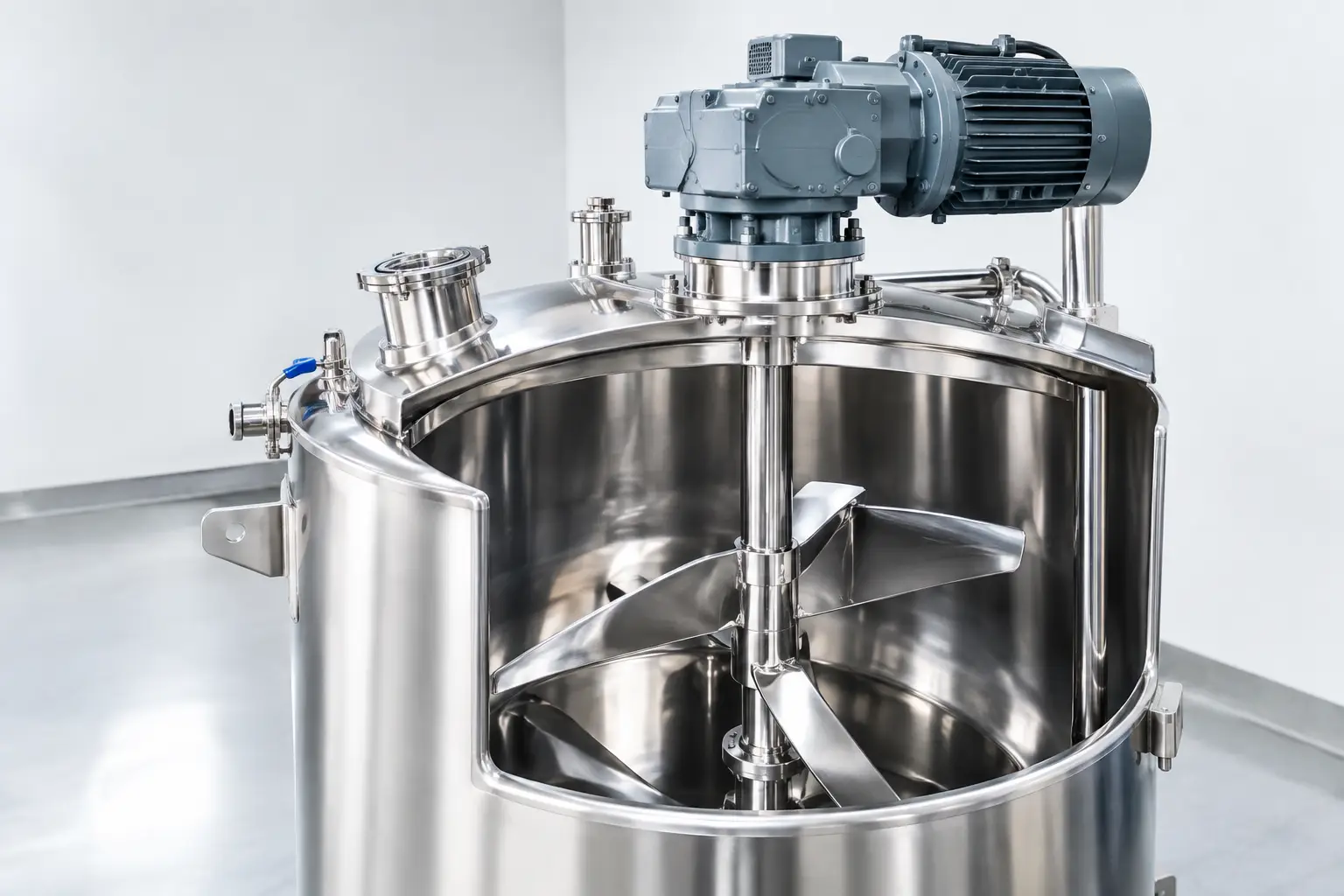
Mixer Safety Review for Industrial Batch Mixing
A mixer safety review is not a paperwork exercise performed after a near miss. For an industrial batch process, it is a practical examination of how operators, materials, controls, and cleaning procedures interact around a high-torque machine. Done well, the review protects personnel while preserving the throughput, blend consistency, and uptime the process was designed to deliver.
Ribbon mixers are frequently selected for powders, granules, pastes, and other bulk materials because they provide efficient convective mixing in a compact horizontal vessel. That performance also creates predictable hazards: rotating agitators, stored energy, dust exposure, elevated access points, material charging, and cleaning inside a confined space. The right safeguards must address the actual application rather than simply adding generic guarding after installation.
Why a Mixer Safety Review Belongs in Equipment Selection
Safety decisions made during specification are typically more effective and less costly than modifications made after a mixer enters production. A plant that identifies access requirements, material hazards, washdown needs, and cleaning procedures early can specify the right vessel configuration, cover design, interlocks, controls, and discharge arrangement from the start.
This matters because no two mixing duties behave the same way. A food processor handling dry seasoning may prioritize allergen containment and hygienic access. A chemical manufacturer may need to manage combustible dust, corrosive ingredients, or solvent vapors. A pharmaceutical operation may require validated cleaning procedures, controlled material transfer, and a documented approach to preventing cross-contamination. The safe mixer configuration depends on the product, the surrounding environment, and the way people actually operate the equipment on every shift.
A thorough review also supports business outcomes. Preventing an injury is the primary objective, but safety measures can also reduce unplanned shutdowns, product loss, cleanup time, and maintenance exposure. When equipment is designed for safe access and predictable operation, teams are less likely to bypass procedures just to keep a batch moving.
The Core Hazards Around Ribbon Mixing Equipment
The agitator is the most obvious hazard. Ribbon assemblies, shafts, and choppers where installed can create entanglement, pinch-point, and crushing risks when the machine is operating or capable of starting unexpectedly. Covers and access doors must prevent contact with moving components, and safety devices must be selected to suit how the mixer is loaded, inspected, and cleaned.
Stored energy deserves the same attention. Electrical power, pneumatic actuators, hydraulic systems, and gravity-fed material can all create hazardous motion after an operator believes the machine has stopped. A discharge valve can release unexpectedly, and a mixer may restart through an automated control sequence if lockout procedures are incomplete. A safety review should map every energy source and confirm that isolation points are accessible, identifiable, and workable for maintenance personnel.
Dust is another process-specific concern. Fine organic powders, chemicals, polymers, and agricultural ingredients may create respiratory exposure, housekeeping challenges, or combustible dust conditions. The risk depends on particle size, moisture level, concentration, oxygen availability, ignition sources, and enclosure design. Plants should evaluate the material data, applicable hazard classifications, dust collection strategy, grounding and bonding needs, and pressure-relief requirements with qualified process and safety professionals.
Material handling creates hazards beyond the mixer itself. Charging bags, drums, bulk bags, or pneumatic transfer lines can introduce ergonomic strain, falling-object exposure, and uncontrolled releases. If operators work from platforms to charge ingredients, the review should address safe access, handrails, toe boards, loading geometry, and visibility into the vessel. A mixer can be mechanically sound yet still create risk because the charging method was treated as a separate issue.
Mixer Safety Review: Controls That Must Work Together
Effective safety relies on layers of protection, not one component. A properly designed system combines physical barriers, control logic, operating procedures, training, and maintenance discipline. Each layer covers a different failure mode.
Access covers and guards should be durable enough for the production environment and designed so they are not routinely removed to perform normal work. Where an operator needs access during operation, an engineered interlock can prevent the agitator from running when the cover is open. The design should also consider restart behavior. After a safety device is opened and closed, the mixer should require an intentional start command rather than automatically resuming motion.
Emergency stop devices should be readily accessible from normal operating positions, including material charging and discharge areas where appropriate. However, emergency stops are not a substitute for lockout/tagout. They stop motion but may not isolate all hazardous energy. Maintenance, internal cleaning, and inspections that expose personnel to the agitator require a documented energy-control procedure suited to the equipment and facility.
Controls should provide operators with clear status information. Simple indicators for power availability, mixer running condition, fault status, and discharge position can reduce confusion during startup and troubleshooting. For automated systems, the control sequence should prevent mixing under unsafe conditions, such as an open cover, an unconfirmed discharge position, or a faulted safety circuit.
A productive specification process should examine at least these four control questions:
- Can personnel reach moving parts during normal charging, sampling, discharge, or inspection?
- Does opening an access point stop hazardous motion and prevent unintended restart?
- Can every energy source be isolated and verified before maintenance or vessel entry?
- Does the control system communicate abnormal conditions clearly enough for operators to respond correctly?
The answers should be documented in the equipment scope, operating procedures, and commissioning plan. Safety functions that are only discussed informally are easily lost between engineering, installation, and daily operation.
Cleaning, Sanitation, and Confined-Space Exposure
Cleaning is often where a safe production machine becomes a high-risk maintenance task. Ribbon mixers may require dry cleaning, washdown, clean-in-place features, or manual removal of residual material, depending on the product and sanitation standard. The safest approach is to reduce the need for people to enter the vessel in the first place.
Features such as polished product-contact surfaces, appropriate cover geometry, spray devices, full-access doors, and drainable designs can improve cleanability. Yet accessibility must be balanced against containment and safeguarding. A large access door may make inspection easier, but it must also maintain a secure safety boundary during operation and avoid creating a difficult-to-clean crevice.
If vessel entry is possible or anticipated, the plant must evaluate whether the mixer meets the definition of a permit-required confined space under its own safety program and applicable requirements. This evaluation should address atmospheric hazards, engulfment potential, mechanical isolation, rescue planning, communication, and supervision. No internal cleaning task should begin until the agitator and all related energy sources are isolated, locked out, and verified.
For food, pharmaceutical, and cosmetic applications, sanitation and worker safety are closely connected. Residue buildup can affect product quality and increase the amount of manual cleaning required. A mixer tailored to the material’s flow behavior and cleaning method can help reduce both cross-contamination risk and operator exposure.
Design Details That Improve Safe Daily Operation
A safety review should go beyond the vessel and motor. Discharge design affects whether operators need to stand beneath a valve, handle heavy containers, or intervene when sticky material bridges at the outlet. A properly selected discharge valve, support frame, and collection arrangement can reduce manual handling and make batch turnover more controlled.
Vacuum ribbon mixers and dryers require additional attention because vacuum operation, heating or cooling jackets, and vapor handling introduce different process conditions. The vessel, seals, instrumentation, and controls must be engineered for the intended operating pressure and temperature range. When volatile materials are involved, safe vapor management and appropriate electrical classification should be evaluated as part of the complete system, not as an afterthought.
Maintenance access also influences safety and lifecycle cost. Bearings, seals, drives, and instrumentation should be accessible without forcing technicians into awkward positions or unnecessary exposure to product residue. Durable equipment reduces intervention frequency, but every machine still needs inspection. Designing for maintainability supports safer work and more predictable uptime.
Turn the Review Into a Repeatable Plant Practice
A mixer safety review should occur before purchase, during installation, at commissioning, and whenever the product, batch size, operating method, or cleaning procedure changes. The people closest to the work should be involved: process engineers, maintenance leaders, EHS personnel, operators, sanitation teams, and equipment suppliers. Their perspectives reveal practical risks that drawings alone may not show.
Commissioning is the time to test safeguards under realistic conditions. Verify interlock functions, emergency stops, startup logic, discharge behavior, alarms, and lockout points before production pressure encourages shortcuts. Then train operators on the reason behind each safeguard, not merely the steps required to start and stop the machine.
PerMix designs configurable ribbon mixing systems around the material, process, and operating environment, helping manufacturers align superior mixing performance with practical safeguards and maintainable equipment layouts. The best result is not a mixer surrounded by obstacles. It is a well-engineered system that lets trained teams blend safely, clean efficiently, and keep production moving with confidence.