Stainless Versus Carbon Steel Mixers Compared
A mixer vessel can look like a minor line item until corrosion, product carryover, or an unexpected cleaning requirement stops production. When evaluating stainless versus carbon steel mixers, the right choice is not simply about paying more for stainless steel or reducing initial equipment cost with carbon steel. It is a process decision that affects sanitation, product integrity, maintenance planning, and the useful life of the mixer.
For ribbon mixing applications, the material of construction must match the product, operating environment, cleaning method, and required finish. A properly specified carbon steel ribbon mixer can be an efficient, cost-effective solution for dry industrial materials. A correctly engineered stainless steel mixer can be essential where hygiene, corrosion resistance, and cleanability are non-negotiable.
Stainless Versus Carbon Steel Mixers: The Core Difference
Stainless steel contains chromium, which forms a passive surface layer that helps resist corrosion. Common mixer materials include Type 304 stainless steel for many food, cosmetic, and general processing applications, and Type 316 stainless steel where chlorides, acids, salt-containing ingredients, or more aggressive cleaning chemicals create a higher corrosion risk.
Carbon steel is a strong, widely available material that performs well in many dry, non-corrosive bulk solids applications. It is often finished with industrial paint, powder coating, or a specialized lining to protect exterior and product-contact surfaces where appropriate. Its lower acquisition cost can make it attractive for high-volume processing of minerals, fertilizers, feed ingredients, polymers, and similar materials.
The difference is most apparent once the mixer enters service. Stainless steel generally tolerates repeated washdown, humid operating conditions, and many chemical exposures better than unprotected carbon steel. Carbon steel requires more careful control of moisture, product chemistry, surface damage, and coating condition. Neither material is automatically superior in every operation. The better investment is the material that controls the real risks in the process.
When Stainless Steel Is the Better Mixer Material
Stainless steel is typically the preferred choice when product purity, sanitary design, or corrosion resistance has a direct effect on production quality. In pharmaceutical, food, nutraceutical, cosmetic, and many specialty chemical operations, product-contact surfaces must support validated cleaning procedures and reduce the chance of contamination between batches.
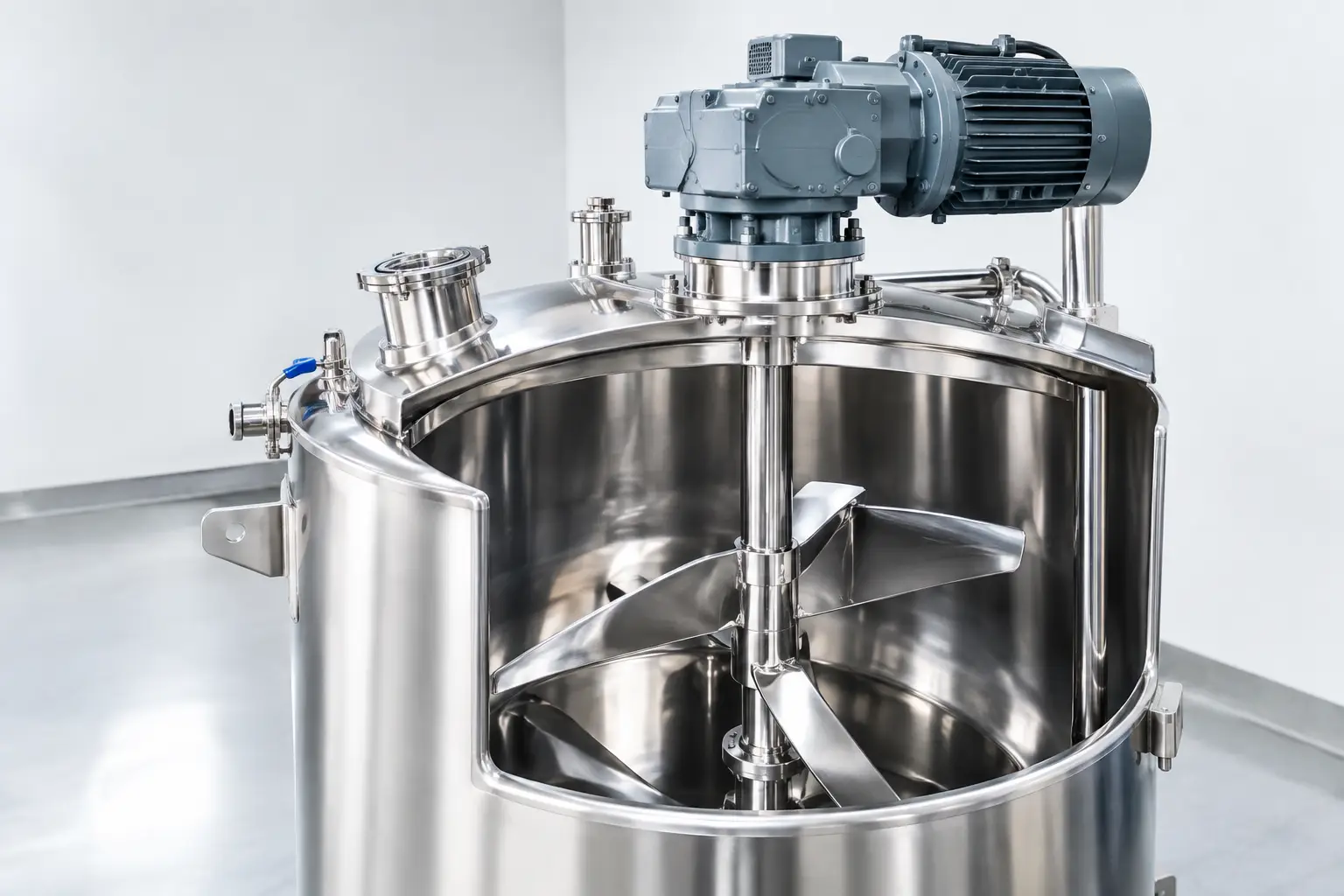
A stainless ribbon mixer can be specified with smooth internal welds, polished contact surfaces, sanitary fittings, and discharge arrangements designed to minimize retained material. These details matter as much as the base alloy. A highly polished vessel with properly finished ribbon elements, shafts, and discharge valves is easier to inspect and clean than a rougher surface with crevices where fine powders or paste products can accumulate.
Stainless steel also becomes more compelling when the formulation includes moisture, salt, acidic ingredients, alkaline compounds, or cleaning agents that can attack carbon steel coatings. If the process uses frequent wet cleaning, clean-in-place procedures, or steam-based sanitation, the lifecycle value of stainless steel usually outweighs its higher initial cost.
However, stainless steel should be specified with care. Type 304 is not interchangeable with Type 316 in every chemical environment, and stainless steel is not immune to pitting, chloride attack, or damage from incompatible cleaning practices. The mixer supplier should review product chemistry, washdown exposure, cleaning chemistry, temperature, and batch frequency before selecting an alloy and finish.
Applications commonly suited to stainless steel
Food powders, seasoning blends, dietary supplements, pharmaceutical intermediates, cosmetics, wet granulations, and corrosion-sensitive chemical blends often benefit from stainless construction. Vacuum ribbon mixers and dryers may also require stainless steel when heat, moisture removal, solvent handling, or hygienic production standards place added demands on the vessel and internal mixing assembly.
For these applications, the material decision supports more than appearance. It supports consistent cleaning outcomes, lower contamination risk, and a more defensible quality program.
Where Carbon Steel Delivers Strong Value
Carbon steel remains a practical choice for many industrial mixing duties. If a product is dry, non-corrosive, and not subject to sanitary regulations, carbon steel can provide dependable service at a lower capital cost. It is particularly well suited to applications where the mixer operates in a controlled environment and batches do not require intensive wet cleaning between runs.
Examples include certain construction materials, mineral blends, dry agricultural inputs, plastic compounds, and non-corrosive chemical powders. In these environments, the cost difference can be substantial, especially for larger-capacity horizontal ribbon mixers. Lower upfront investment may allow a plant to increase batch capacity, add automation, or fund supporting material handling equipment without compromising mixing performance.
The important qualification is surface protection. A painted or coated carbon steel mixer must be selected around the product and cleaning method. Coatings can wear, chip, or degrade under abrasion and chemical exposure. Once the protective layer is compromised, oxidation can begin, creating maintenance requirements and possible product contamination concerns.
Carbon steel also demands more attention in humid plants or outdoor installations. Condensation, washdown overspray, and temperature swings can shorten coating life. For this reason, some operations specify a carbon steel structural frame with stainless steel product-contact parts. This hybrid approach can balance cost control with process protection when only the wetted surfaces require stainless construction.
Cost Is More Than the Purchase Price
The initial cost difference between stainless and carbon steel is real, but it should be evaluated against the total cost of ownership. A lower-cost carbon steel mixer may be the right commercial decision for a dry, stable material with long production campaigns. The same mixer can become expensive if it requires repeated repainting, unplanned repairs, intensive inspection, or early replacement due to corrosion.
Stainless steel generally commands a higher purchase price because of raw material cost, fabrication requirements, and surface finishing. Yet it can reduce downtime associated with corrosion repair and simplify cleaning in applications with frequent product changeovers. For regulated plants, the ability to document a sanitary, repeatable process can be more valuable than the difference in equipment acquisition cost.
Maintenance planning should also consider the ribbon agitator, shaft seals, end plates, discharge valve, access covers, and associated piping. Selecting a stainless vessel while leaving corrosion-prone product-contact components in carbon steel can create the weakest-point problem. A complete material-of-construction review is more effective than specifying the vessel alone.
Abrasion, Heat, and Product Behavior Change the Answer
A common mistake is assuming that stainless steel always offers the best resistance to wear. Highly abrasive materials can erode stainless and carbon steel alike. In severe applications, a hardened liner, wear-resistant alloy, replaceable wear components, or a purpose-designed agitator may offer more value than simply upgrading to a standard stainless grade.
Temperature matters as well. Heated mixing, cooling jackets, vacuum operation, and thermal cycling place additional demands on vessel construction, seals, and weld quality. Paste products may require heated surfaces and close-clearance ribbon geometry, while fragile granules may need lower-speed mixing to prevent degradation. Material selection should be part of the broader mixer design, not a standalone purchasing decision.
Product flow characteristics also influence the required internal finish. Fine cohesive powders may cling to rough surfaces, while sticky materials can accumulate around shafts, discharge valves, and cover interfaces. A polished stainless interior may improve cleanability in these cases, but the ribbon configuration, fill level, and discharge design still determine whether the mixer fully evacuates product.
How to Specify the Right Mixer Construction
The most efficient way to choose between materials is to provide the mixer manufacturer with operating data early. Product composition, particle size, bulk density, moisture level, abrasiveness, temperature, batch size, required blend uniformity, and cleaning method all affect the recommendation.
Procurement teams should also identify whether the material is product-contact or structural only. Ask whether the proposed design includes the same material for the vessel, ribbons, shaft, discharge valve, covers, and fittings. Clarify the internal surface finish, weld treatment, coating system where used, and the expected maintenance approach.
For operations that may add new formulations later, future flexibility deserves consideration. A carbon steel mixer that works well for a current dry blend may not be acceptable when the plant introduces a wet, salty, acidic, or food-grade product. If expansion into more demanding processing is likely, stainless construction can preserve options and avoid a premature equipment replacement.
PerMix engineers ribbon mixing systems around the actual material and production objective, including horizontal, vertical, and vacuum mixing configurations. That application-specific approach helps ensure the material of construction supports both dependable operation and the required process outcome.
The right choice becomes clear when the conversation starts with the product rather than the metal. Share representative material data, cleaning requirements, and operating conditions with a mixing expert before requesting a final specification. That upfront review can prevent an avoidable compromise between capital cost, product quality, and long-term uptime.