Critical Powder Containment Measures That Work
A fine powder escaping at a charging port can become far more than a housekeeping problem. It can expose operators, contaminate adjacent batches, create combustible dust concerns, and turn routine cleaning into unplanned downtime. Critical powder containment measures address these risks at the point where materials enter, move through, and leave the process – without making the operation unnecessarily difficult to run.
For manufacturers handling pharmaceuticals, food ingredients, specialty chemicals, pigments, polymers, or agricultural products, containment must be engineered around the actual material and workflow. Particle size, bulk density, moisture sensitivity, dustiness, toxicity, batch volume, and cleaning requirements all influence the right solution. A design that works well for a free-flowing food premix may not provide adequate protection for a potent active ingredient or a highly aerated pigment.
Why powder escapes during otherwise controlled processes
Powder containment problems rarely begin with the mixer chamber itself. In a properly specified ribbon mixer, the vessel is designed to process material within a closed environment. Losses commonly occur during material charging, sampling, discharge, transfer, and cleaning. Pressure differences, poor seal selection, hurried operator practices, and poorly matched transfer equipment can all turn these transition points into emission sources.
The behavior of the powder matters as much as the equipment. Fine, low-density powders can become airborne with very little energy. Materials that retain static charge may cling to surfaces and release later during access or cleaning. Cohesive powders can bridge above a discharge valve, encouraging operators to intervene manually. Each behavior requires a different combination of mechanical design, process controls, and operating procedures.
Containment should therefore be treated as a system requirement rather than an accessory added after installation. The mixer, charging method, dust collection arrangement, downstream container, valve design, and cleaning plan must work together.
Critical powder containment measures at each transfer point
The most effective approach is to identify every point where powder crosses a boundary. A process review should follow the material from receiving through batching, mixing, discharge, packaging, and sanitation. This makes it possible to prioritize controls where they will deliver the greatest reduction in exposure and product loss.
Use enclosed charging instead of open addition
Open-top charging is simple, but it places the operator directly beside the highest-risk release point. Where the application permits, enclosed charging through a sealed feed port, bag dump station, vacuum conveyor, screw feeder, or intermediate bulk container connection provides much better control.
For a ribbon mixer, the charging arrangement should match the material delivery method and expected batch cadence. A manual bag addition station may be appropriate for lower-volume production with local dust extraction. Higher-throughput lines often benefit from enclosed pneumatic conveying or bulk-bag discharge systems that limit manual handling. The trade-off is that more enclosed systems require careful validation of conveying rate, filter performance, and cleanability.
Dust extraction can be useful at a charging station, but it is not a substitute for physical enclosure. Excessive airflow may pull valuable fines from the batch or disrupt accurate ingredient addition. The objective is controlled capture at the source, not simply applying more suction.
Specify seals and access doors for the duty cycle
Gaskets, shaft seals, inspection covers, and access doors are often small components with a major effect on containment. A seal must withstand the actual temperature, chemical exposure, vacuum or pressure condition, and cleaning method used in the process. It must also remain reliable through repeated opening and closing.
For dry powder applications, gasket materials should be selected for compatibility and compression set resistance. Sanitary processing may require food-grade or pharmaceutical-grade elastomers and surface finishes that prevent product buildup. For applications involving solvents, vacuum drying, or hazardous materials, seal selection becomes even more application-specific.
Access doors need positive, repeatable closure. A large cover that is easy to open but difficult to reseat correctly can become a recurring leak point. Well-designed equipment supports inspection and cleaning without forcing personnel to compromise containment in order to complete routine work.
Control discharge with the right valve and receiver connection
Discharge is one of the most overlooked powder containment challenges. When the valve opens, product may fall into a drum, tote, conveyor, or downstream process under conditions that displace air and create a dust plume. The receiver must be connected and vented in a controlled way.
Butterfly valves can provide a practical solution for many free-flowing powders, while slide gates, rotary valves, or specialized valves may be more suitable where flow control, pressure isolation, or difficult material behavior is involved. The correct choice depends on the powder and the receiving equipment. A valve that performs well with granules may not control a fine, fluidizable powder.
A sealed connection between the mixer outlet and receiving container is usually preferable to open gravity discharge. Flexible sleeves, clamped adapters, split-valve technology, and contained drum-filling stations can reduce dust release substantially. The right arrangement should also account for ergonomic access, container changeover, and the likelihood of residual product falling after the primary discharge is complete.
Match ribbon mixer design to containment requirements
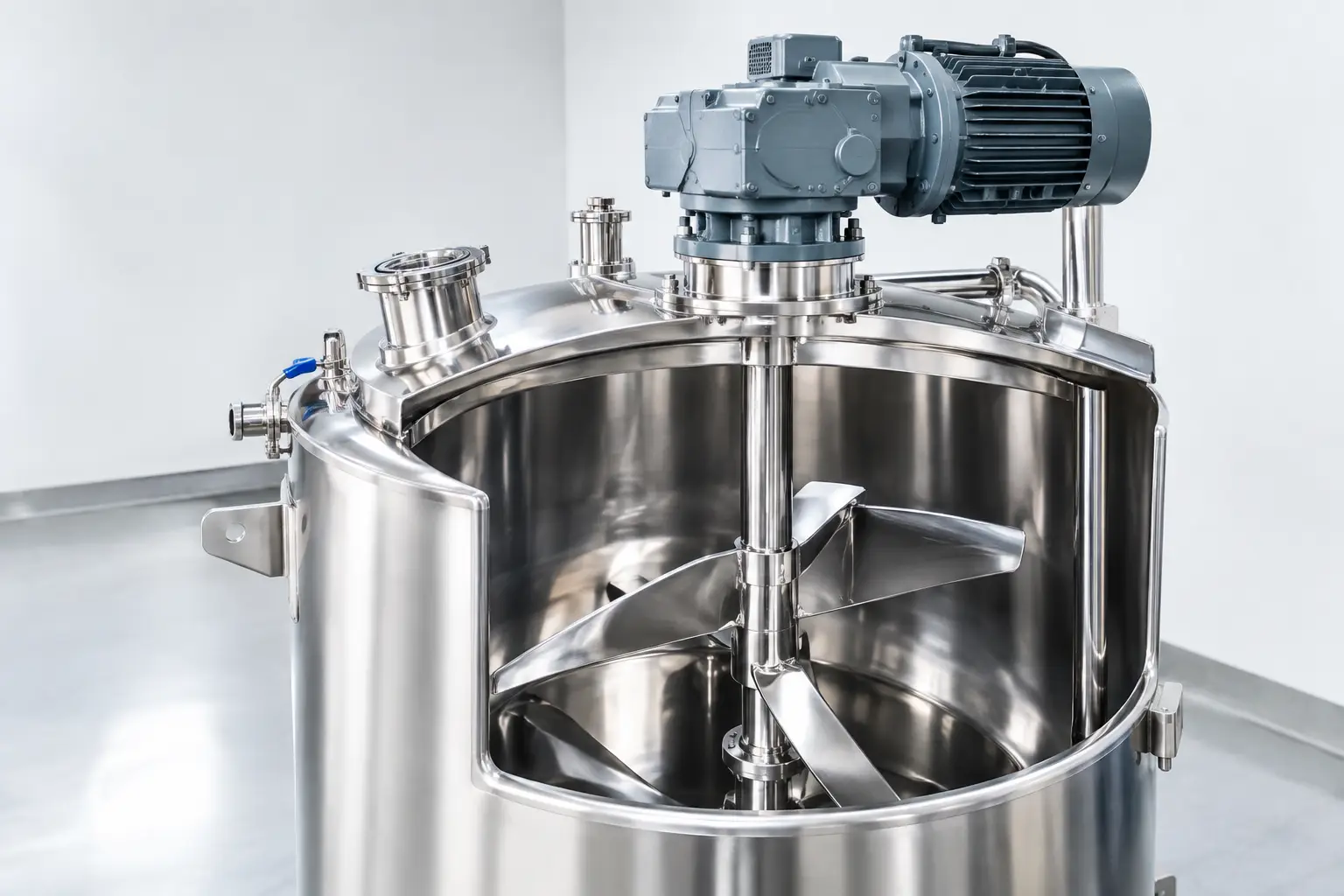
A ribbon mixer contributes to containment by supporting consistent, efficient blending inside a closed vessel. Horizontal ribbon mixers are commonly selected for rapid blending of dry powders, granules, and certain wet materials. Their geometry allows broad product movement with relatively low energy demand, while properly engineered covers, inlets, and discharge assemblies help maintain a contained processing environment.
The details are decisive. A mixer may require multiple feed ports for automated additions, a dust-tight cover for fine powders, a purgeable seal arrangement, or a vacuum-rated vessel for drying and deaeration. In sanitary applications, polished internal surfaces and clean-in-place provisions can reduce residual material that might otherwise create cross-contamination risks during product changeovers.
Vacuum ribbon mixers and dryers provide another containment advantage when a process benefits from reduced exposure to ambient conditions. Operating under vacuum can support drying and solvent removal in a closed system. However, vacuum service introduces its own engineering requirements, including vessel integrity, compatible seals, controlled filtration, and procedures for safe opening after the cycle.
PerMix engineers mixing systems around these operating realities, helping manufacturers align vessel configuration, feed connections, discharge design, and sanitation requirements with the material being processed.
Do not separate containment from combustible dust control
Some powders create a second category of risk: combustibility. Organic dusts, certain polymers, metals, and other fine materials may require a formal dust hazard analysis and equipment selection based on the identified hazard. Containment reduces fugitive dust, but it does not independently establish compliance with combustible dust requirements.
Grounding and bonding, explosion venting, suppression, isolation, suitable electrical classifications, and dust collection design may all be relevant depending on the material and process. A plant should not assume that a closed mixer alone eliminates the hazard. The entire system, including upstream and downstream equipment, must be evaluated by qualified technical and safety personnel.
The practical benefit is broader than regulatory alignment. Better dust control reduces cleanup labor, protects bearings and controls from contamination, and makes abnormal releases easier to detect before they become a larger event.
Build containment into operating discipline
Even well-designed equipment can underperform if operating practices create unnecessary exposure. Standard work should define how bags, containers, and transfer hoses are connected; how operators verify seals before a batch begins; and how they open the system after processing. These steps are particularly valuable when production involves frequent formulation changes or multiple shifts.
Cleaning deserves the same level of planning as mixing. Dry cleaning methods may be preferred where water creates product buildup or microbial concerns. Wet cleaning may be necessary for allergen control, potent compounds, or difficult residues. The best method depends on the product and validation requirements, but uncontrolled compressed-air blowdown should be avoided because it can disperse powder into the work area.
Maintenance teams also need clear inspection criteria. A worn gasket, damaged flexible connector, misaligned valve, or declining dust collector performance can gradually weaken containment without immediately stopping production. Scheduled inspections and documented replacement intervals are usually less costly than responding to an exposure event or product quality failure.
Measure results, not just equipment features
Containment performance should be verified after installation and revisited when formulations, throughput, or operating methods change. Useful indicators include visible dust around transfer points, housekeeping time, filter loading patterns, product loss, operator feedback, and air-monitoring results where occupational exposure limits apply.
A practical evaluation often starts with the highest-consequence material and the most frequently used transfer point. Addressing one poorly contained bag dump or discharge station can produce a larger operational improvement than making minor changes across the entire line. The goal is not to add complexity for its own sake, but to create a process that protects people and product while remaining efficient to operate.
A focused containment review before specifying or upgrading a mixer can prevent expensive retrofits later. When the powder, batch process, cleaning method, and transfer path are considered together, manufacturers can build a safer operation with more consistent product quality and fewer interruptions.