Ribbon Mixer vs Paddle Mixer: Which Fits?
When a blend is missing spec, the mixer is often the first place to look. In the ribbon mixer vs paddle mixer decision, the right answer depends less on labels and more on flow behavior, batch goals, and how your plant actually runs from shift to shift.
For industrial buyers, this is not a theoretical comparison. Mixer selection affects blend uniformity, cycle time, sanitation, energy use, and maintenance burden. It also affects whether a machine stays flexible as product lines change. A ribbon mixer and a paddle mixer can both handle dry bulk solids, but they do not move material in the same way, and that difference matters.
Ribbon mixer vs paddle mixer: the core difference
A ribbon mixer uses inner and outer helical ribbons mounted on a horizontal shaft. These ribbons move material in opposing axial directions while also creating radial movement. The result is a continuous exchange of product from one end of the trough to the other and from the wall to the center.
A paddle mixer uses paddles mounted on one or more shafts to lift, tumble, and throw material through the mixing zone. Instead of the sweeping, layered movement of ribbons, paddles create a more aggressive mechanical action. That can be useful for some formulations, but it can also change how fragile or cohesive materials behave.
In practical terms, ribbon mixers are commonly chosen for applications that require consistent, homogeneous blending across powders, granules, and some paste-like products. Paddle mixers are often selected when a processor wants stronger agitation, faster incorporation of some ingredients, or a different style of particle movement.
How mixing action affects blend quality
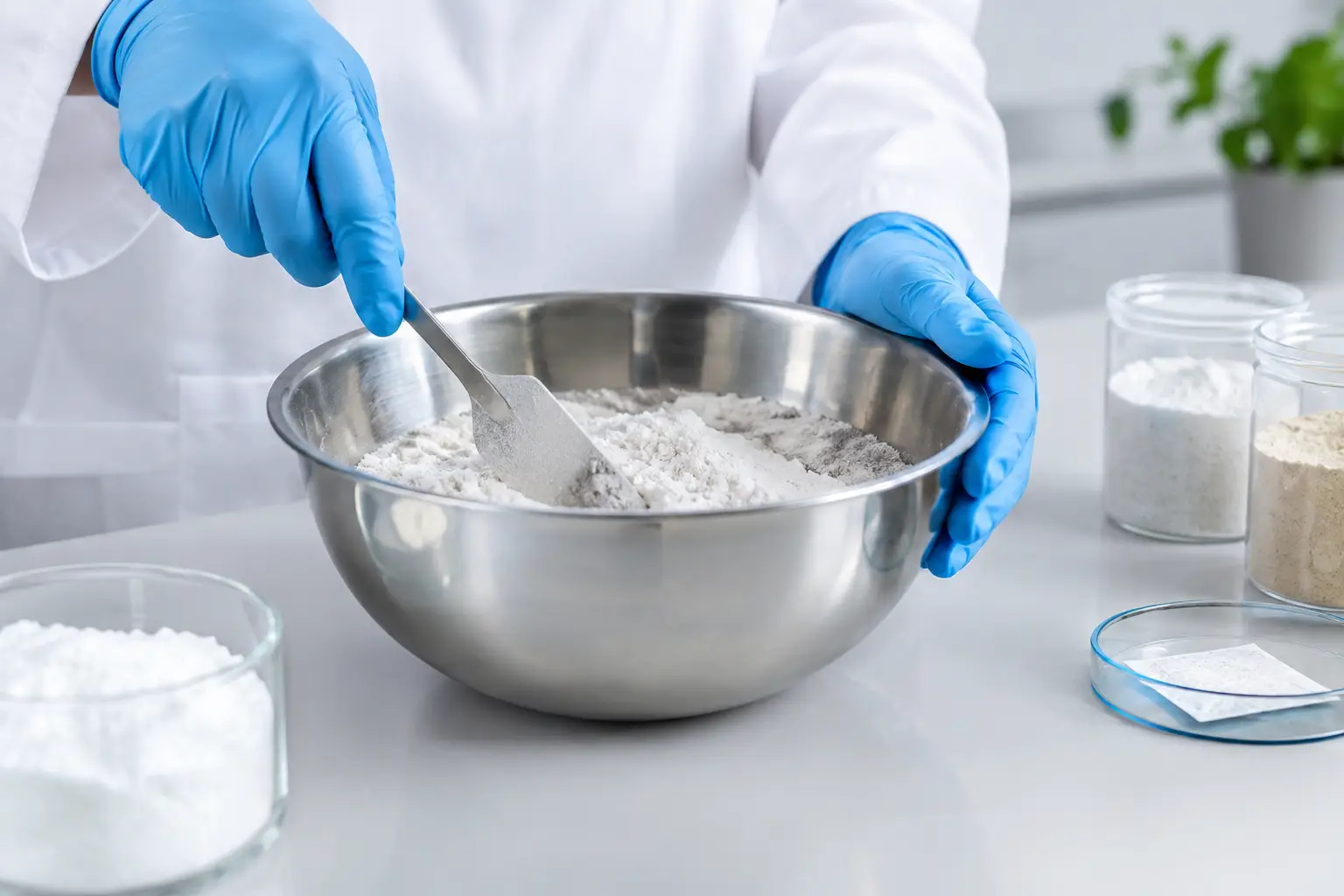
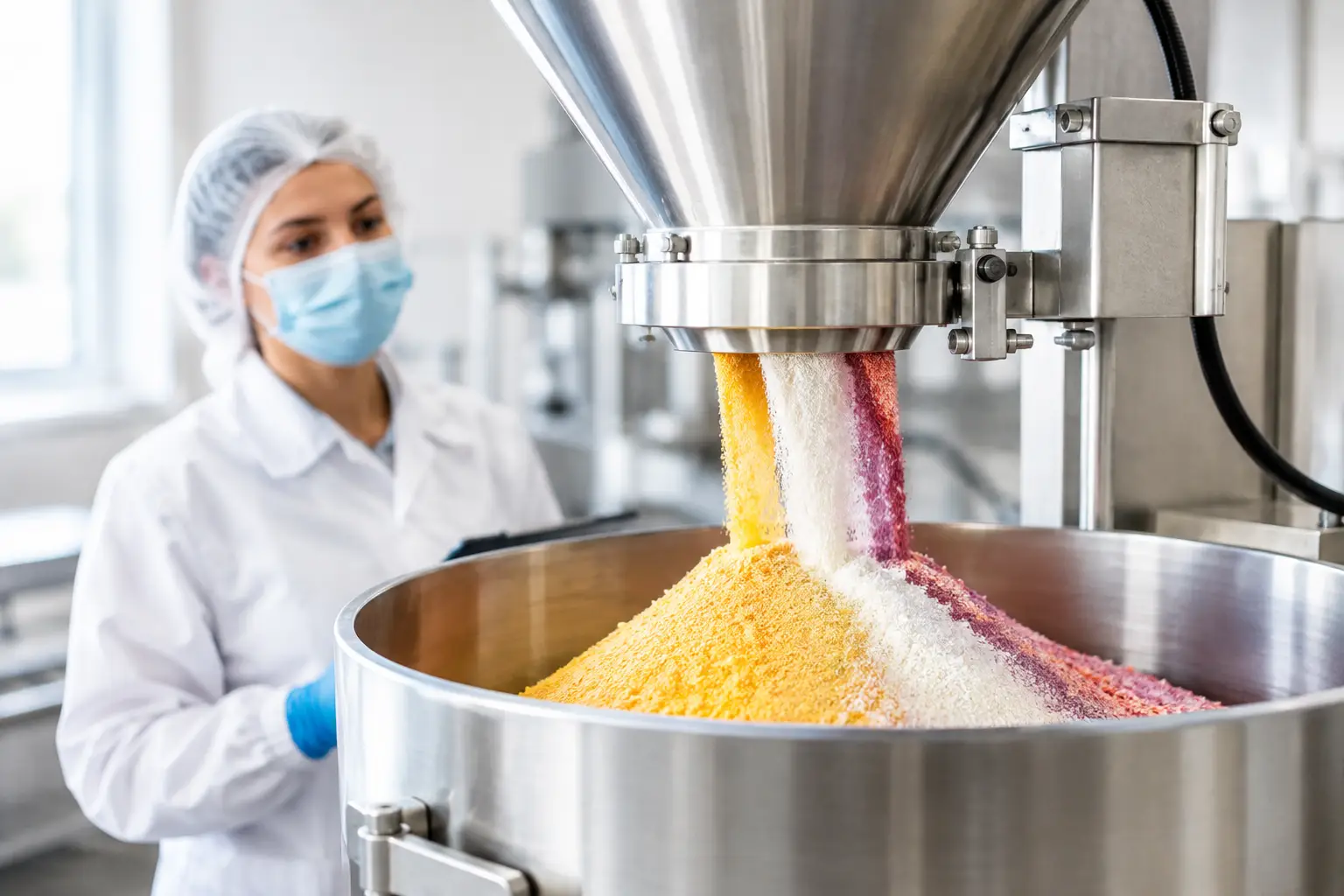
For many dry powder and granule applications, blend quality comes down to controlled movement rather than force alone. Ribbon agitators generate a broad, repeatable mixing pattern that promotes uniformity without relying on high-impact particle collisions. This is especially valuable when formulations include minor ingredients that need to be distributed evenly throughout the batch.
Paddle mixers can also achieve strong mixing performance, but their action is typically more turbulent. In some products, that helps break apart lumps or move denser components efficiently. In others, it can increase the risk of segregation, particle degradation, or inconsistent residence patterns if the product is not a good fit for the machine geometry.
That is why the best choice depends on the material set. Free-flowing powders, dry blends with tight uniformity targets, and applications requiring predictable repeatability often favor ribbon mixing. Products that benefit from more lifting and tossing may point toward paddles.
When a ribbon mixer has the advantage
A horizontal ribbon mixer is often the stronger option when the process requires gentle but thorough blending over a wide batch range. It performs well with powders, granular materials, premixes, and formulations where trace ingredient distribution matters. It is also a practical choice when plants want a versatile platform that can handle multiple products with consistent results.
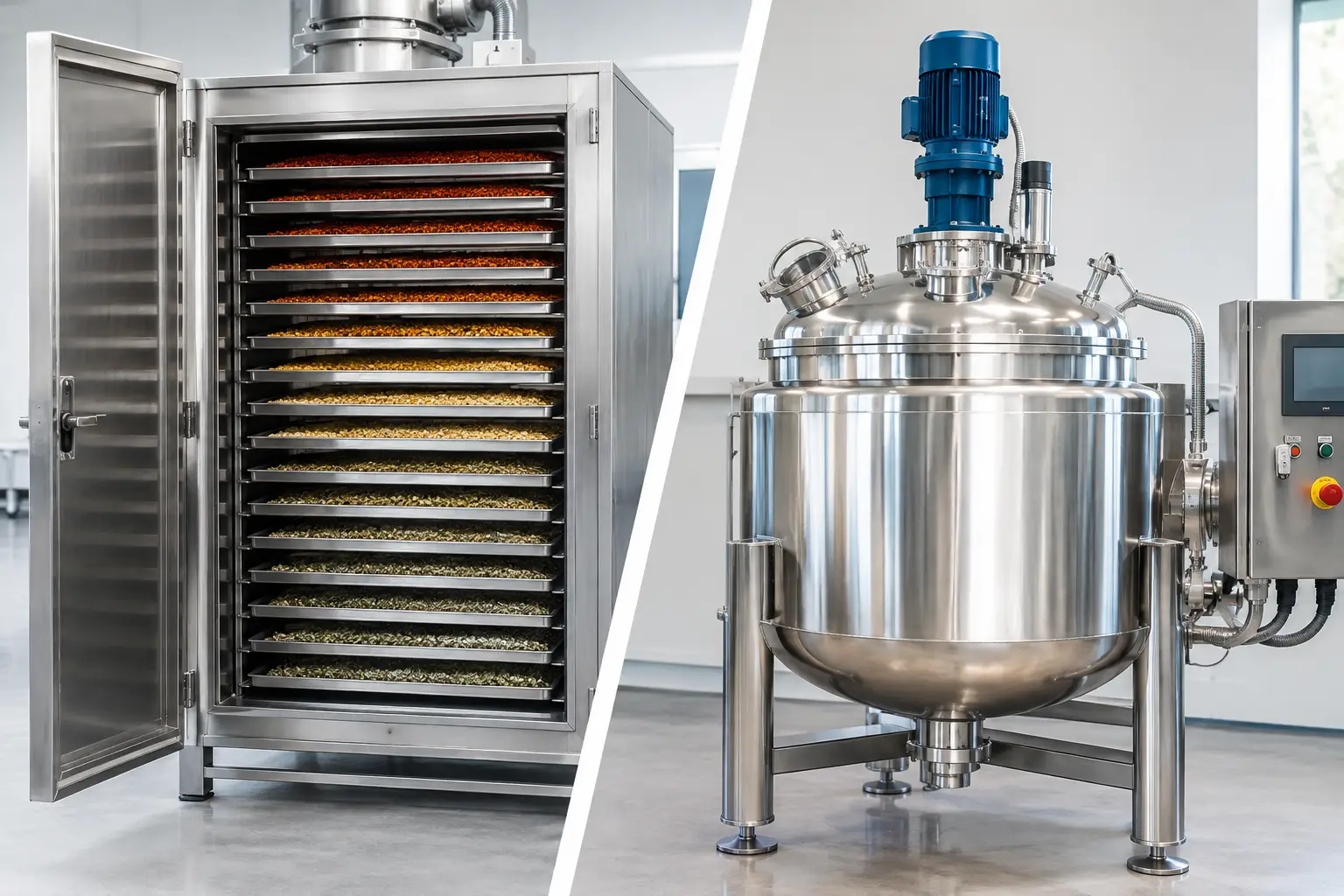
Ribbon mixers are frequently preferred in food processing, chemicals, plastics, agriculture, and many other industries because they balance mixing efficiency with controlled material handling. With the right configuration, they can also support liquid addition, heating or cooling jackets, sanitary design features, and discharge options tailored to plant requirements.
When a paddle mixer may make sense
A paddle mixer may be worth considering when the material benefits from a more forceful tumbling action or when the product has characteristics that respond better to mechanical lifting than to ribbon-driven axial flow. Some processors also look at paddle designs for wetter blends or formulations where deliberate particle movement helps ingredient incorporation.
Still, this is where application testing matters. A paddle mixer that performs well on one formulation may not deliver the same consistency on another with different density, particle size, or moisture content. The same is true in reverse, but ribbon mixers are often favored for their ability to deliver stable, repeatable blending across a broader range of dry bulk applications.
Capacity, cycle time, and plant efficiency
Mixer performance is not only about the final blend. It is also about how many acceptable batches your line can produce in a shift. In the ribbon mixer vs paddle mixer comparison, throughput should be evaluated as a full process calculation, not just stated mixing time.
Ribbon mixers are widely valued for efficient batch processing because they can achieve high-quality blending without excessive energy input. Their mixing action is effective yet controlled, which supports predictable cycle times and reduced operating costs. In many production environments, that combination translates into better batch-to-batch consistency with less strain on equipment.
Paddle mixers may offer benefits in certain formulations, but the more aggressive action can come with trade-offs. Depending on the material, processors may see different fill-level sensitivities, more wear in key contact areas, or additional attention needed to maintain a consistent process window.
If uptime, energy efficiency, and long-term production stability are priorities, the mixer should be evaluated in the context of total operating performance, not simply agitation intensity.
Cleanability, maintenance, and downtime
In regulated and high-value manufacturing, cleanout time is often as important as mixing time. The easier a mixer is to inspect, discharge, and clean, the less non-productive time the plant carries between batches.
Ribbon mixers can be configured for efficient discharge and practical cleanability, especially when designed around the actual product and sanitation standard. Trough geometry, shaft seals, internal finishes, access covers, and discharge valve design all influence how quickly operators can turn the machine around. A well-engineered ribbon mixer can support reduced downtime and lower maintenance burden over the equipment life cycle.
Paddle mixers also can be designed for cleaning access, but their geometry may create different considerations depending on shaft arrangement and product retention points. For any mixer type, the details matter more than the category name. Buyers should look closely at dead spots, seal arrangement, inspection access, and how the machine handles sticky or residual product.
Wear and long-term durability
Durability is a purchasing issue, not just a maintenance issue. Frequent repairs, inconsistent clearances, and seal failures affect output, labor costs, and confidence in the process.
Ribbon mixers are often chosen in industrial settings because they offer a strong balance of mechanical simplicity and dependable performance. With proper materials of construction and application-specific engineering, they can deliver long service life in demanding environments. That is particularly relevant for plants processing abrasive powders, corrosive ingredients, or products that require tight mechanical tolerances over time.
Choosing based on your material, not just the machine
The most reliable way to choose between a ribbon mixer and a paddle mixer is to start with the product. Particle size distribution, bulk density, flowability, moisture content, fragility, and required batch size all influence the result. So do practical constraints such as ceiling height, discharge needs, cleaning protocol, and whether the mixer must support future product changes.
Ask a few direct questions. Is the product free-flowing or cohesive? Does it require gentle homogenization or stronger agitation? Are trace ingredients critical? Will liquids be added? Is sanitation a major concern? Does the process demand a single dedicated mixer or a flexible platform for multiple SKUs?
For many manufacturers, those answers lead back to a ribbon mixer because it offers a dependable combination of uniform blending, energy-conscious operation, and broad application versatility. That is one reason companies looking for superior mixing performance often focus on horizontal ribbon systems first, then compare alternatives only if the product behavior suggests a different approach.
Why many industrial buyers lean toward ribbon mixing
Across sectors such as food, chemicals, pharmaceuticals, plastics, cosmetics, and agriculture, the buying decision usually comes down to risk reduction. Plants want equipment that can hold blend quality, minimize downtime, and support efficient production over years of operation.
That is where ribbon mixers continue to stand out. They are a proven solution for consistent, homogeneous blending in a wide range of powder and bulk solid applications. They can be configured for demanding production environments, built for durability, and tailored to support process-specific goals such as sanitation, vacuum operation, thermal processing, or controlled liquid addition.
For buyers who need more than a standard machine, an engineered ribbon mixer platform offers another advantage: adaptability. Instead of forcing the process to fit the equipment, the equipment can be specified around the process. That is the difference between purchasing a mixer and investing in a reliable production asset.
PerMix works with manufacturers that need that level of fit, especially where blend consistency, uptime, and application-specific design directly affect business performance.
If you are weighing a ribbon mixer against a paddle mixer, the smartest next step is to evaluate the material behavior and production target with technical precision. The right mixer should not only blend the batch well. It should make the entire operation easier to run, easier to maintain, and easier to scale.