Choosing the Right Ribbon Blender for Cosmetics
A ribbon blender for cosmetics is not simply a vessel with an agitator. It is a process-critical system that affects shade consistency, texture, ingredient distribution, batch release, cleaning time, and production cost. Whether the product is a loose face powder, dry shampoo, clay mask base, exfoliating blend, or pigment-containing formulation, the mixer must move materials thoroughly without creating segregation, damaging fragile particles, or leaving costly residue behind.
For cosmetic manufacturers, the right specification begins with the formula and ends with a mixer configured for daily production reality. Capacity matters, but it is only one part of the decision. Material flow, sanitation requirements, discharge performance, automation needs, and the expected batch-to-batch repeatability all deserve equal attention.
Why a Ribbon Blender for Cosmetics Needs Application-Specific Design
Horizontal ribbon blenders use concentric inner and outer ribbons to create counterflow movement inside a U-shaped trough. Material is transported in opposing directions while being folded and redistributed through the batch. This action makes the design highly effective for many dry powders, granules, and low-to-medium viscosity cosmetic blends.
The advantage is not just mixing speed. A properly designed ribbon system can create a consistent blend while operating at relatively low energy compared with more aggressive mixing technologies. For production teams, that can mean dependable throughput without unnecessary heat generation or excessive product attrition.
Cosmetic materials, however, are rarely simple. A formula may combine fine talc alternatives, mica, pigments, starches, clays, fragrances, preservatives, botanical powders, polymers, or lightweight functional ingredients. Differences in particle size, shape, density, moisture content, and flowability can make a blend look uniform at the mixer yet separate during discharge, transfer, or packaging. The mixer must therefore be selected around the material behavior, not just the desired batch weight.
Start With Product Behavior, Not Mixer Capacity
A capacity target is useful, but it should follow a careful review of the formula. Ribbon mixers generally perform best within a defined working fill range. An oversized mixer running with too little material may not develop the intended mixing pattern, while an overfilled trough can limit circulation and extend blend time.
Powder flow and density differences
Fine powders with similar bulk densities are often well suited to ribbon mixing. More difficult blends may contain a dense pigment or mineral component alongside a very light powder. Without the right ribbon geometry, speed, fill level, and mixing sequence, the heavier fraction can migrate while lighter material accumulates in another zone.
The issue is not always solved by running longer. Excessive mix time can sometimes increase particle breakdown, drive moisture-sensitive ingredients into clumps, or introduce unwanted air. A process review should establish the appropriate order of addition, mixing time, and operating speed for the actual formulation.
Fragile and heat-sensitive ingredients
Cosmetic powders can include ingredients that are sensitive to shear, temperature, or compression. Soft spheres, encapsulated actives, delicate botanical materials, and certain specialty additives may require a gentler process. Ribbon mixing is often a practical choice when uniform distribution is needed without the intense mechanical action of a high-shear mixer.
That said, a ribbon blender is not the right answer for every cosmetic product. Liquid emulsions, creams requiring droplet-size reduction, and products that depend on intensive dispersion generally need other process equipment, such as high-shear mixing or homogenization. A ribbon mixer can handle certain pastes and wet blends, but the decision depends on viscosity, tackiness, and the level of dispersion required.
Core Design Features That Affect Blend Quality
The internal ribbon assembly is central to performance. Ribbon pitch, diameter, clearances, and shaft speed should be matched to the formulation and batch size. Close wall clearances can improve product movement and reduce material buildup, while a well-matched drive provides enough torque for the product without applying unnecessary mechanical stress.
The discharge valve deserves the same scrutiny as the agitator. A poor discharge design can leave material in the trough, slow changeovers, and create opportunities for segregation after the blend is complete. For cosmetic manufacturers working with valuable pigments, active ingredients, or fragrance components, minimizing heel volume has a direct effect on yield and cleaning efficiency.
A flush-mounted or full-width discharge arrangement may be appropriate when fast, complete discharge is a priority. The best choice depends on the powder’s flow characteristics and how material moves to downstream equipment. A free-flowing setting powder may discharge easily, while a cohesive clay blend may need a different valve style, hopper arrangement, or process sequence.
Variable-speed controls also add useful flexibility. They allow operators to establish a repeatable recipe for different products and make controlled adjustments during process development. For facilities managing many SKUs, that flexibility can support better changeover control and more consistent operator practices.
Sanitary Construction Is a Production Requirement
Cosmetic production demands more than a mixer that can blend well. The equipment must be practical to inspect, clean, and maintain. Product-contact surfaces should be selected for compatibility with the formula and cleaning method, with stainless steel construction commonly used for hygienic processing environments.
Surface finish, weld quality, access openings, shaft seals, and valve construction all affect sanitation. Rough internal surfaces and difficult-to-reach areas can hold residual powder, colorants, or fragrance. This creates avoidable cleaning work and raises the risk of cross-contamination between shades, product lines, or allergen-sensitive formulations.
For many operations, a polished interior, ground and finished welds, sanitary seals, and access doors sized for real cleaning tasks are worthwhile investments. The objective is not to specify every available option. It is to build a mixer that meets the site’s cleaning validation approach and reduces downtime between batches.
Dust containment should also be considered early. Fine powders can create housekeeping issues, material loss, and operator exposure concerns. A properly designed cover, gasketed access points, and suitable dust collection connections can help maintain a cleaner production environment. Where combustible dust may be present, the facility should evaluate the material and process using the applicable safety standards and site-specific hazard assessment.
Configure the Mixer Around the Production Line
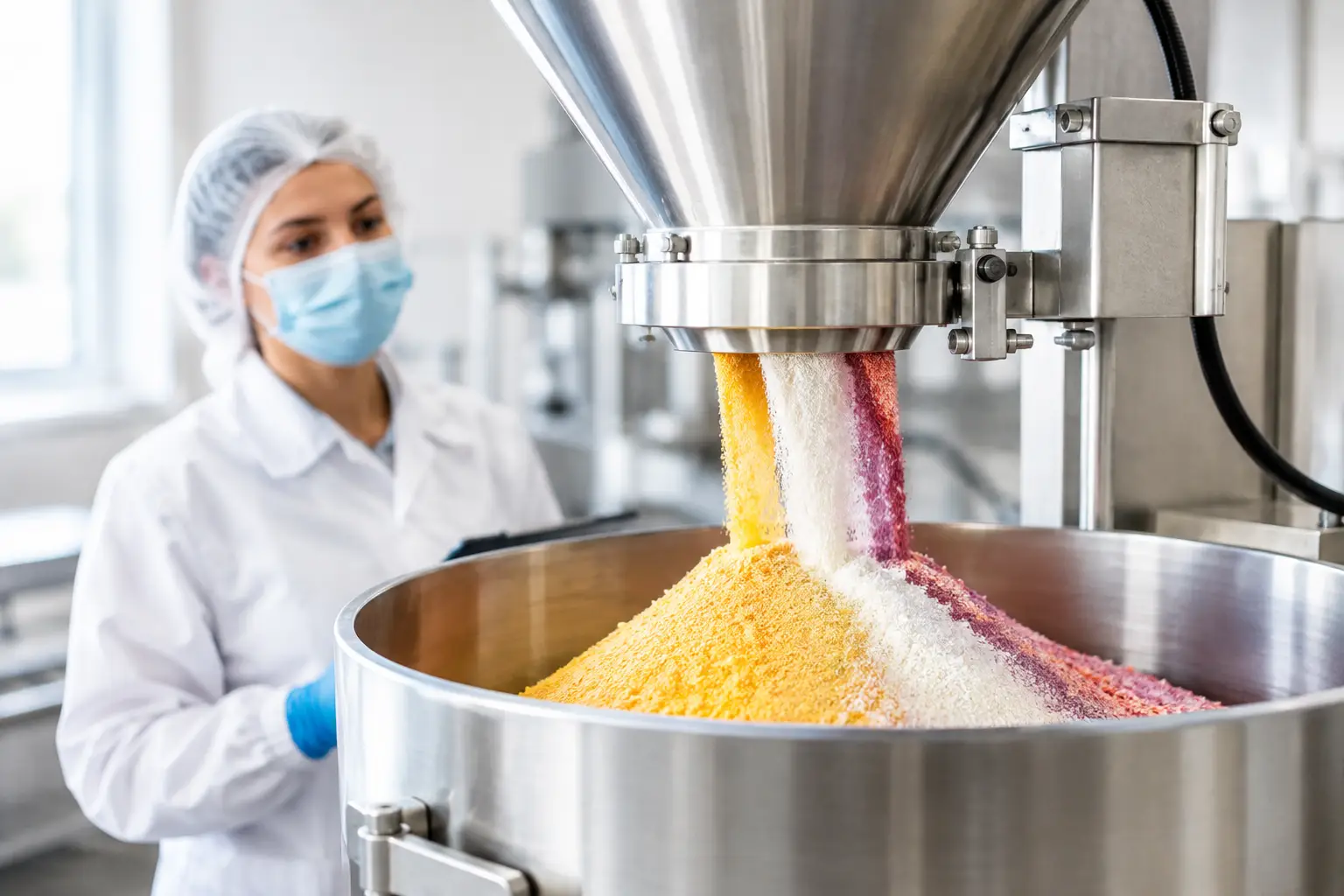
A ribbon blender performs best when it is treated as part of a complete production system. Loading method, weighing accuracy, upstream screening, downstream transfer, and packaging all influence the result. A highly uniform blend can still become inconsistent if it drops through an unsuitable conveying system or separates in an oversized surge hopper.
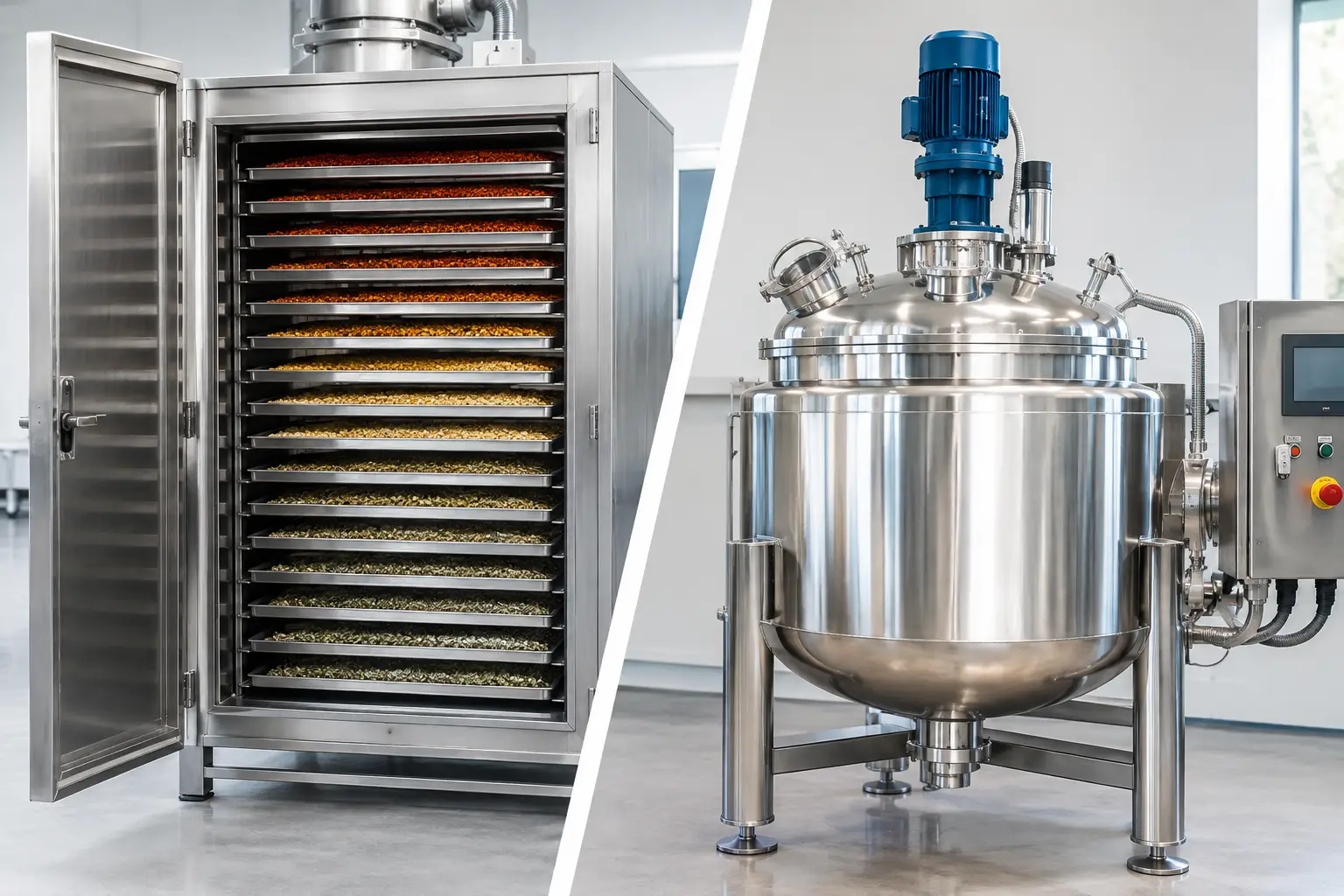
Useful configuration options may include load cells for batch weighing, automated ingredient addition points, jacketed troughs for temperature-sensitive processes, vacuum capability for specific deaeration or drying applications, and controls that store validated recipes. These features should be selected because they solve a defined process need, not because they add complexity.
For example, load cells may reduce manual weighing errors and improve traceability for a high-value color cosmetics line. A jacket may be justified for a paste that requires controlled temperature. In contrast, a straightforward manually loaded ribbon mixer may be the most cost-effective solution for a stable, single-shift powder operation with limited product changeovers.
PerMix works with manufacturers to align mixer configuration with the actual material, required capacity, sanitation standard, and operational goals. This application-focused approach helps avoid a common purchasing mistake: selecting a standard mixer first and trying to force a demanding formula into it later.
Validate Performance Before Full-Scale Production
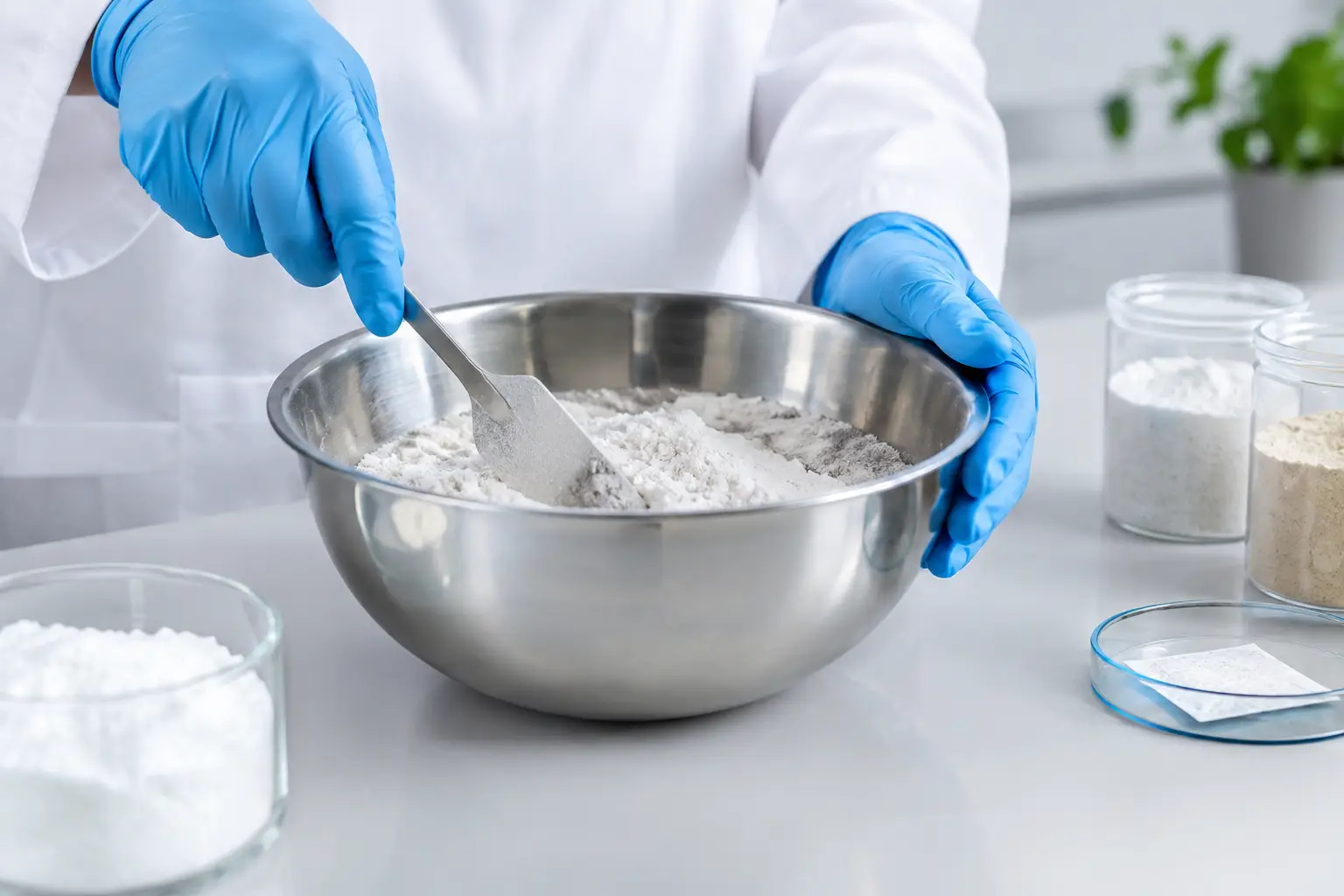
A cosmetic mixer should be evaluated by measurable results, not by visual appearance alone. Pigment distribution, active concentration, moisture uniformity, bulk density, particle integrity, and blend time can all be relevant quality indicators. The appropriate test plan depends on the formulation and the risk associated with variation.
Representative product trials are particularly valuable for formulations with low-dose ingredients, large density differences, or high color sensitivity. They provide an opportunity to confirm blend uniformity, determine the correct operating parameters, assess discharge behavior, and identify cleaning challenges before equipment is committed to production.
It is also wise to assess the full operating cycle. A mixer with a short blend time may not deliver the best overall output if loading, discharge, cleaning, or maintenance consumes excessive time. The most productive ribbon blender for cosmetics is the one that supports repeatable quality across the entire batch cycle, shift after shift.
Choose for Repeatability, Not Just Initial Cost
The lowest initial equipment price can become expensive when it produces uneven batches, retains product, requires frequent repairs, or adds hours to each changeover. Durable construction, correctly sized drives, dependable seals, accessible components, and a configuration suited to the formula protect both uptime and product quality.
A detailed discussion with a mixing specialist should cover your ingredients, target batch sizes, required throughput, cleaning procedures, plant layout, and downstream handling. Bring data on bulk density, particle size, moisture, viscosity where applicable, and any known flow or segregation issues. The better the process definition, the more confidently a mixer can be specified.
For cosmetic production, consistent blending is not an abstract equipment benefit. It is what keeps a powder shade true, a formula compliant, a packaging line supplied, and a production schedule on track. Select the ribbon mixer around that reality, and it becomes a dependable part of the process rather than the source of the next batch problem.