Choosing Chemical Mixer Materials for Your Process
A mixer can deliver the right shear, batch time, and blend uniformity yet still become the weak point in a chemical process if its wetted surfaces are poorly specified. Chemical mixer materials determine whether equipment withstands corrosion, avoids product contamination, and remains available for production between planned maintenance intervals.
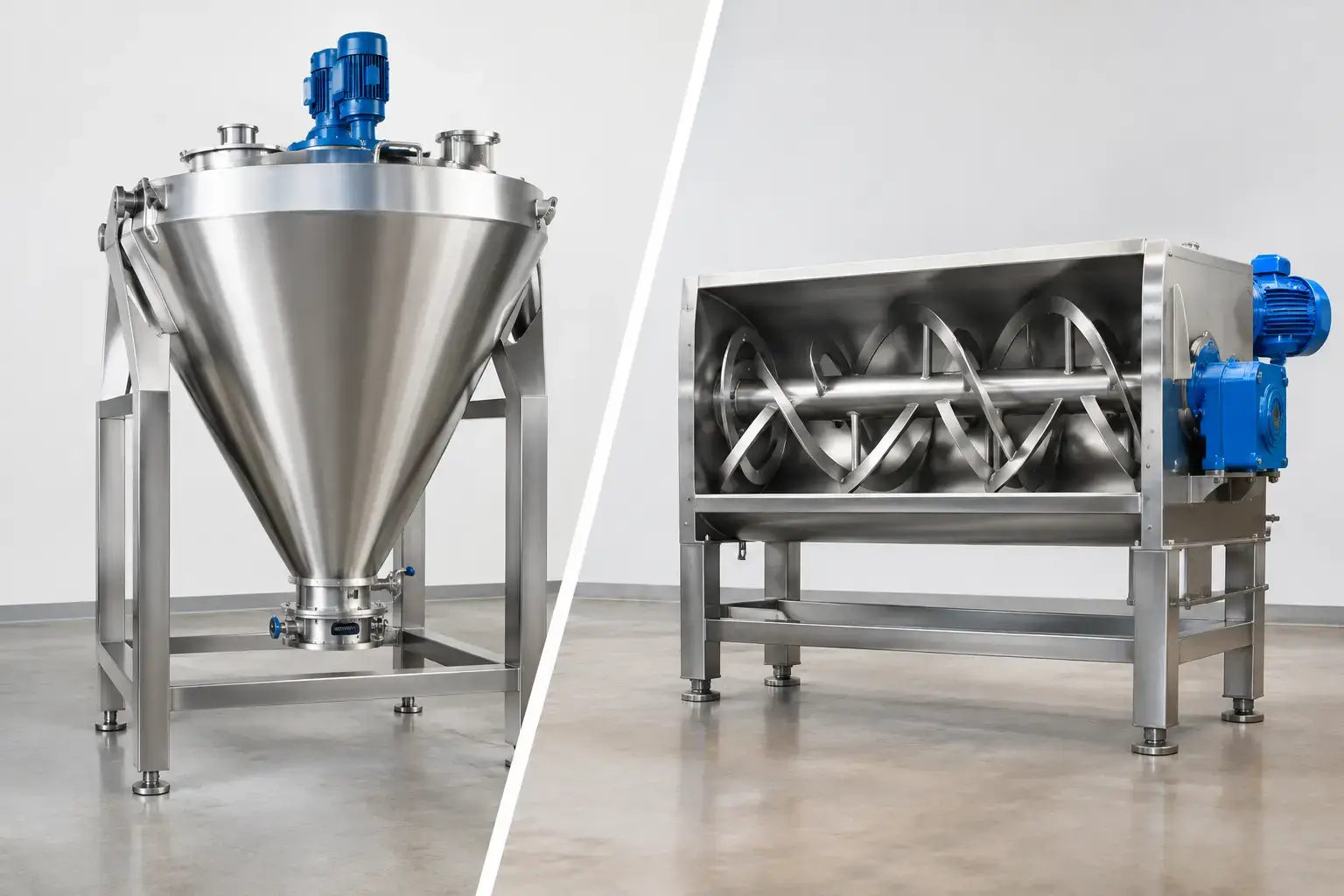
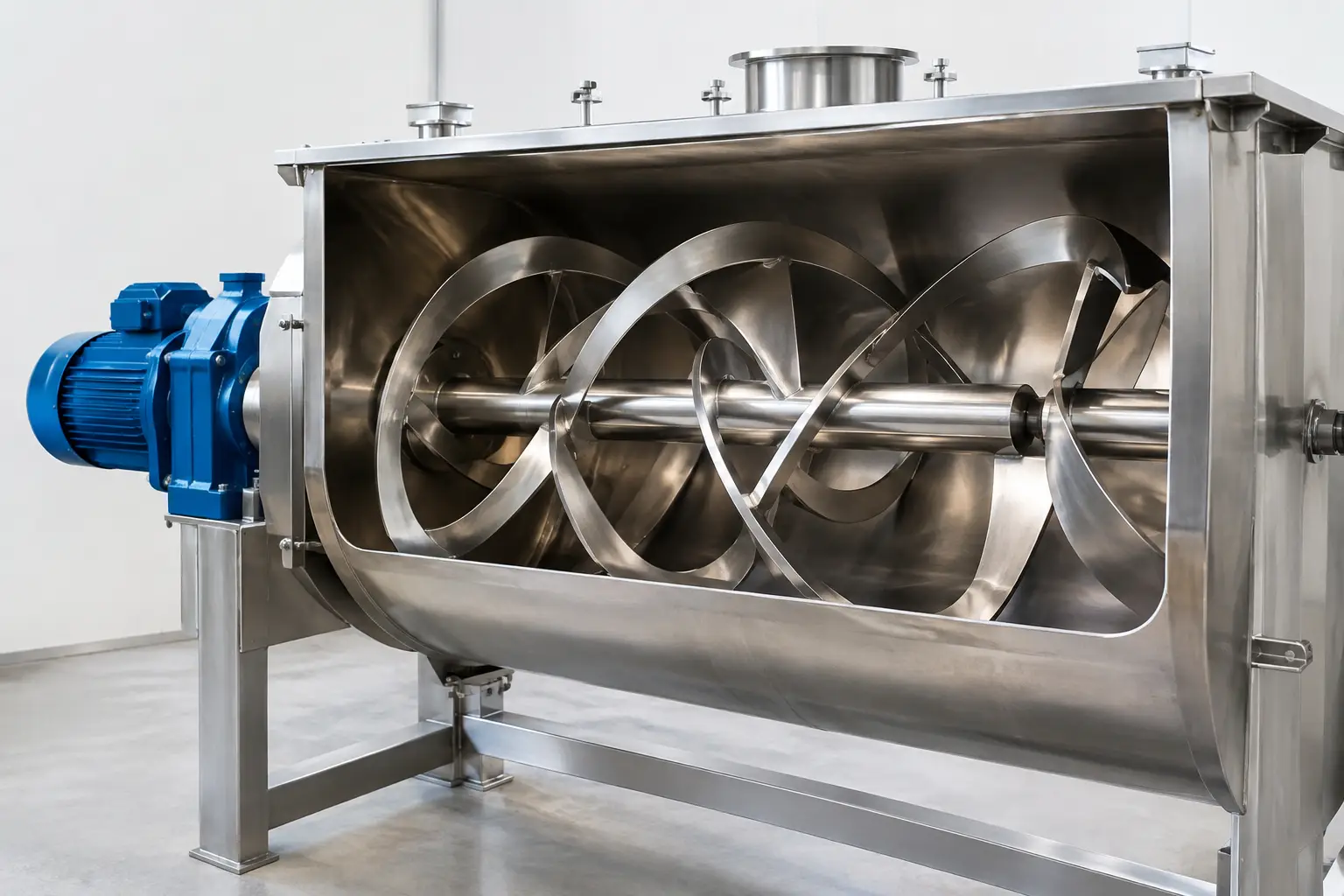
For ribbon mixers handling powders, granules, pastes, and viscous compounds, material selection is more than a vessel decision. The trough, inner and outer ribbons, shafts, agitator supports, discharge valve, seals, welds, and surface finish must work as a system. A corrosive material can find its way into crevices, attack a weld heat-affected zone, or accumulate beneath a damaged coating long before the mixer shell shows obvious failure.
Start With the Process, Not a Material Grade
There is no universally correct metal for chemical mixing. Stainless steel may be the practical choice for one formulation and an expensive mistake for another. The right selection begins with the actual operating conditions, including the chemical composition, concentration, moisture level, batch temperature, cleaning method, and expected residence time.
A dry powder may appear non-corrosive in storage but become highly aggressive when exposed to humidity during processing or washdown. Chloride-bearing ingredients are a common example. A mildly acidic slurry may be manageable at ambient temperature but cause accelerated attack when heated, mixed under vacuum, or subjected to frequent clean-in-place cycles. Product impurities matter as well, especially when recycled process streams or variable raw materials enter the batch.
Process engineers should evaluate the full exposure profile rather than the primary ingredient alone. This includes cleaning agents, sanitizers, solvents, purge media, and any product that may remain in the mixer after discharge. Material compatibility should also account for pressure and vacuum duty, as well as mechanical loads created by dense or abrasive formulations.
Common Chemical Mixer Materials and Their Limits
Carbon Steel for Dry, Non-Corrosive Service
Carbon steel remains a cost-effective option for many dry bulk materials that are non-corrosive and do not require a sanitary contact surface. It can be suitable for minerals, selected agricultural products, dry construction materials, and industrial blends where product discoloration or trace metal contamination is not a concern.
Its limitations are clear. Carbon steel is susceptible to oxidation and chemical attack when water, acidic components, salts, or corrosive vapors are present. Protective paint or lining can extend service life on non-contact surfaces, but coatings require inspection and repair. For a mixer handling a product where rust particles, coating flakes, or cleaning limitations are unacceptable, stainless steel is typically the more dependable investment.
Type 304 Stainless Steel for General Corrosion Resistance
Type 304 stainless steel is widely used in industrial mixing because it offers strong corrosion resistance, cleanability, and mechanical durability at a manageable cost. It performs well in many food, cosmetic, pharmaceutical, and general chemical applications involving neutral or moderately reactive materials.
However, 304 is not a default answer for chloride exposure. Salt-containing ingredients, chloride-based cleaners, and humid environments can create conditions for pitting or stress corrosion cracking. The risk increases with elevated temperatures, stagnant product zones, and poor drainage after washdown. When these factors are present, moving to 316 or another alloy is often justified.
Type 316L Stainless Steel for More Demanding Chemical Duty
Type 316L stainless steel contains molybdenum, which improves resistance to pitting and crevice corrosion compared with 304. Its lower carbon content also supports better corrosion performance in welded assemblies. For chemical mixer materials in contact with chlorides, mildly acidic compounds, wet granulations, and frequent cleaning cycles, 316L is commonly the preferred baseline.
That does not mean 316L solves every corrosion problem. Strong acids, highly concentrated caustics, halides, oxidizing media, and elevated-temperature applications may exceed its capabilities. Selecting 316L without reviewing the chemistry can result in premature damage at ribbon welds, valve seats, shaft interfaces, and other hard-to-inspect areas.
High-Alloy Metals for Severe Corrosion
Where the process includes aggressive acids, solvents, chlorinated compounds, or highly corrosive liquid phases, high-alloy materials may be required. Duplex stainless steels can provide increased strength and improved resistance in certain chloride-rich conditions. Nickel-based alloys, such as Hastelloy grades, are often considered for severe acid service and specialty chemical production.
These materials carry a higher initial cost, so they should be applied where their performance value is real. The calculation should include downtime risk, replacement costs, product loss, maintenance labor, and safety exposure. In a high-value batch process, a more corrosion-resistant alloy can be less expensive over the equipment lifecycle than repeated repairs to a lower-grade mixer.
Surface Finish Matters as Much as Base Metal
The same stainless steel grade can perform very differently depending on how it is fabricated and finished. Rough surfaces retain product. Crevices around attachments trap moisture and cleaning chemicals. Poorly finished welds can become initiation points for corrosion or contamination.
For regulated and hygiene-sensitive operations, interior surfaces should be specified with a finish appropriate to the product and cleaning method. A smoother finish supports product release and helps reduce residue buildup, especially with cohesive powders, sticky pastes, and high-fat formulations. It can also shorten cleaning time and limit cross-batch carryover.
Weld quality deserves specific attention. Continuous, properly finished welds are preferable in product-contact areas because they minimize pockets where material can collect. The mixer design should also provide access for inspection, cleaning, and maintenance. A chemically compatible alloy is less valuable if the equipment geometry creates persistent retention zones.
Do Not Overlook Ribbons, Seals, and Discharge Components
A mixer shell may be built from 316L while other wetted components receive less scrutiny. That is a common source of avoidable failures. The ribbons and shaft see continuous product contact and mechanical loading. The discharge valve is exposed to product during every batch and can be especially vulnerable if material compacts around sealing surfaces.
Elastomers used in door gaskets, valve seals, and shaft seals need their own compatibility review. A solvent that does not harm stainless steel may swell, harden, or degrade an unsuitable elastomer. Temperature, vacuum, cleaning chemistry, and abrasive particles all affect seal life. Material selection should include the entire product-contact assembly, not just the trough.
For abrasive chemicals and mineral-filled blends, wear resistance becomes a separate design requirement. Stainless steel may offer adequate corrosion resistance but wear rapidly in high-friction zones. Hard-facing, replaceable wear components, specialized coatings, or engineered ribbon geometry may be appropriate, depending on the product and required cleaning standard.
Coatings and Linings: Useful, but Not Automatic
Polymer linings and protective coatings can provide excellent resistance to select chemicals. PTFE-based linings, fluoropolymer systems, rubber linings, and ceramic coatings each have applications where bare metal is not the best answer. They may also improve release characteristics for difficult products.
The trade-off is that coatings can be damaged by abrasion, impacts, thermal cycling, or improper cleaning. Once compromised, a lining can allow chemicals to migrate beneath the surface. This makes inspection discipline essential. A coating should be selected as part of a complete operating and maintenance strategy, not treated as a permanent substitute for compatible base materials.
Match Mixer Construction to the Cleaning Strategy
The cleaning method often determines material requirements as much as the product itself. Manual dry cleaning places different demands on a mixer than wet washdown or clean-in-place operation. Caustic cleaning agents, acids, steam, and sanitizers each affect metals, elastomers, and surface finishes differently.
Vacuum ribbon mixers and dryers add further considerations. The vessel must withstand pressure differentials while maintaining product integrity, and components must tolerate both the process temperature and cleaning cycle. Where solvent recovery or volatile materials are involved, the selected materials should also support the required safety and containment approach.
A well-engineered ribbon mixer considers these factors early, before fabrication decisions are locked in. PerMix works with customers to align mixer configuration, contact materials, surface treatment, and discharge design with the actual demands of the process.
Build the Specification Around Lifecycle Value
The lowest-cost material choice is not always the lowest-cost mixer. Corrosion-related failures can interrupt batch schedules, create quality investigations, increase cleaning labor, and shorten equipment life. Conversely, specifying a premium alloy for a benign dry blend may add capital cost without meaningful operational benefit.
The most productive approach is to define the chemistry, operating envelope, sanitation requirements, and maintenance expectations before selecting the construction materials. Include realistic upset conditions, not only normal operation. Ask what happens if a wet batch sits overnight, a cleaner is overdosed, a raw material changes, or a scheduled washdown becomes more frequent.
When chemical mixer materials are selected with those realities in mind, the mixer becomes a durable production asset rather than a recurring maintenance concern. A detailed application review before purchase can protect blend quality, improve equipment availability, and give your operation a clearer path to consistent output.