Choosing a Chemical Ribbon Blender
A chemical ribbon blender usually gets attention only after something goes wrong – off-spec batches, visible segregation, long cleaning cycles, or a mixer that cannot keep pace with production. In chemical processing, those problems are expensive. They affect quality, waste raw materials, slow throughput, and create avoidable downtime. Choosing the right blender is less about buying a standard machine and more about matching mixer design to material behavior, batch size, cleaning requirements, and plant operating goals.
What a chemical ribbon blender is designed to do
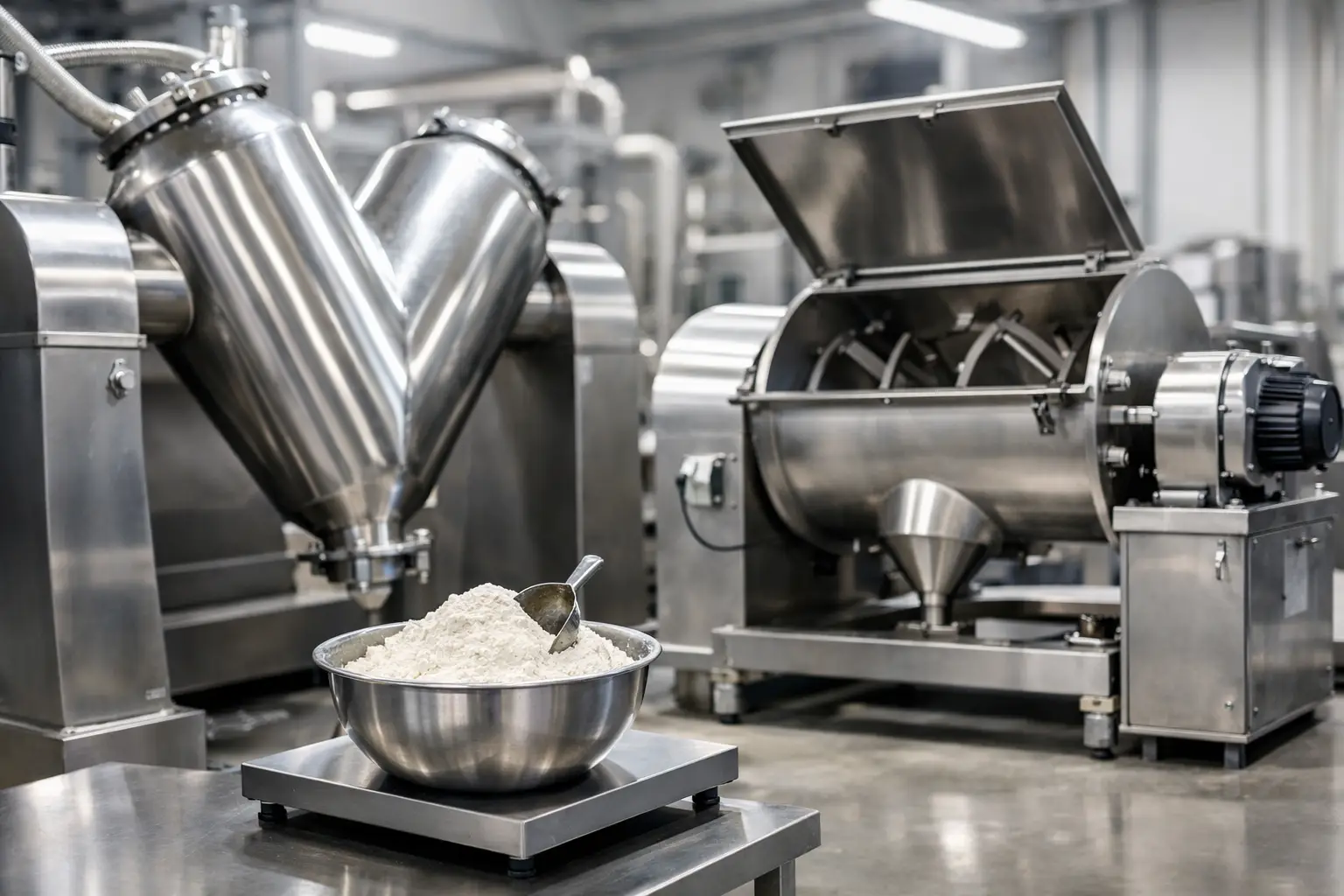
A ribbon blender is a horizontal mixing system built around a U-shaped trough and a ribbon agitator that moves material in opposing axial and radial directions. The inner and outer ribbons work together to circulate powders, granules, and certain pastes throughout the vessel, producing a consistent blend across the batch.
For chemical manufacturers, that basic principle matters because many formulations are not forgiving. Bulk density can vary. Particle sizes may be uneven. Additives may be present at low inclusion rates. Some products are free-flowing, while others are cohesive or prone to sticking. A properly configured ribbon blender helps manage those realities with predictable, repeatable mixing performance.
The key point is that not every ribbon blender is automatically suitable for chemical duty. A chemical ribbon blender often needs more than a standard trough and agitator. It may require upgraded materials of construction, tighter tolerances, specialized seals, abrasion resistance, solvent-compatible finishes, dust control features, heating or cooling jackets, vacuum capability, or customized discharge geometry.
Why mixer selection affects more than blend quality
Blend uniformity is the obvious target, but industrial buyers rarely make decisions based on one metric. The right mixer also affects cycle time, energy use, maintenance burden, sanitation, worker safety, and long-term equipment life.
If a mixer reaches target homogeneity quickly but takes too long to discharge or clean, the real production gain may be limited. If it handles one formulation well but struggles with another, flexibility becomes a problem. If shaft seals wear prematurely in a demanding environment, maintenance costs rise and uptime falls. That is why process engineers and plant managers typically evaluate the full operating picture rather than the mixing chamber alone.
In chemical plants, the trade-offs can be significant. A more aggressive agitator design may improve performance with difficult materials but increase wear in abrasive applications. A tighter seal arrangement may better contain fine powders, yet it can also affect service complexity. Jacketed designs support temperature-sensitive processing, but they add system considerations that must be accounted for during specification and installation.
How to evaluate a chemical ribbon blender for your process
The best starting point is not machine size. It is the product itself. Material behavior determines whether a ribbon blender is a strong fit and what configuration will produce the most reliable result.
Start with bulk material characteristics
Ask how the material flows, packs, and responds during agitation. Free-flowing powders typically blend differently than cohesive or moisture-sensitive products. Fine powders may create dusting issues that influence seal and cover design. Abrasive solids can affect agitator and trough wear. Sticky materials may require choppers, specialized finishes, or alternate mixer configurations.
Batch density also matters. The same working volume can represent very different batch weights depending on the formulation. Underestimating density can lead to undersized drives or compromised mixing performance. Overestimating it can push a buyer toward unnecessary capital cost.
Consider ingredient ratios and blend sensitivity
Many chemical batches involve minor ingredients that must distribute evenly throughout a larger base powder. If those low-percentage components are critical to performance, the blender must generate consistent movement across the full working volume without dead zones.
At the same time, some products are fragile. Excessive mixing can alter particle shape, promote heat buildup, or increase segregation after discharge. Faster is not always better. The right design balances mixing intensity with product protection.
Match discharge and downstream handling
Discharge design has a direct effect on usable throughput. A blender that mixes well but leaves residual material in the trough can reduce yield and complicate cleaning. Valve style, outlet size, and equipment positioning should align with how material moves to the next stage, whether that is packaging, conveying, screening, or additional processing.
This is also where plant layout matters. Limited headroom, platform constraints, or integration with existing feeders and hoppers can influence the practical design choice.
Design features that often matter in chemical applications
A chemical ribbon blender is rarely a one-specification purchase. Most serious applications depend on a combination of design features working together.
Materials of construction and finish
Carbon steel may be suitable for some industrial chemical products, while stainless steel is often preferred where corrosion resistance, cleanliness, or contamination control are priorities. Internal surface finish affects cleanability and product release. The right choice depends on chemistry, cleaning method, and regulatory expectations.
Seal design and containment
Fine powders, hazardous materials, and solvent-related processes can place high demands on shaft seals. The goal is not only to reduce leakage but also to protect bearings, preserve product integrity, and support safe operation. Seal selection should reflect the actual process environment, not a generic assumption.
Heating, cooling, or vacuum capability
Some chemical blends require controlled temperatures to improve flow, reduce moisture, support reactions, or condition the product before discharge. Jacketed ribbon blenders and vacuum-capable systems can expand what the equipment can do, but only if they are engineered around the application. Thermal transfer rates, vacuum levels, and residence time all influence performance.
Cleanability and maintenance access
Quick access covers, cleanout doors, spray devices, and service-friendly layouts can make a measurable difference in changeover time. In multi-product environments, that matters as much as nominal mixing speed. Reduced downtime often creates more value than a small gain in batch time.
When a ribbon blender is the right choice – and when it may not be
Ribbon blenders are highly effective for many dry and damp chemical formulations, especially where consistent batch blending is required at production scale. They are well suited to powders, granules, and some paste-like materials when the viscosity and flow behavior remain within the blender’s design range.
That said, there are cases where another mixer type may be more suitable. Highly fragile particles, extremely high-viscosity masses, or formulations that demand very fast dispersion of liquids may benefit from alternate technologies or added process features. This is where application-specific engineering becomes important. The goal is not to force every product into one machine category. It is to identify the mixer design that delivers stable performance under real operating conditions.
Common mistakes buyers make
One of the most common mistakes is sizing a mixer around total vessel volume instead of working capacity. Ribbon blenders need the right fill level to create proper material movement. Too little product can reduce mixing efficiency. Too much can limit circulation and increase strain on the drive.
Another issue is treating all chemical products as if they behave the same way. Two powders with similar batch weights can perform very differently because of particle shape, moisture content, or flowability. Buyers who specify only capacity and motor horsepower often miss the process details that determine whether the machine will perform as expected.
There is also a tendency to focus on purchase price without fully considering operating cost. Lower-cost equipment can become expensive if it requires frequent maintenance, consumes excessive energy, extends changeovers, or produces inconsistent batches that need rework.
What industrial buyers should expect from a supplier
A qualified mixer supplier should ask detailed questions about the application. Product characteristics, batch size, target cycle time, plant constraints, cleaning methods, temperature requirements, and safety considerations all belong in the discussion. If the conversation starts and ends with standard dimensions and a quote, the specification process is probably too shallow.
Industrial buyers should expect a solution-oriented approach grounded in engineering. That includes selecting the appropriate ribbon geometry, drive arrangement, discharge design, materials of construction, and optional features based on the actual process. For manufacturers running multiple formulations or planning future expansion, configurability matters just as much as current performance.
PerMix Ribbon Mixers approaches this category with that application-specific mindset, helping processors match ribbon mixing technology to demanding bulk solids and paste handling requirements without losing sight of durability, efficiency, and maintainability.
The business case for choosing well
A properly specified chemical ribbon blender supports more than consistent mixing. It can improve batch repeatability, reduce material loss, shorten cleaning time, and make production scheduling more predictable. Those gains affect labor efficiency, throughput, and total cost of ownership over the life of the equipment.
For chemical processors, reliability is rarely a side issue. It is part of product quality and plant profitability. The best mixer choice is the one that fits the material, the process, and the production environment with enough precision that operators can run it confidently day after day.
If you are evaluating new mixing capacity or replacing equipment that has become a bottleneck, the smartest next step is to define the process requirements in detail before comparing machines. That is where better outcomes usually start.