Choosing an Energy Efficient Ribbon Mixer
Power consumption in mixing is rarely the first line item that triggers a capital equipment review. More often, the problem shows up as slow batch times, inconsistent blends, rising maintenance costs, or heat buildup that affects product quality. That is where an energy efficient ribbon mixer becomes a practical advantage. In the right application, it reduces operating cost while improving mixing consistency, protecting sensitive materials, and supporting more predictable production.
For plant managers and process engineers, the question is not simply how to use less motor power. The better question is how to get the required blend quality, throughput, and sanitation performance with the least wasted motion, least avoidable downtime, and best fit for the material being processed. Energy efficiency in a ribbon mixer is a system-level outcome, not a single specification on a data sheet.
What makes an energy efficient ribbon mixer different
A ribbon mixer becomes energy efficient when it moves material effectively without forcing the machine to work harder than the application requires. That starts with agitator geometry. A properly designed double ribbon agitator creates a balanced axial and radial movement pattern, pulling material in opposing directions to achieve fast, homogeneous blending. When that flow pattern is matched to bulk density, particle size, fill level, and batch objective, the mixer reaches target uniformity in less time and with less wasted energy.
The trough design matters just as much. A well-proportioned horizontal mixing chamber helps the ribbon assembly maintain consistent product movement across the full batch. If the chamber is oversized, underfilled, or poorly configured for the product, the mixer can spend excess time circulating material inefficiently. If it is too tight for the application, torque demand can rise and create unnecessary strain on the drive system.
Drive sizing is another area where buyers often misread efficiency. A larger motor is not automatically a better choice. The most effective design uses enough installed power to handle startup load, product resistance, and process variation without excessive oversizing. When the drive package is aligned with the actual material characteristics, the machine can maintain dependable performance without consuming more power than necessary.
Why energy efficiency matters beyond utility costs
Electricity savings are valuable, but industrial buyers usually see the bigger return elsewhere. A mixer that reaches blend uniformity faster can increase batch turnover. A design that minimizes dead zones and material buildup can shorten cleaning cycles. A machine that runs with lower mechanical stress can reduce wear on seals, bearings, and drive components.
These gains compound over time. In food, pharmaceutical, and specialty chemical production, the cost of downtime often exceeds the cost of electricity. If an energy efficient ribbon mixer helps stabilize the process, reduce rework, and support repeatable output, the business case becomes much stronger than a simple power comparison.
There is also a product quality dimension. Excessive friction and prolonged mixing can damage fragile particles, alter flow properties, or introduce unwanted temperature rise. This is particularly relevant for powders, coated particles, heat-sensitive ingredients, and formulations where particle integrity affects downstream processing. Efficient mixing is not only about using less energy. It is about using that energy in a controlled, productive way.
How mixer design influences power draw
The most efficient ribbon mixer designs are built around the application rather than forced into it. Bulk solids with free-flowing behavior need a different mixing strategy than cohesive powders or wet mass blends. Granules, fibers, and abrasive products each change how the agitator interacts with the batch.
Ribbon pitch, ribbon width, agitator clearance, shaft speed, and fill percentage all influence energy demand. A mixer operating at the wrong speed may still blend the batch, but it can consume more power and increase wear while doing so. The same is true when discharge design, inlet arrangement, or internal spray systems interfere with material flow.
This is why application-specific engineering has a direct effect on efficiency. A ribbon mixer selected only by vessel volume can underperform in real production. A mixer selected by material behavior, batch objective, required cycle time, and plant constraints is far more likely to deliver sustainable and cost-effective operation.
Energy efficient ribbon mixer selection by application
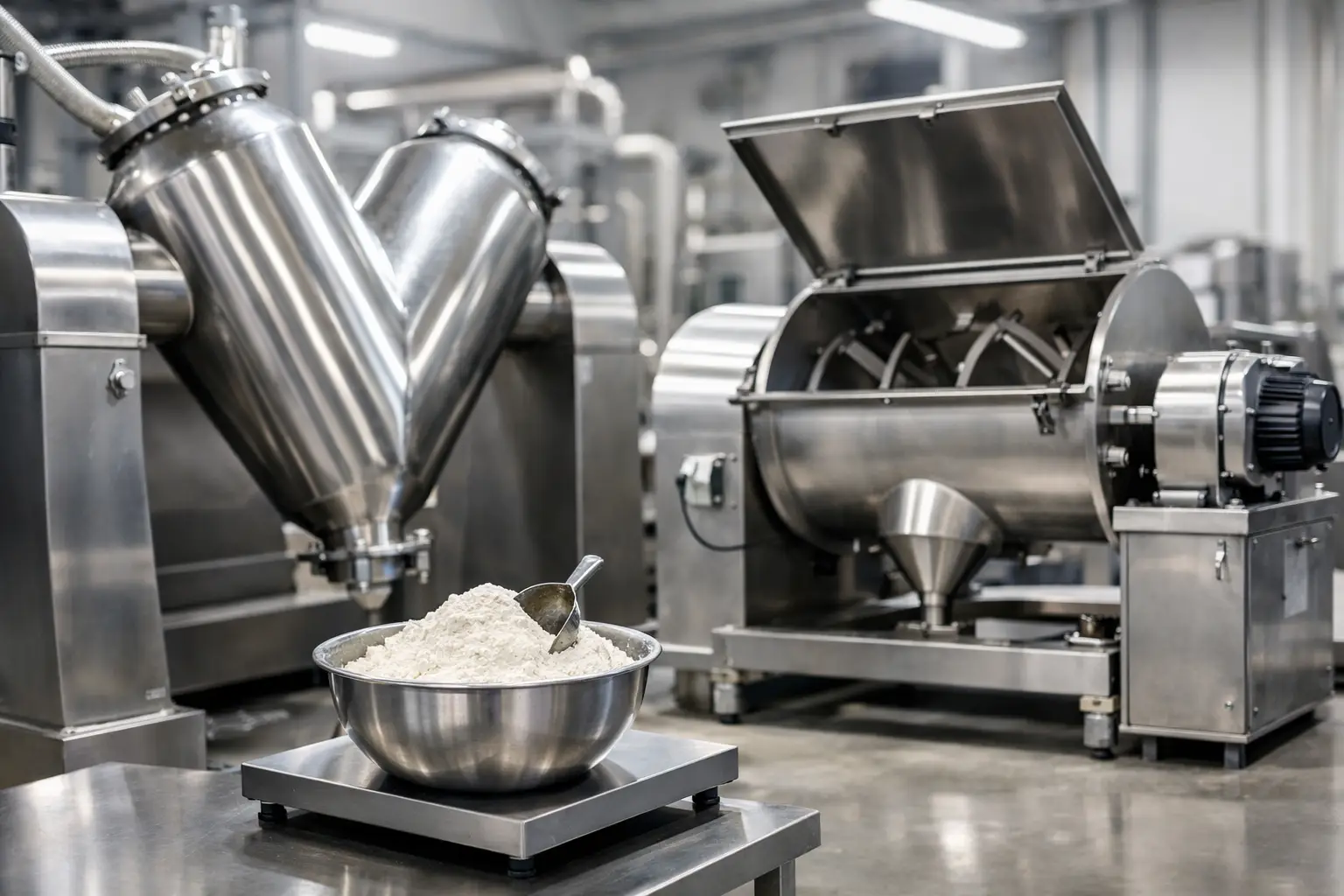
Not every ribbon mixer configuration performs the same way across product categories. Horizontal ribbon mixers are often the preferred choice for fast, high-capacity blending of powders and granules because they combine strong convective mixing with relatively simple mechanical design. When configured correctly, they offer an effective balance of throughput, uniformity, and energy use.
Vertical ribbon mixers can be a strong fit where floor space is limited or where specific flow characteristics favor vertical movement. Their efficiency depends heavily on the product and batch size. In some applications, they provide a compact and practical answer. In others, a horizontal design will reach the target blend faster with lower power per batch.
Vacuum ribbon mixers and ribbon dryers introduce another layer of process efficiency. They can reduce handling steps by combining blending with drying or vacuum-assisted processing in one system. While the equipment itself is more specialized, the overall process may be more energy efficient because it eliminates transfers, shortens cycle time, and reduces the need for separate machinery.
That trade-off is worth evaluating carefully. The most energy efficient choice is not always the machine with the lowest standalone motor load. It is often the system that completes the full process with the fewest steps, least product loss, and lowest total operating burden.
Common mistakes that reduce efficiency
One of the most common issues is running a mixer outside its intended fill level. Underfilling can reduce ribbon engagement with the product and create uneven movement. Overfilling can increase resistance and extend mixing time. In both cases, the machine uses energy less effectively.
Another frequent problem is using a ribbon mixer for materials that need a different mixing principle. Extremely delicate products, highly adhesive pastes, or formulations with unusual rheology may require customized internals or a different mixer type altogether. Trying to force a standard design into a poor-fit application usually leads to higher power use, lower uniformity, and more maintenance.
Maintenance practices also influence energy performance. Worn ribbons, misalignment, buildup on internal surfaces, and degraded seals increase friction and reduce mixing effectiveness. Over time, even a well-designed mixer can become less efficient if preventive maintenance is inconsistent.
Controls should not be overlooked. Variable frequency drives, timed recipes, and process monitoring can prevent overmixing and reduce unnecessary energy consumption. If operators routinely run the mixer longer than needed because blend endpoints are uncertain, the plant is paying for inefficiency every batch.
What buyers should ask before specifying equipment
A serious equipment review should go beyond asking for motor size and capacity. Buyers should ask how the mixer was sized for the product, what assumptions were made about bulk density and fill level, how discharge performance affects cycle time, and whether the agitator design is optimized for the material.
It is also worth asking how the machine supports sanitation, inspection, and maintenance. A mixer that is efficient during operation but difficult to clean may not be efficient in the broader production schedule. The same applies to component access and spare parts planning. Long-term energy performance is closely tied to long-term mechanical condition.
For regulated industries, validation and repeatability matter as much as throughput. The mixer must deliver predictable results from batch to batch without forcing operators to compensate for design limitations. That consistency reduces waste, protects quality targets, and supports a more stable operating cost profile.
PerMix approaches ribbon mixer selection with that broader view in mind, aligning mixer configuration with product behavior, process goals, and plant realities rather than relying on generic equipment matching.
The business case for a better mixer
An energy efficient ribbon mixer should be evaluated as a production asset, not just a utility load. If it shortens mixing cycles, improves first-pass quality, lowers maintenance demand, and supports cleaner changeovers, it contributes directly to profitability. The machine becomes easier to justify because the return shows up in multiple areas of plant performance.
That is especially relevant for facilities facing tighter margins, labor pressure, and stricter quality expectations. A mixer that wastes time, power, and product creates hidden costs throughout the operation. A properly engineered system does the opposite. It gives production teams more control, more consistency, and fewer avoidable interruptions.
The right ribbon mixer is not simply the one that uses the least electricity on paper. It is the one that produces the required result with the best balance of energy use, throughput, reliability, and process fit. For manufacturers running demanding blending applications, that balance is where real efficiency starts.