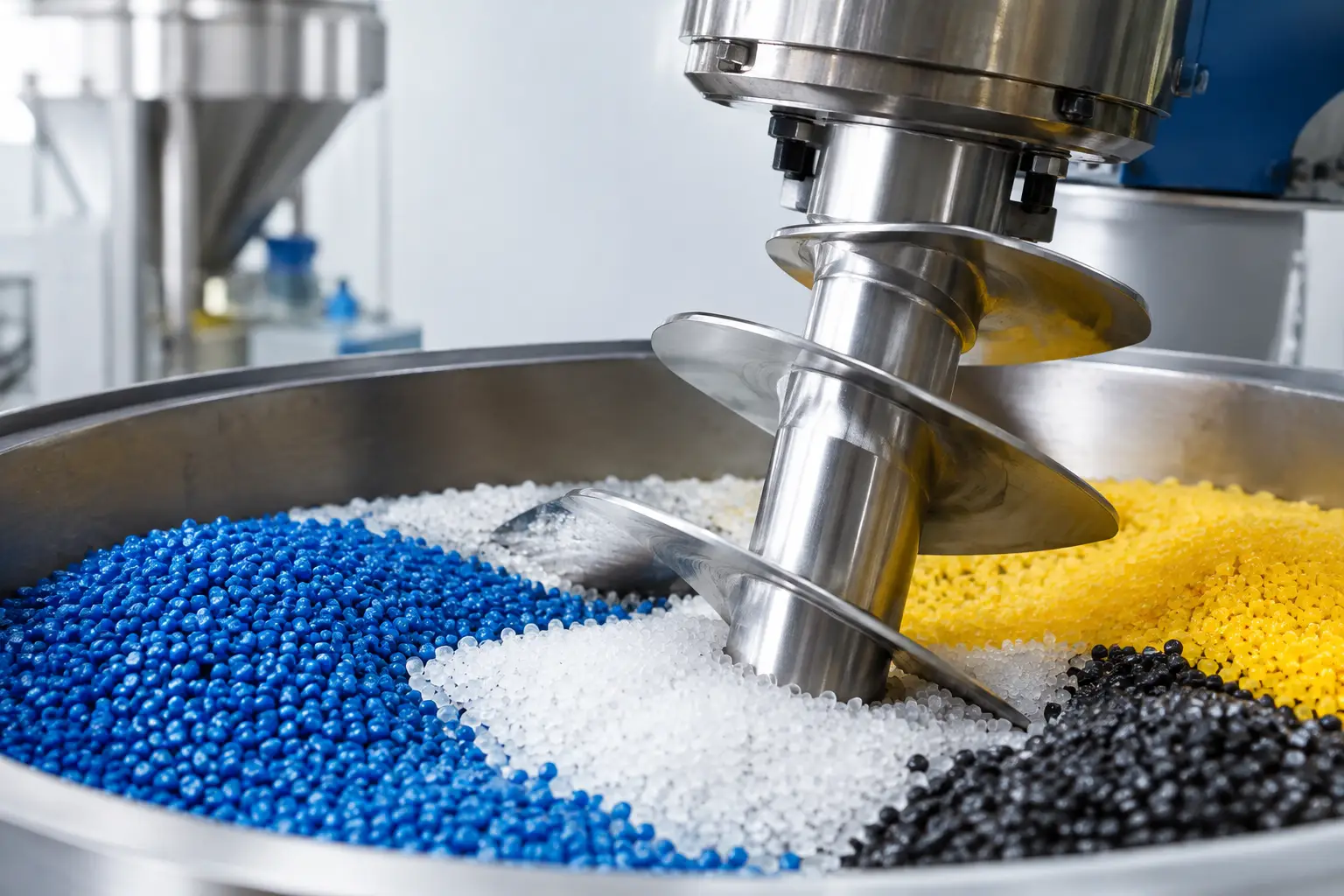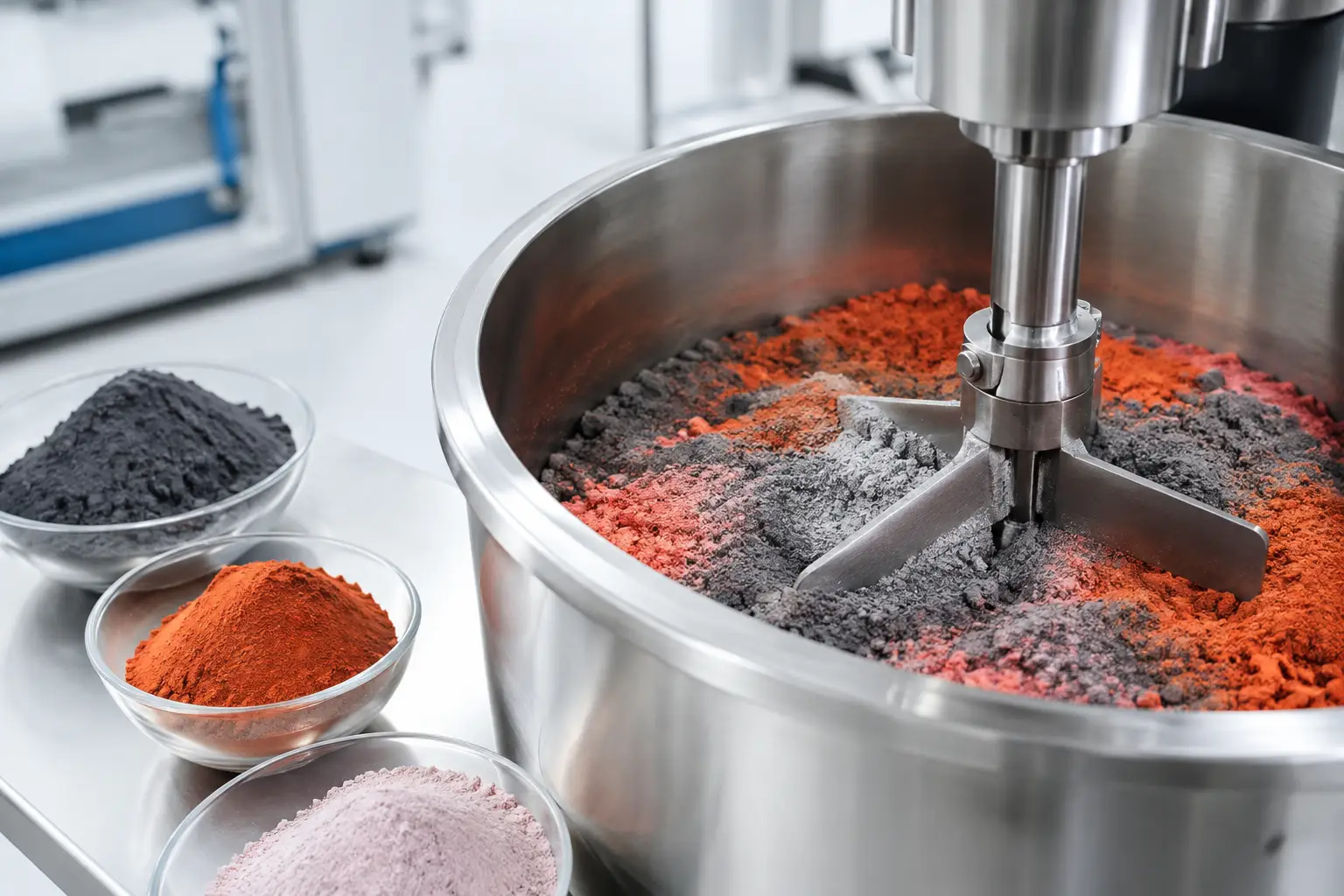
Ribbon Blenders for Consistent Batch Mixing
A blend can look uniform at discharge and still fail where it matters: at the packaging line, in a downstream reactor, or during final quality testing. Ribbon blenders are designed to prevent that outcome by creating controlled, repeatable movement throughout a batch of powders, granules, bulk solids, and selected pastes. For manufacturers managing product quality, throughput, and operating cost at the same time, mixer selection is a process decision, not simply an equipment purchase.
The right ribbon mixer supports homogeneous blending without unnecessary cycle time, material degradation, or difficult cleanup. The wrong design can contribute to segregation, long batch cycles, residue buildup, and avoidable downtime. Understanding how ribbon blending works helps plant teams specify equipment that fits both the material and the production objective.
How Ribbon Blenders Create a Homogeneous Mix
A horizontal ribbon blender uses a U-shaped trough and a centrally mounted agitator fitted with inner and outer helical ribbons. As the agitator rotates, the outer ribbon typically moves material from the vessel ends toward the center, while the inner ribbon moves material from the center outward. This opposing axial flow is combined with radial and circumferential movement, continually dividing and recombining the batch.
That multi-directional action is why ribbon blenders are widely used for dry blends that need reliable distribution of ingredients. They can efficiently combine powders with different particle sizes, densities, and concentrations when the material behavior is suitable for convective mixing. A properly configured system can also incorporate minor liquid additions into a dry carrier, provided the addition rate, spray pattern, and batch formulation are evaluated correctly.
Mixing performance depends on more than agitator speed. Fill level, ribbon geometry, vessel clearances, particle characteristics, ingredient addition sequence, and discharge design all affect the final result. A mixer that performs well with a free-flowing seasoning blend may require different controls or a different agitator design for cohesive mineral powders or a high-viscosity paste.
Where Ribbon Blenders Fit Best
Ribbon blenders are a practical choice for many batch processes because they handle a broad range of bulk materials and can be configured around plant requirements. Common applications include food ingredients, nutraceutical powders, chemical premixes, fertilizer products, plastic compounds, cosmetics, and agricultural formulations.
In food and pharmaceutical-related production, sanitation and repeatability often drive the specification. Smooth internal surfaces, appropriate shaft sealing, cleanable spray devices, and validated discharge performance can reduce the risk of cross-contamination and product hold-up. Depending on the application, material construction and finish requirements may be as critical as the mixer’s basic capacity.
For chemical, polymer, and industrial mineral producers, the primary concern may be the ability to move difficult powders consistently while maintaining batch throughput. Some formulations are abrasive, moisture-sensitive, or prone to bridging. Others require liquid binder addition, heating or cooling, vacuum drying, or vapor removal as part of the same operation. A standard horizontal mixer may be sufficient for one process, while another calls for a vacuum ribbon mixer and dryer designed as an integrated processing vessel.
The key is to evaluate the actual material, not just its general category. Two products described as “powder” can behave entirely differently under shear, compression, humidity, and temperature.
Selecting the Right Ribbon Blender Configuration
The most productive equipment specification begins with process data. Capacity alone is not enough. A supplier should understand the target batch weight and volume, bulk density range, desired blend uniformity, cycle time, material flow behavior, and any regulatory or sanitation requirements.
Several configuration choices deserve early attention:
- Working volume and fill level: Ribbon mixers are generally most effective within a defined operating range. Oversizing can reduce mixing efficiency, while overfilling can restrict material circulation.
- Ribbon and agitator design: Standard double ribbons work well for many blends, but paddle-ribbon combinations or specialized agitators may better suit fragile particles, sticky materials, or liquid additions.
- Drive system: Motor power, gearbox selection, and variable-speed control must match the material’s resistance and the intended process duty.
- Discharge valve: A full-width bomb-bay, slide-gate, or other discharge arrangement can influence cleanout, batch turnover, and the risk of retained material.
- Seals and construction: Shaft seals, stainless steel grades, surface finish, and sanitary details should align with the operating environment and product-contact requirements.
It also matters whether the mixer must perform one task or several. A mixer intended only for dry powder blending does not need the same vessel design as one that must blend, apply liquid, operate under vacuum, and dry the product. Combining operations may reduce transfers, handling losses, and floor-space demands, but it can increase initial engineering requirements. The best solution depends on whether the process benefits from consolidation or from dedicated equipment at each stage.
Managing Common Mixing Challenges
Segregation is one of the most common concerns in bulk-solid processing. Even when the mixer produces a uniform blend, materials can separate during transport, discharge, or filling if there are large differences in particle size, density, or shape. The answer may involve mixer settings, but it may also require changes to ingredient handling, transfer velocity, hopper design, or packaging procedures.
Liquid addition presents another frequent challenge. A small amount of oil, flavor, binder, or active ingredient can be distributed effectively when it is introduced through a properly designed spray system and allowed adequate mixing time. Adding liquid too quickly or at a single point can create agglomerates and wet pockets. For higher liquid levels or materials that become paste-like, a different mixer configuration may provide better results than a conventional ribbon arrangement.
Cleaning requirements should be addressed before purchase rather than after installation. Some products tolerate a practical dry cleanout between batches. Others require washdown, validated cleaning procedures, or strict allergen control. Internal geometry, access doors, shaft seals, spray coverage, and drainability all influence how quickly a unit can be returned to service.
Horizontal, Vertical, and Vacuum Ribbon Mixing Options
Horizontal ribbon mixers are often preferred for efficient batch blending and broad process versatility. Their horizontal design provides strong material movement and convenient options for discharge, liquid addition, and process controls. They are a proven fit for a wide range of powder, granule, and paste applications.
Vertical ribbon mixers can be advantageous where floor space is limited or where a process benefits from vertical material circulation. Their geometry may also support certain feed and discharge arrangements. As with any mixer, performance should be confirmed against the product’s flow properties and batch requirements rather than assumed from vessel orientation alone.
Vacuum ribbon mixers and dryers serve processes that require more than blending. By operating under vacuum, these systems can support drying, deaeration, solvent removal, or temperature-sensitive processing in a closed vessel. They are especially relevant when product handling, environmental control, and reduced transfers are central to process efficiency.
PerMix approaches these options as configurable process solutions, matching mixer geometry, agitation, controls, and auxiliary features to the realities of each application.
Evaluating Performance Before Full-Scale Purchase
Reliable mixing results should be demonstrated, not inferred from a brochure. For critical applications, pilot testing or representative trials can establish expected blend time, uniformity, power demand, liquid incorporation behavior, and discharge characteristics. Samples should be taken from multiple locations and evaluated using the quality criteria that matter to the finished product.
This testing phase also reveals practical details that are easy to overlook during specification. Can the material be loaded without dusting? Does the discharge clear completely? Does the formulation compact after sitting? Will the mixer need heating, cooling, vacuum capability, or an inert gas atmosphere? Answers to these questions protect both product quality and capital investment.
A well-specified ribbon blender becomes part of a stable production system: it reduces batch variability, supports predictable schedules, and gives operators equipment they can run and clean with confidence. Start with the material data, define the process constraints, and involve mixing specialists early enough to turn those requirements into a machine built for the work.