What Determines Mixer Durability in Production?
A mixer that delivers a homogeneous batch on day one but develops seal leaks, shaft deflection, or excessive wear after a year is not a cost-effective asset. Mixer durability directly affects production uptime, batch consistency, labor requirements, and the long-term cost of ownership. For operations handling powders, granules, pastes, or abrasive solids, durability must be engineered into the mixer around the actual material, batch size, cleaning method, and duty cycle.
A properly specified ribbon mixer is built to maintain predictable performance under its intended operating conditions. That distinction matters. A standard design may be suitable for free-flowing powders in intermittent service, while sticky, high-density, abrasive, or temperature-sensitive products can require upgraded materials, sealing systems, drives, and internal geometry.
Why Mixer Durability Is a Production Issue
Durability is often reduced to the thickness of a mixer trough or the grade of stainless steel. Those factors matter, but they are only part of the picture. In industrial mixing, long service life depends on how the vessel, agitator, shaft, seals, bearings, gearbox, and controls work together under load.
When one component is underspecified, the consequences can extend beyond a single repair. Worn ribbon flights can change mixing action. A failing seal can introduce contamination risk or product loss. An overloaded drive can create unplanned downtime at the worst possible point in a production schedule. In regulated industries, a mechanical issue may also trigger cleaning, inspection, documentation, and quality review activities that add further cost.
The right question is not simply, “How long will this mixer last?” It is, “How will this mixer perform over years of real production at our material characteristics and operating schedule?” A supplier should be able to address that question with application-specific engineering rather than a generic equipment rating.
The Engineering Factors Behind Mixer Durability
Construction materials must match the product
The material of construction should reflect product chemistry, abrasion, hygiene requirements, and cleaning practices. Carbon steel may be appropriate for certain agricultural, mineral, or industrial dry-blending applications. Stainless steel is frequently selected where corrosion resistance, sanitary processing, or product purity is required.
However, stainless steel alone does not solve every durability challenge. Fine mineral powders, glass-filled compounds, and other abrasive materials can wear internal surfaces and ribbon flights over time. Corrosive ingredients may require a higher alloy selection, specialized finishes, or protective measures at exposed areas. Products that retain moisture or cleaning chemicals can create concerns at welds, joints, and hard-to-reach locations if the design does not support proper drainage and sanitation.
Material selection should therefore be based on the full process, including what enters the mixer, what is used to clean it, and how long the equipment remains exposed between batches.
Shaft, agitator, and drive design carry the real load
A ribbon agitator does more than move material from one end of the trough to the other. It must withstand the torque generated by the product, particularly during startup when a dense or compacted batch can place the highest demand on the drive system. Heavy pastes, high-fill batches, and materials with changing moisture content deserve special attention.
The shaft diameter, ribbon arrangement, support configuration, and weld quality influence resistance to deflection and fatigue. A properly designed agitator maintains the intended clearance to the trough and continues to produce the axial and radial movement needed for consistent blending. Excessive flexing can accelerate wear, affect mixing uniformity, and create mechanical stress at critical connection points.
Drive selection is equally important. Motor power, gearbox capacity, service factor, and speed control should be selected for actual operating load rather than average theoretical demand. A variable frequency drive can provide controlled startup and operating flexibility, but it does not compensate for an undersized gearbox or a mixer routinely operated outside its design range.
Seals and bearings protect the process and the equipment
End seals are a common focal point because they sit at the boundary between the product zone and the mechanical drive components. Their design must account for product behavior, pressure conditions, vacuum requirements, temperature, and sanitation needs. Fine powders may migrate into small clearances, while sticky products can build up around sealing areas. Vacuum mixing and drying applications impose another set of requirements.
Bearing placement and accessibility also affect maintenance burden. Designs that keep bearings outside the product area can support cleaner processing and simplify service. The ideal arrangement depends on the application, but the objective remains the same: protect the product, protect the mechanical components, and allow inspection before a minor issue becomes a production interruption.
Operating Conditions Can Shorten or Extend Service Life
Even a well-engineered mixer can experience premature wear when it is operated beyond its intended limits. Overfilling is a frequent concern. Batch volume affects not only capacity but also torque demand, material circulation, and stress on the agitator. Running at a higher fill level than specified can compromise both mixer durability and blend quality.
The product itself may also change over time. A powder that is free-flowing in dry weather may compact under higher humidity. A formulation may shift to include a denser ingredient, a larger particle size, or a more abrasive additive. Production teams should review these changes before assuming the existing mixer and drive configuration will respond the same way.
Cleaning procedures deserve the same level of consideration. High-pressure washdown, aggressive chemicals, frequent thermal cycling, and incomplete drying can all affect seals, finishes, and corrosion resistance. For sanitary applications, the most durable solution is often one that combines suitable construction materials with a cleanable internal design and a validated operating procedure.
Specifying Mixer Durability Before Purchase
A productive equipment discussion starts with the material, not the mixer model. Process engineers and purchasing teams should provide bulk density, particle characteristics, moisture content, flow behavior, abrasiveness, temperature, required batch volume, and expected cycle frequency. If the application includes liquid addition, vacuum operation, heating, cooling, or a demanding clean-in-place process, those requirements should be identified early.
The expected duty cycle is especially valuable. A mixer used for one batch per shift has different design priorities from a unit running multiple batches every hour. The second application may benefit from greater drive capacity, enhanced sealing, improved access for inspection, and components selected for frequent operation. The correct configuration depends on the balance between initial investment, process risk, and the cost of downtime.
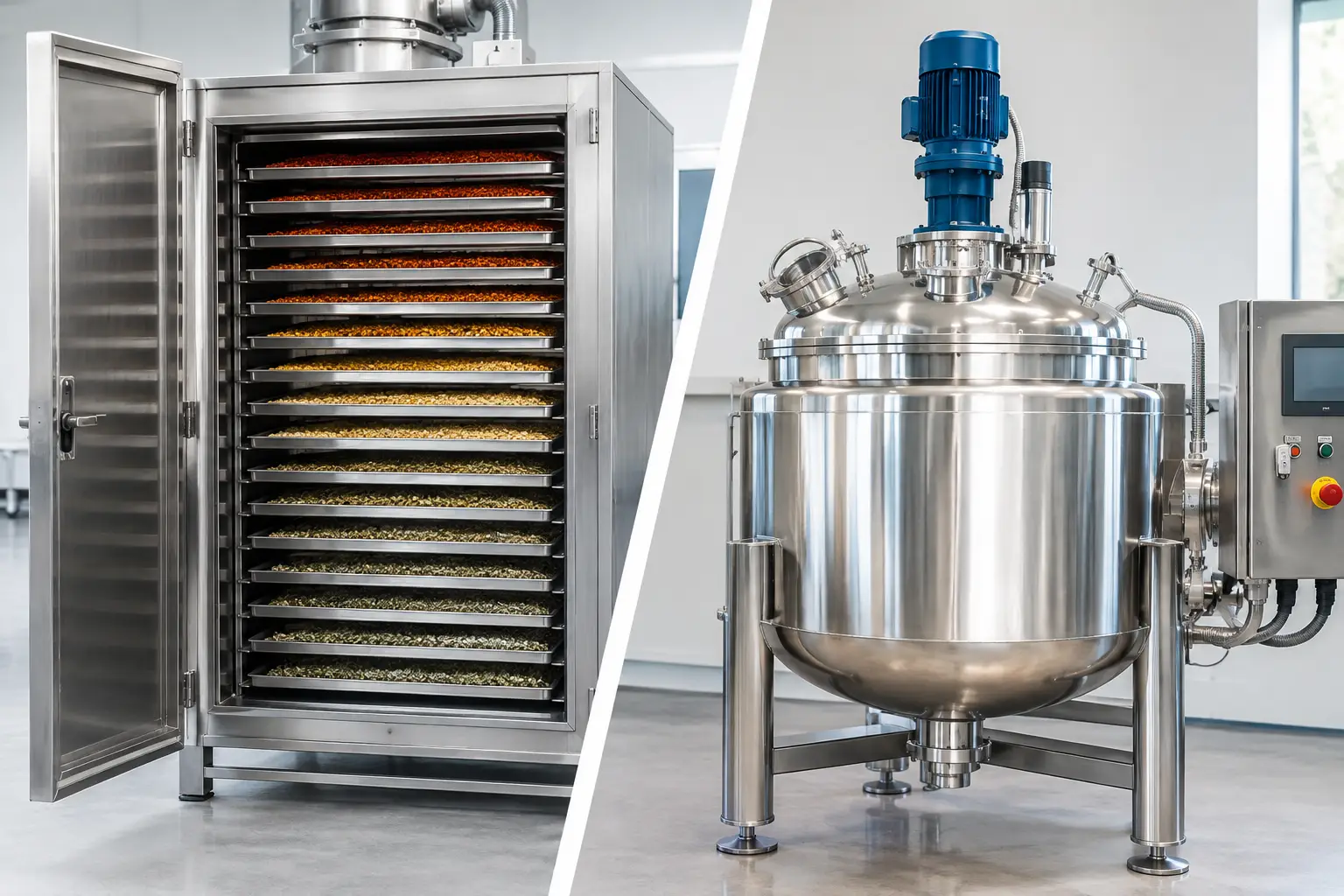
For many industrial applications, horizontal ribbon mixers provide efficient blending and adaptable configuration options. Vertical ribbon mixers can be advantageous where footprint, product behavior, or material flow calls for a different approach. Vacuum ribbon mixers and dryers add process capability for applications requiring moisture removal or controlled atmospheric conditions. Each equipment category requires its own durability assessment because operating loads and sealing demands are not identical.
Maintenance Is Part of the Durability Strategy
Durable equipment still requires disciplined maintenance. The purpose of a preventive plan is not to create unnecessary service work. It is to find wear while it is measurable and manageable, before it causes a missed production day or a compromised batch.
Operators should monitor changes in motor load, noise, vibration, mixing time, discharge behavior, and seal performance. A gradual increase in mixing time, for example, may indicate a formulation change, material buildup, worn agitator components, or an issue elsewhere in the system. Maintenance records make those patterns easier to identify.
Scheduled inspections should focus on the components that experience load and wear: ribbons, shaft connections, trough surfaces, seals, bearings, gearbox lubrication, fasteners, and discharge valves. The appropriate inspection interval depends on the product and duty cycle. Abrasive materials and high-throughput operations generally justify more frequent review than light-duty dry blending.
Replacement parts availability also influences practical service life. An industrial mixer is more valuable when critical wear components and technical support can be obtained without prolonged delays. PerMix approaches mixer selection as an application-specific engineering decision, helping manufacturers align equipment construction with process demands before installation.
A Durable Mixer Starts With an Honest Process Review
The most economical mixer is rarely the lowest-priced unit or the one with the largest nameplate capacity. It is the machine configured to handle the material, operating schedule, and quality requirements without imposing unnecessary maintenance or energy costs.
Before committing to a mixer design, review the worst-case batch, not just the ideal one. That conversation can reveal the need for a different material grade, a higher-capacity drive, enhanced seals, or a configuration that will keep production moving when process conditions become demanding.