Batch Mixer Versus Continuous Mixer: Which Fits?
A batch mixer versus continuous mixer decision is not simply a choice between two machine layouts. It determines how material moves through the plant, how easily operators can verify blend quality, how production responds to changing formulas, and where downtime occurs. For powders, granules, pastes, and other bulk solids, the right answer depends on the product behavior and the operating strategy behind the line.
A continuous system can provide exceptional output when conditions are stable. A batch system often provides greater control when formulas, lot sizes, or quality requirements change frequently. Plant teams should evaluate both options against real production demands rather than selecting equipment based on nameplate capacity alone.
Batch Mixer Versus Continuous Mixer: The Core Difference
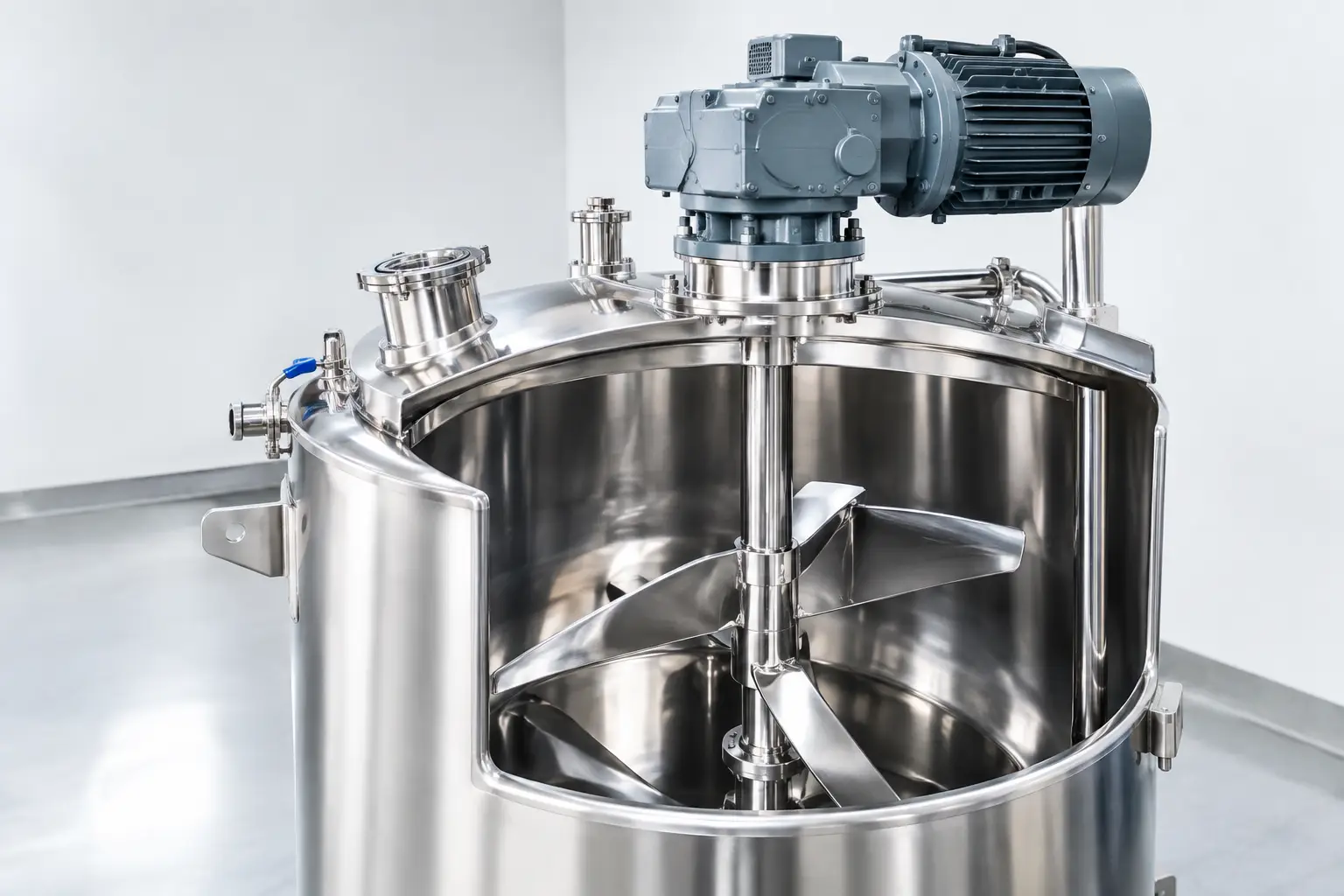
A batch mixer receives a defined quantity of ingredients, blends that charge for a set time, then discharges it before the next batch begins. Each cycle is a discrete production event. Operators can weigh, add, mix, sample, approve, and release a specific lot.
A continuous mixer receives ingredients at controlled feed rates and discharges blended material continuously. Material is always entering, mixing, and leaving the unit. The process is designed around steady-state production, where feed consistency and control accuracy are essential to maintaining a uniform output.
Neither approach is automatically superior. The best selection reflects the material, required throughput, process controls, sanitation standards, and the commercial reality of the operation.
When a Batch Mixer Is the Better Process Choice
Batch mixing is widely used because it accommodates operational variation without forcing the entire plant to run at one fixed rate. It is particularly effective for manufacturers producing multiple SKUs, seasonal products, specialty blends, or lower-to-medium production volumes.
A horizontal ribbon mixer is a common batch solution for dry powders, granules, and many paste-like materials. Its inner and outer ribbons move material in opposing directions, creating a broad convective mixing pattern throughout the trough. With the right fill level, ribbon geometry, and cycle time, this design can produce highly homogeneous blends efficiently.
Greater formula and lot flexibility
In a batch process, changing from one formula to another is straightforward. The operator completes the current lot, cleans the mixer as required, and prepares the next recipe. This supports facilities that manufacture varied products, use different package sizes, or need to schedule short runs without disrupting the entire process line.
Batch systems also make it easier to manage ingredients that require staged addition. Minor ingredients, flavors, pigments, binders, liquids, and sensitive components can be introduced at specified points in the cycle. That level of control is valuable when addition sequence affects product quality.
Clearer traceability and quality control
For pharmaceutical, food, chemical, and specialty material producers, lot traceability can be a decisive factor. Each batch can be assigned a unique record containing raw material information, mixing time, operator actions, sample results, and release status.
Sampling is also more direct. A quality team can collect a representative sample before discharge, verify conformity, and hold the lot if a correction is needed. Continuous processing can achieve strong quality control as well, but it typically requires more extensive inline measurement, feeder verification, and process monitoring.
Practical fit for difficult materials
Batch ribbon mixers can be configured for materials that are not free-flowing, including cohesive powders, wet granulations, dense blends, and pastes. Features such as liquid spray bars, high-speed choppers, heating or cooling jackets, vacuum capability, specialized shaft seals, and sanitary finishes can adapt the system to demanding applications.
This matters because a material that behaves well in a pilot trial may behave differently at plant scale. Moisture, particle size distribution, bulk density, and ingredient ratios all affect flow and blend behavior. A configurable batch mixer gives process engineers useful latitude to address those variables.
Where Continuous Mixing Delivers Value
Continuous mixing is best suited to high-volume operations with stable formulations and a dependable upstream feeding system. When a plant produces the same product over extended runs, continuous processing can reduce handling steps and maintain a consistent material flow from ingredient dosing through downstream packaging or further processing.
The primary benefit is throughput. Instead of waiting for a mixer to fill, blend, discharge, and reset, production can proceed without cyclic interruptions. This can reduce the footprint of intermediate storage and support a more integrated manufacturing line.
Efficiency depends on feed accuracy
The performance of a continuous mixer is closely tied to feeder performance. Every ingredient must enter at the correct rate, and that rate must remain stable over time. Variations in bulk density, bridging, rat-holing, moisture pickup, or feeder refill behavior can change the formulation before the material reaches the mixer.
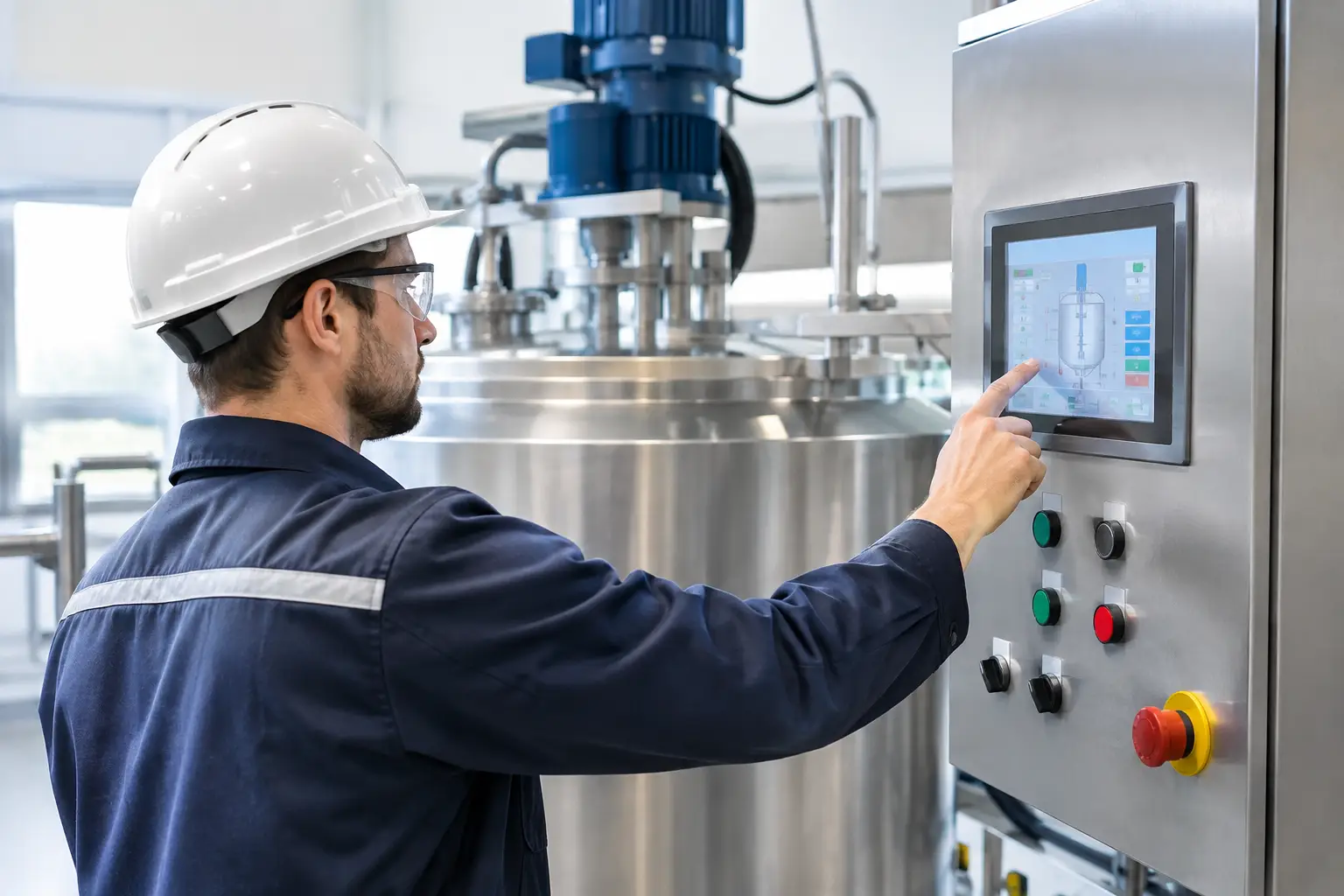
For this reason, continuous systems often require sophisticated loss-in-weight feeders, automated controls, validation protocols, and real-time monitoring. These investments are appropriate when production volume justifies them. They can be difficult to justify for plants with frequent recipe changes or intermittent schedules.
Less flexible during changeovers
A continuous line is designed to perform efficiently under defined conditions. Formula changes may require feeder adjustments, line purging, verification, and possible disposal or rework of transitional material. If a plant runs dozens of products each week, those transitions can reduce the apparent advantage of continuous throughput.
Continuous mixing is therefore not simply a faster version of batch mixing. It is a different manufacturing model, one that rewards long campaigns, tightly controlled inputs, and predictable demand.
Compare the Operational Trade-Offs
The practical choice between a batch mixer and a continuous mixer usually comes down to a small number of operational questions. Throughput matters, but it should be evaluated alongside quality assurance, cleaning time, labor, material loss, and future product plans.
Batch mixing generally provides more flexibility, simpler lot segregation, and a familiar validation path. It can also allow a plant to isolate a quality issue to one defined quantity of material. The trade-off is cycle time. Filling, mixing, sampling, discharge, and cleaning can limit output if the mixer is undersized or poorly integrated with upstream and downstream equipment.
Continuous mixing can deliver a lower cost per pound at sustained high volume, particularly when automation and ingredient feeding are already well developed. Its trade-off is sensitivity to variation. A feeder interruption or an unstable raw material can affect output continuously until the condition is detected and corrected.
Energy use should be considered in context. A properly selected ribbon mixer can deliver efficient mixing action with a relatively modest drive requirement, especially when compared with systems that rely on high-speed agitation. Continuous systems may reduce energy associated with repeated filling and discharge cycles, but their total utility demand includes feeders, controls, conveying equipment, and associated process components.
Material Characteristics Should Guide the Selection
The material itself often settles the question faster than a general capacity comparison. Free-flowing, uniform powders are often suitable for either process. Materials with wide particle size differences, low-dose additives, sticky components, or changing moisture levels require closer testing.
Segregation risk deserves particular attention. A blend can appear uniform inside the mixer yet separate during discharge, conveying, or packaging if ingredients differ significantly in size, density, or shape. The mixer should be evaluated as part of the whole material-handling system, not as an isolated piece of equipment.
For products requiring liquid addition, a batch ribbon mixer can provide the time and circulation needed to distribute liquids throughout the dry base. For drying, deaeration, or solvent removal applications, a vacuum ribbon mixer and dryer may combine multiple process steps within one enclosed vessel. That consolidation can reduce transfers, improve containment, and simplify cleaning.
Questions to Ask Before Selecting a Mixer
A productive equipment evaluation starts with operating data, not assumptions. Process teams should define expected annual volume, normal batch size or continuous rate, number of formulas, required blend uniformity, and acceptable changeover time. They should also document bulk density, particle size, flow properties, moisture content, temperature sensitivity, and whether liquids or binders are added.
It is equally useful to examine the wider line. Can upstream equipment feed material consistently? Does downstream packaging require a steady flow or accept discrete batches? Are there sanitation, containment, explosion protection, or regulatory requirements that affect the mixer design? Answers to these questions often reveal whether continuous processing will create efficiencies or introduce unnecessary complexity.
For many manufacturers, a configurable batch ribbon mixer provides the most balanced path: dependable homogeneous mixing, practical cleaning access, controlled lot production, and the ability to adapt as product needs change. PerMix works with process requirements at this level, matching mixer geometry, capacity, finishes, discharge design, and optional features to the actual application.
The most valuable next step is to test the decision against your material and production schedule. A mixer should support the way your facility needs to operate next year, not just satisfy a throughput target on paper today.