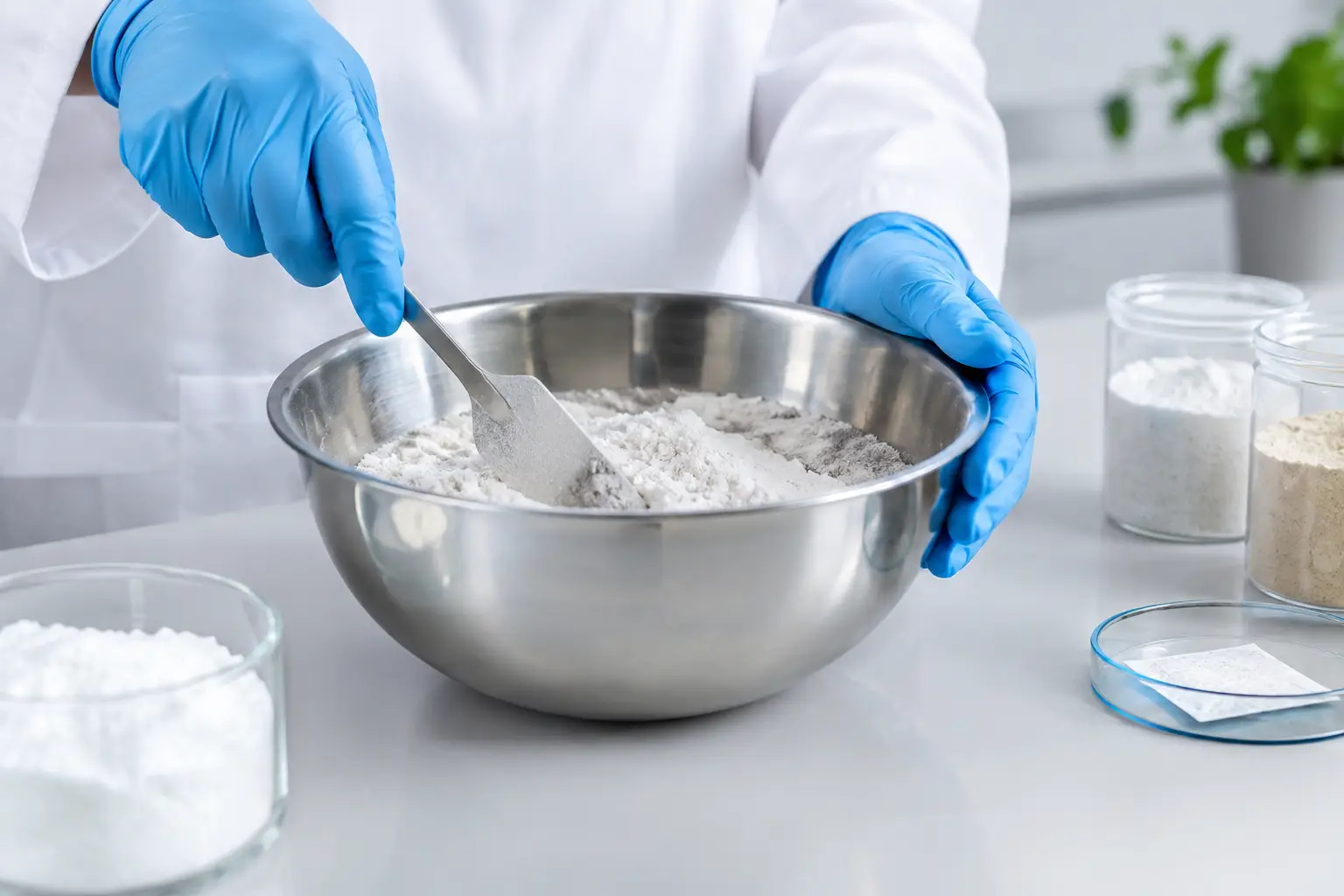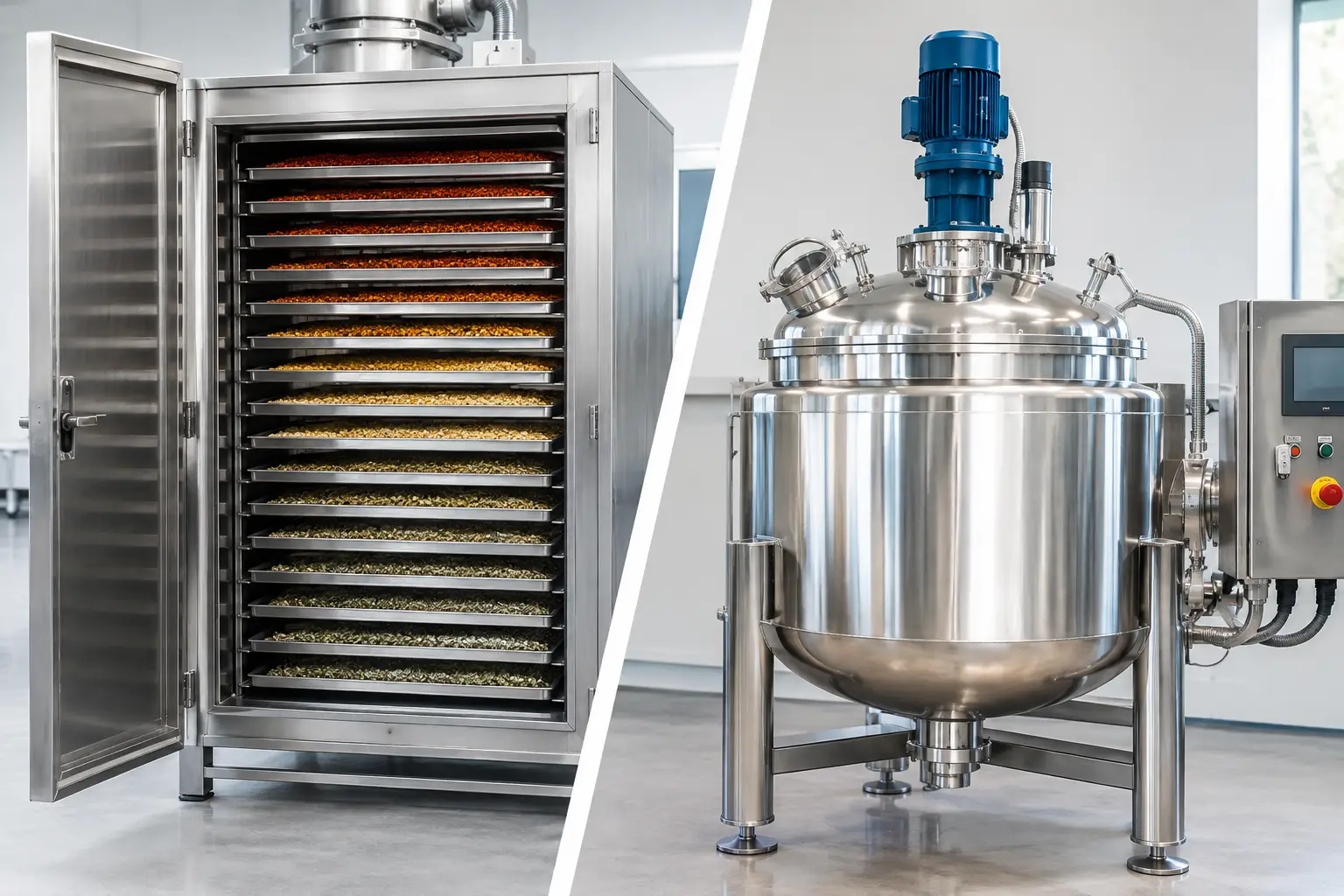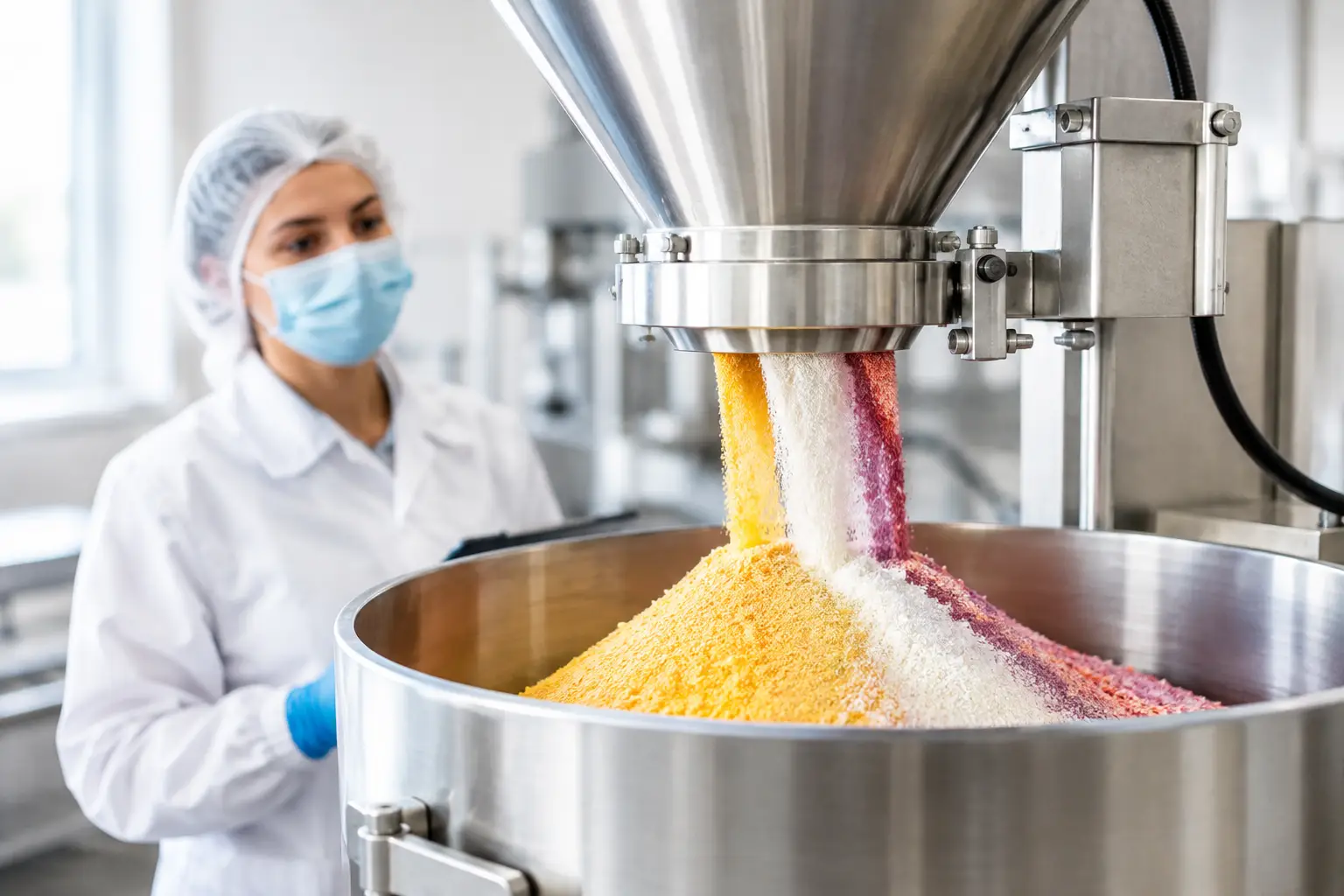
Industrial Mixer Material Compatibility Guide
A ribbon mixer that handles dry sugar perfectly can fail fast on a chloride-rich blend, a sticky vitamin premix, or an abrasive mineral powder. That is why an industrial mixer material compatibility guide matters early in equipment selection, not after corrosion, buildup, seal wear, or contamination has already affected production.
For plant managers and process engineers, compatibility is not a narrow materials question. It sits at the intersection of product chemistry, operating temperature, moisture level, cleanability, abrasion, and regulatory expectations. If the mixer body, agitator, seals, discharge assembly, and interior finish are not matched to the process, the result is rarely limited to maintenance cost. Product quality drifts, cleaning takes longer, downtime grows, and equipment life shortens.
What material compatibility really means in mixer selection
In industrial mixing, compatibility means more than whether a metal resists corrosion. It also covers whether the product will stick to interior surfaces, whether cleaning agents will attack elastomers, whether abrasive particles will wear flight edges, and whether the discharge valve can hold up under repeated contact with a reactive or high-friction material.
This matters because the mixer is a system, not a shell. The trough, ribbon agitator, shaft, welds, seals, bearings isolation, spray devices, and outlet components all face the process differently. A material may be acceptable for the vessel but unsuitable for gaskets or shaft seals. Another may resist chemistry well but still perform poorly because product adhesion creates sanitation or batch consistency problems.
For buyers evaluating ribbon mixers, the practical question is simple: will the machine maintain superior mixing performance and predictable service life with your exact formulation and cleaning routine? The answer depends on several variables working together.
Industrial mixer material compatibility guide: the key variables
The first variable is the product itself. Dry powders, granules, slurries, and pastes each present different compatibility demands. A free-flowing food powder may be relatively gentle on metal surfaces but highly sensitive to contamination. A chemical blend may be non-abrasive yet corrosive in the presence of trace moisture. A paste may not corrode the vessel at all, but it can challenge seal materials and increase torque loads.
The second variable is process condition. Temperature changes reactivity. Vacuum service changes how volatiles behave. Moisture can turn a manageable powder into a caking, corrosive mass. Even batch time matters. Intermittent contact is different from prolonged exposure during long blend cycles or hold times.
The third variable is cleaning. In many plants, the cleaning chemistry is harder on the mixer than the product itself. Caustic washdown, acidic sanitizers, solvent exposure, and high-pressure cleaning can all influence the right choice of stainless grade, elastomer, surface finish, and weld treatment.
The fourth variable is wear. Abrasion often gets less attention than corrosion, but it should not. Mineral powders, glass-filled compounds, salt crystals, and certain agricultural products can steadily erode ribbons, vessel walls, and discharge components. A mixer can remain chemically compatible while losing efficiency from mechanical wear.
Stainless steel selection is not one-size-fits-all
For many industrial applications, stainless steel is the starting point, but not the end of the discussion. Type 304 stainless is common and cost-effective for many food, dry chemical, and general industrial uses. It offers solid corrosion resistance in a wide range of environments and supports sanitary fabrication when properly finished.
Type 316 stainless is often the better choice when chloride exposure, frequent washdown, or more aggressive formulations are involved. It is widely preferred in pharmaceutical, nutraceutical, cosmetic, and higher-corrosion chemical environments because it provides a stronger margin of protection. That added resistance can translate directly into longer service life, fewer surface defects, and lower contamination risk.
Still, higher alloy does not automatically solve every problem. If the process includes highly abrasive solids, stainless selection alone will not address wear. If the product tends to smear or harden on contact surfaces, finish quality and agitator geometry may matter just as much as the alloy itself.
Product contact surfaces need the right finish
Surface finish is part of compatibility because rougher surfaces encourage retention, buildup, and difficult cleaning. In regulated industries, that can create sanitation concerns and extend changeover time. In chemical and mineral applications, retained residue can harden and interfere with consistent discharge.
A smoother interior finish helps reduce product hang-up and supports repeatable batch performance. It can also improve dry cleanability, which is valuable in operations where minimizing water use is part of the process strategy. For sticky or cohesive materials, finish selection should be reviewed alongside ribbon design, trough geometry, and discharge configuration.
Seals, gaskets, and valves are often the weak point
When compatibility issues appear, they often start in elastomers and moving components rather than in the vessel shell. Shaft seals, gaskets, and valve seats are exposed to friction, heat, cleaning chemicals, and direct product contact. If these materials are not chosen correctly, you may see swelling, cracking, leakage, or premature wear long before the stainless structure shows any sign of damage.
This is especially important in vacuum ribbon mixers and dryers, where sealing performance directly affects process reliability. The wrong seal material can reduce vacuum integrity, increase maintenance frequency, and introduce contamination risk. In paste applications, seal design becomes even more critical because the product may pack into interfaces and increase wear under load.
That is why compatibility reviews should include all wetted and near-product-contact components. A strong mixer specification accounts for the vessel, agitator, seals, discharge assembly, and cleaning exposure as a complete package.
Abrasive, sticky, and reactive materials each need a different approach
Abrasive materials call for attention to ribbon thickness, wear exposure at the outer flight edges, and durability at the discharge zone. Depending on the duty cycle, protective design considerations may be just as important as the base metal. Plants processing mineral blends, ceramics, or filled compounds should evaluate expected wear rate, not just corrosion resistance.
Sticky materials create a different challenge. They can coat ribbons, bridge near discharge points, and leave residue that affects batch-to-batch consistency. In those cases, compatibility includes release behavior. A mixer may be chemically safe but operationally inefficient if the product does not move or discharge cleanly.
Reactive materials demand the most caution. Hygroscopic powders, oxidizers, solvent-bearing blends, and materials that change behavior under heat or vacuum need a more application-specific review. Here, a standard machine configuration may not be enough. The right answer may involve a different stainless grade, specialized seal materials, tighter fabrication standards, or a vacuum-capable design tailored to the process.
Why application testing matters before purchase
Spec sheets help, but they rarely capture the full behavior of real products. Formulations vary by particle shape, moisture uptake, oil content, bulk density, and minor ingredients. Two materials that look similar on paper can behave very differently in the same ribbon mixer.
That is why experienced industrial buyers place value on application review and testing. A practical evaluation can reveal whether the product smears, segregates, compacts, corrodes, or causes unexpected wear. It can also show whether a horizontal ribbon mixer, vertical ribbon mixer, or vacuum ribbon mixer is the better fit for process efficiency and maintenance control.
At this stage, customization becomes a business advantage, not an extra. Tailored construction materials, interior finishes, seal packages, and discharge options can reduce long-term operating cost far more effectively than choosing a generic mixer at a lower initial price.
Questions to answer before specifying a mixer
Before moving to quotation, technical teams should define the material’s chemical profile, moisture range, temperature exposure, abrasiveness, and cleanability requirements. They should also identify whether the process is dry, paste, heated, vacuum-assisted, or sanitation-sensitive. These details shape the right construction package.
Just as important, teams should look beyond normal operation and ask what the mixer will see during upset conditions, washdown, idle periods, and product changeovers. Many compatibility failures happen at the margins of the process, not during ideal production runs.
For manufacturers balancing uptime, compliance, and capital efficiency, the best industrial mixer material compatibility guide is one grounded in the actual application. PerMix approaches this as an engineering decision tied to performance, reliability, and total cost of ownership, not as a box-checking exercise.
The right mixer material package should make production easier a year from now, not just easier to approve today. If your product is hard on equipment, the smartest move is to solve that on the front end, where material compatibility can still be engineered into the machine.