Vertical Ribbon Mixer Advantages Explained
When floor space is tight, product integrity matters, and batch consistency cannot drift, vertical ribbon mixer advantages become more than a design preference. They directly affect throughput, cleaning time, energy use, and how reliably a process performs from one batch to the next. For manufacturers working with powders, granules, and select paste applications, the mixer geometry can determine whether blending stays controlled or becomes a recurring production problem.
Why vertical ribbon mixer advantages matter in production
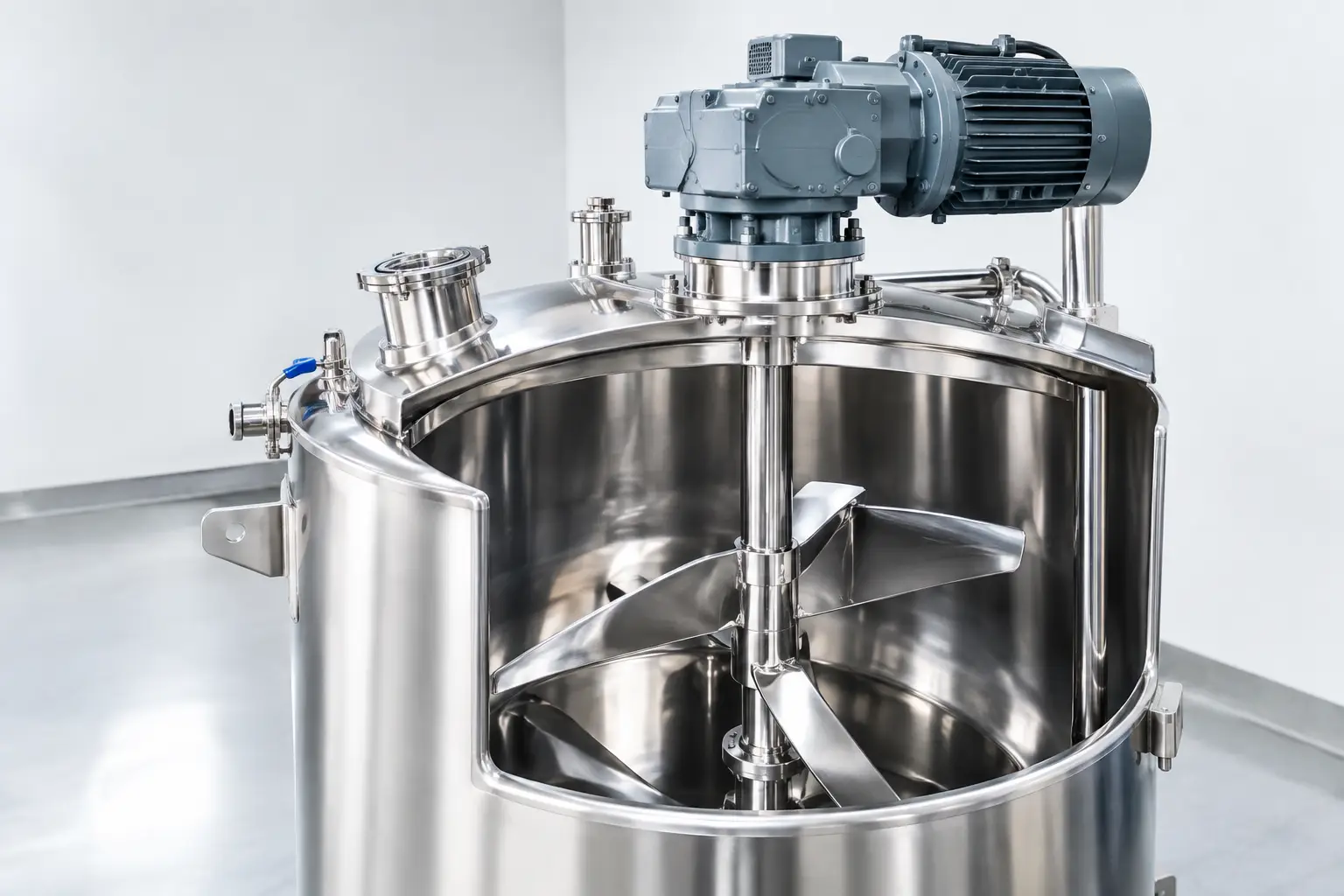
A vertical ribbon mixer uses a vertical vessel and helical ribbon agitation to move material upward and downward in a continuous flow pattern. That motion is especially useful in facilities that need thorough blending without the long footprint associated with many horizontal systems. The result is a mixing approach that can support homogeneity, preserve material characteristics, and fit more easily into constrained production layouts.
For plant managers and process engineers, the value is practical. Equipment choice is not just about whether material blends. It is about how quickly a batch reaches specification, how much operator intervention is required, and how well the machine supports sanitation, maintenance, and repeatability over time.
A smaller footprint with high working capacity
One of the most immediate benefits of a vertical ribbon design is space efficiency. In many production environments, available floor area is already committed to upstream feeding, downstream packaging, access lanes, and utility connections. A vertical configuration uses height instead of length, which can make installation easier in compact process rooms or facilities where expansion options are limited.
That smaller footprint can also simplify line layout. It may be easier to position a vertical ribbon mixer near charging stations, hoppers, or discharge points without redesigning the entire room. For operations trying to increase output within an existing plant, this can be a meaningful advantage.
There is a trade-off, though. Vertical equipment may require more attention to ceiling height, access platforms, and loading methods. In facilities with strict height limitations, that benefit can narrow. The right answer depends on the building as much as the material.
Gentle but effective blending for sensitive materials
Many products do not respond well to aggressive mixing. Fragile granules can break down. Particle size distribution can shift. Heat-sensitive ingredients may suffer if the process introduces unnecessary friction. A well-designed vertical ribbon mixer creates a controlled circulation pattern that promotes uniformity while limiting excessive mechanical stress.
This matters in industries where product quality depends on keeping ingredients intact. Food processors may need to preserve particulates. Chemical manufacturers may need to avoid damaging free-flowing solids. In pharmaceutical and nutraceutical environments, blend uniformity must often be achieved without overprocessing the batch.
That said, not every formulation is best handled with the same mixing intensity. Cohesive powders, materials with very different bulk densities, or products prone to agglomeration may require specific ribbon geometry, chopper integration, or a different mixer type altogether. Good results depend on matching the machine to the application rather than assuming any mixer will perform the same way.
Consistent batch performance across multiple applications
Another of the strongest vertical ribbon mixer advantages is application versatility. These mixers are commonly used for dry powders and granules, but the design can also support more demanding product types when configured correctly. That includes formulations with trace ingredients, blends requiring tight distribution control, and some paste-like materials.
For industrial buyers, versatility reduces risk. A mixer that can support current products while leaving room for future formulations gives operations more flexibility. It can also simplify capital planning when one machine must serve several SKUs or process variations.
Consistency is the larger point. Reliable blending performance helps reduce off-spec batches, rework, and production delays. Over time, those gains affect labor efficiency, raw material utilization, and customer confidence. In regulated industries, they also support process discipline and validation efforts.
Efficient discharge and lower residual material
Discharge performance often gets less attention than mixing speed, but it has a direct effect on yield and downtime. Vertical ribbon mixers can be designed for efficient material flow from the vessel, helping reduce retained product at batch changeover. For facilities processing high-value materials, every pound left behind matters.
Lower residual material can also improve cleaning efficiency. When the vessel empties more completely, operators spend less time recovering product or removing stubborn material deposits before the next batch. That supports both productivity and sanitation.
The benefit depends on the product. Very sticky, oily, or highly cohesive materials may still present discharge challenges, and those applications may require specialized finishes, discharge valve configurations, or ancillary systems. Still, for many standard powder and granule applications, discharge efficiency is a real operating advantage rather than a minor design detail.
Lower energy demand in the right process window
Energy consumption is now a standard part of equipment evaluation, especially in operations running multiple shifts or high batch volumes. Vertical ribbon mixers can offer lower energy use relative to process demands when they are properly sized and applied. Their mixing action is often effective without requiring excessive speed or power input, which supports a more sustainable and cost-effective production model.
This does not mean vertical ribbon mixers are automatically the lowest-energy option for every product. Mixing time, fill level, bulk density, and material behavior all influence actual consumption. But when the application fit is right, the design can help manufacturers control operating costs without sacrificing blend quality.
That balance is valuable for procurement and operations teams alike. Lower utility demand is helpful, but only if the mixer still delivers repeatable, specification-grade output. Performance comes first. Efficiency should support it, not replace it.
Easier cleaning and maintenance planning
Maintenance burden often becomes clear only after installation. Bearings, seals, access points, and internal geometry all affect how easily a mixer can be inspected, cleaned, and returned to service. Vertical ribbon systems that are engineered for accessibility can reduce downtime tied to routine sanitation and preventive maintenance.
For plants with frequent product changeovers, cleanability matters as much as mixing performance. If operators can access key contact surfaces without excessive disassembly, turnaround improves. In food, pharmaceutical, and cosmetic applications, that has obvious implications for hygiene and cross-contamination control.
Maintenance planning also benefits from durable construction and application-specific engineering. A mixer built for the actual load profile, product characteristics, and duty cycle will generally perform more reliably than a generic unit selected on nominal capacity alone. That is where consultation matters. Equipment should be chosen based on what the process requires, not just what fits on paper.
Customization supports better process outcomes
No two production environments are exactly alike. Ingredient behavior, batch size, sanitation requirements, and plant layout all influence what the mixer must do. One of the less obvious but highly valuable vertical ribbon mixer advantages is how adaptable the platform can be when supplied with the right engineering support.
Configuration options may include vessel size, ribbon design, construction materials, surface finishes, discharge arrangements, vacuum capability, heating or cooling jackets, and controls integration. Those choices are not cosmetic. They determine whether the mixer supports the process efficiently or creates avoidable bottlenecks.
For example, a chemical processor may prioritize corrosion resistance and containment. A food manufacturer may focus on sanitation and allergen changeover. A plastics compounder may need dependable handling of ingredients with different flow characteristics. The same basic mixer category can serve each of these operations, but only when the design is tailored to the application.
This is why experienced buyers ask more detailed questions upfront. What is the target batch size? How does the material behave at different fill levels? Is there a need for vacuum processing, heating, deaeration, or precise dosing integration? The more clearly those variables are defined, the more value the final equipment delivers.
When a vertical ribbon mixer is the right choice
A vertical ribbon mixer is often a strong fit when space efficiency, gentle handling, reliable batch uniformity, and flexible application support are priorities. It can be especially effective for manufacturers looking to improve consistency while keeping operating costs and maintenance demands under control.
It is not the right answer by default. Some materials blend better in horizontal equipment. Some processes need higher shear, faster cycle times, or specialized drying and vacuum functions. The best equipment decision comes from understanding the product, the process target, and the realities of the production environment.
That is where a solution-oriented supplier adds value. Instead of treating the mixer as a catalog item, the process should start with application review, performance requirements, and the practical constraints inside the plant. At PerMix Ribbon Mixers, that approach helps align mixer configuration with real production goals rather than generic assumptions.
If your team is evaluating new blending equipment, the right question is not simply which mixer is popular. It is which mixer will deliver repeatable quality, efficient operation, and long-term reliability for your specific material and process. That is where the real advantage begins.