How to Clean Industrial Mixer Systems
Residue left in a ribbon mixer after a batch change is not a small housekeeping issue. It can become a quality deviation, a cross-contamination risk, a maintenance problem, or an avoidable source of downtime. If you are evaluating how to clean industrial mixer equipment in a production setting, the right answer starts with your product, your cleaning standard, and the mixer design itself.
How to clean industrial mixer equipment without creating more downtime
Cleaning an industrial mixer is a process decision, not just a sanitation task. In powder, granule, and paste applications, the wrong method can push material deeper into seals, leave buildup under ribbons, damage internal finishes, or extend changeover time enough to affect throughput. A good cleaning approach removes residue completely while protecting the machine, the next batch, and the production schedule.
The first point to establish is what clean means in your operation. For some facilities, clean means visible residue removal between similar products. In others, especially food, pharmaceutical, and specialty chemical environments, it may mean validated cleaning to defined residue limits. Those are very different standards, and they should drive the method, labor time, and inspection process.
Start with the mixer design and material behavior
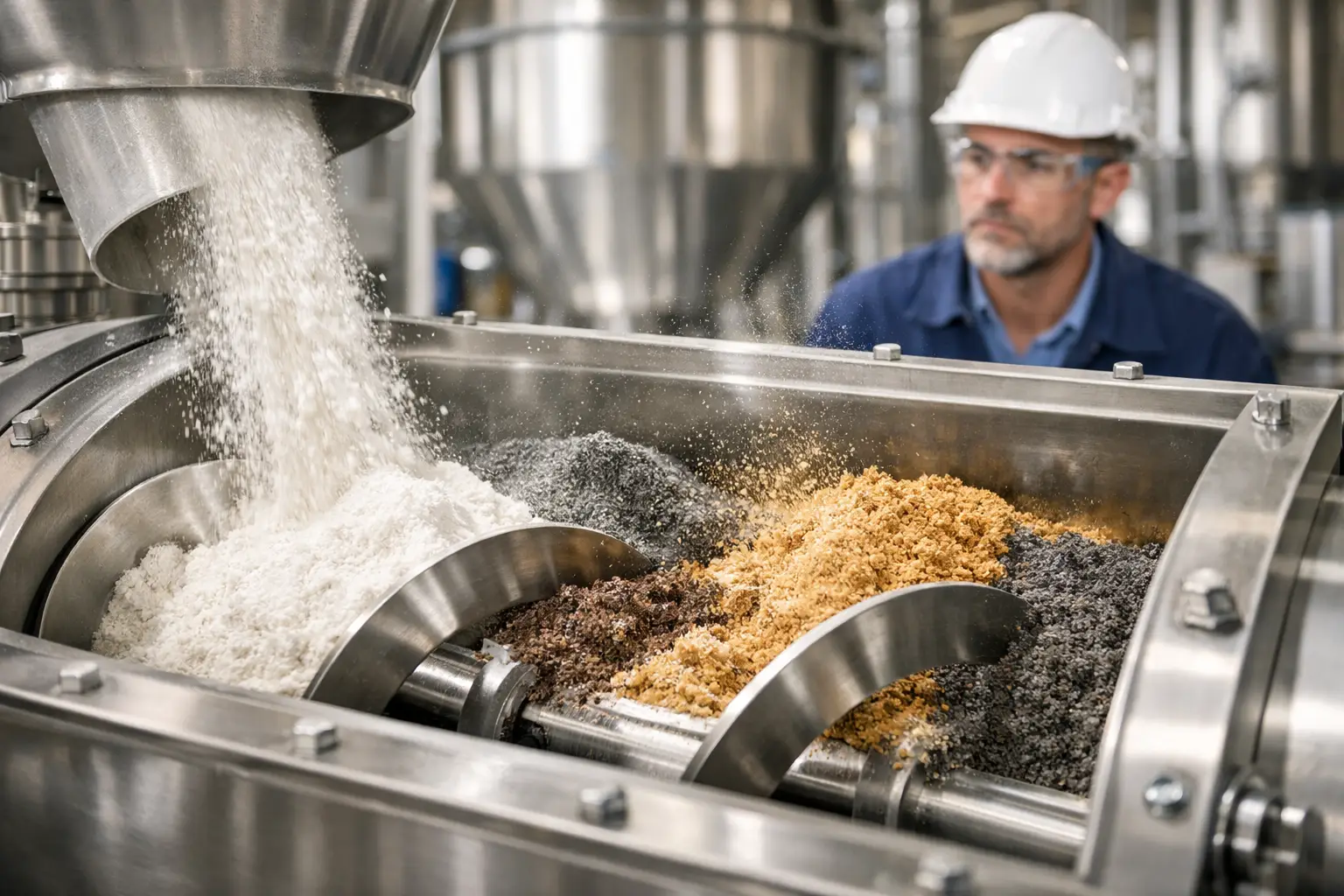
A ribbon mixer is not cleaned the same way as a simple open vessel. Internal ribbons, shaft surfaces, end plates, discharge valves, access doors, and shaft seals all create areas where material can collect. Fine powders may cling electrostatically. Sticky formulations may smear along the trough wall. Hygroscopic or fat-containing ingredients can harden over time if they are not removed quickly.
That is why cleaning should always be matched to product behavior. Free-flowing dry blends often respond well to dry cleaning methods with manual wipe-down and vacuum recovery. Dense pastes or tacky compounds may require wet cleaning, detergents, or clean-in-place support features depending on the equipment configuration. Abrasive solids raise another issue – aggressive scrubbing can remove residue, but it can also wear internal surfaces if the wrong tools are used repeatedly.
For plant teams, the practical lesson is simple. Do not adopt one standard cleaning routine for every product family. The faster path is usually a product-specific cleaning protocol based on residue type, sanitation requirements, and acceptable changeover time.
Lockout, isolate, and prepare the unit first
Before any cleaning starts, the mixer must be fully isolated. Lockout/tagout is not optional. Ribbon mixers contain moving internal assemblies with serious pinch and entanglement hazards, and cleaning often requires personnel to work near access openings, discharge points, and drive components.
After isolation, remove all remaining material from the chamber and discharge section. This usually includes emptying the trough as completely as possible, opening the discharge gate, and manually recovering any retained product. Many teams make cleaning harder by skipping this step and going directly to washdown or wipe-down. Dry residue mixed with cleaning solution often becomes a heavier paste that is slower to remove.
A visual pre-check helps identify where attention is needed most. In many units, the highest-risk areas are under the ribbon flights, at the trough ends, around the discharge assembly, and near seals. If the batch included sticky binders, oils, or heat-sensitive ingredients, inspect before residue hardens.
Dry cleaning is often the best first option
For many bulk solids applications, dry cleaning is the most efficient method. It avoids introducing moisture into a machine that may handle moisture-sensitive materials, and it reduces drying time before the next batch. In regulated industries, it can also simplify control when wet cleaning is not required by the product risk profile.
A typical dry cleaning process includes vacuuming loose powder, brushing accessible surfaces with non-shedding tools, and wiping internal contact areas with approved dry cloths or low-residue wipes. Compressed air may seem faster, but it is not always the right choice. It can aerosolize dust, spread contamination into adjacent zones, and push powder into bearings, seals, or hard-to-reach crevices. In combustible dust environments, it creates an even more serious safety concern.
Dry cleaning works best when the mixer has been designed with accessibility in mind. Adequate access doors, smooth welds, minimal dead zones, and well-engineered discharge geometry all reduce labor time. That matters because cleaning time is really production time under another name.
When wet cleaning is necessary
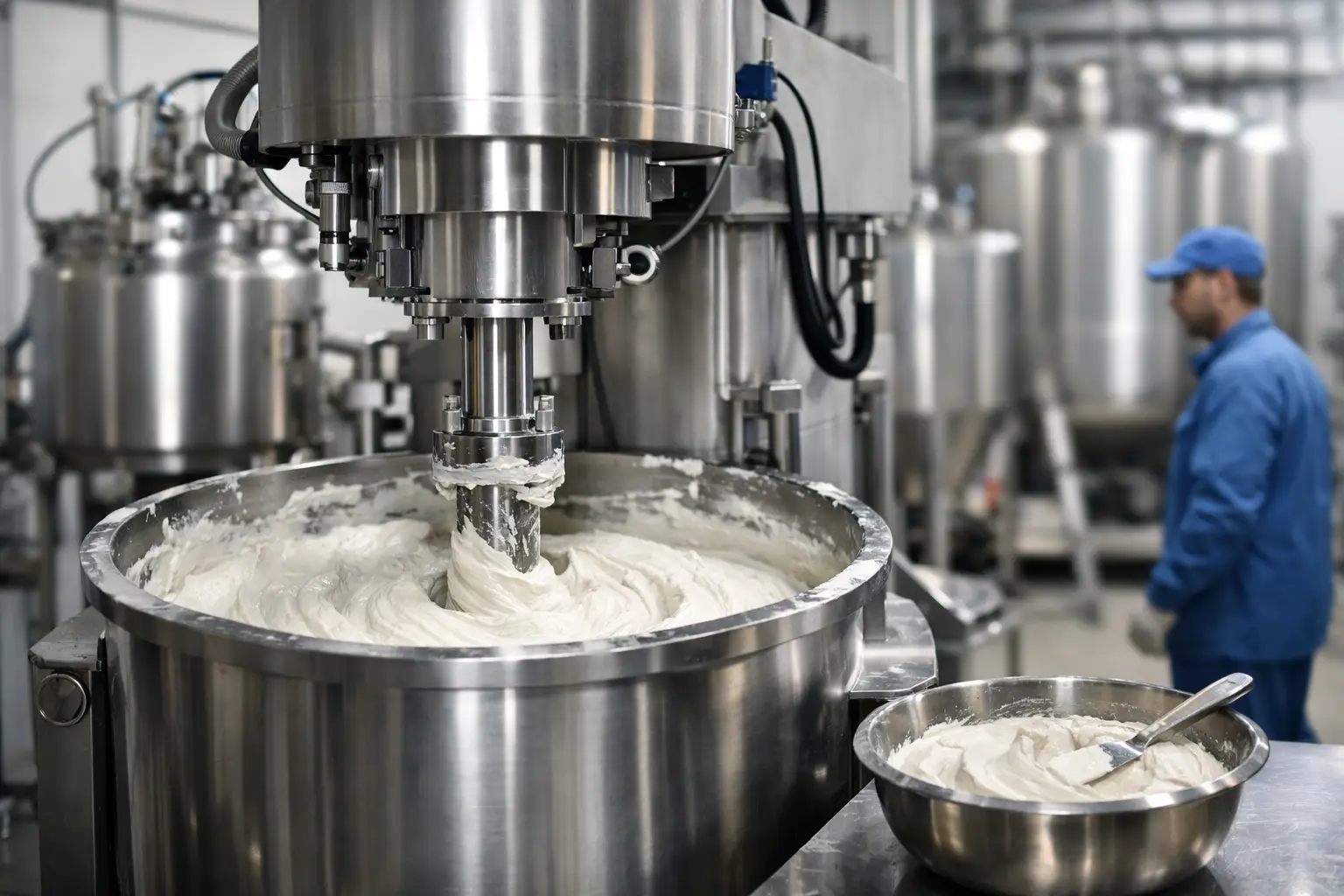
Some products simply do not release well with dry methods. Pastes, slurries, sugar-based blends, dairy powders with fat carryover, and adhesive formulations may require water, solvent, or detergent-assisted cleaning. In that case, the goal is to remove residue thoroughly without exposing the mixer to unnecessary corrosion, seal damage, or prolonged idle time.
The cleaning chemistry must match the product and the machine materials. Stainless steel contact surfaces generally offer good resistance, but compatibility still matters, especially around elastomers, gaskets, and seal faces. Stronger chemistry may shorten cleaning time, but it can also increase rinse requirements and maintenance exposure. There is always a trade-off.
Wet cleaning usually follows a sequence: pre-remove bulk residue, apply the cleaning solution, allow the correct contact time, scrub or circulate where required, rinse fully, and dry the machine before restarting. Drying is often underestimated. Any retained moisture can cause powder adhesion, microbial risk in certain industries, or batch quality issues in the next run. In some facilities, drying time is the real bottleneck, not washing.
Focus on the parts that are missed most often
Most cleaning failures do not happen on the open, visible surfaces. They happen in the small retention areas that are easy to overlook during fast changeovers. On an industrial ribbon mixer, those areas typically include the shaft-to-end-wall interface, seal housings, ribbon supports, discharge valves, hinged covers, and any internal corners around nozzles or spray features.
If your cleaning team is consistently finding residue after inspection, the issue may not be execution alone. It may point to a design mismatch between the mixer and the application. Some products require tighter sanitary construction, more accessible internals, or different discharge arrangements to support reliable cleaning. This is where equipment selection affects operating cost well beyond the initial purchase.
For buyers comparing systems, cleanability should be treated as a core performance factor alongside batch uniformity, cycle time, and horsepower. A mixer that blends well but takes too long to clean can still become an expensive production constraint.
Build a repeatable cleaning standard
The most reliable plants do not leave cleaning quality to operator preference. They document the method, define acceptable tools and chemicals, set inspection points, and assign signoff responsibility. That approach improves consistency and reduces the risk of one shift cleaning differently than another.
A strong cleaning standard should reflect the actual use case. High-frequency product changeovers may need a fast dry-clean protocol for standard transitions and a deeper wet-clean procedure on a scheduled basis. Allergen changeovers, potent compounds, or regulated formulations may need stricter verification, including swab testing or documented line clearance. It depends on the process risk, not just the machine.
Training matters here. Even a well-designed mixer will not stay easy to clean if operators use abrasive pads on polished surfaces, oversaturate seals, or skip inspection under the ribbons because access is awkward. Cleaning procedures should be written for the real production environment, not for an idealized one.
How equipment design reduces cleaning labor over time
If cleaning consumes too many labor hours, the issue may be structural rather than procedural. Mixer geometry, internal finish, access configuration, discharge design, and seal selection all shape how much residue remains after discharge and how quickly operators can reach product contact areas.
This is why industrial buyers increasingly evaluate mixers for both processing performance and sanitation efficiency. In many applications, the most cost-effective machine is not the one with the lowest purchase price. It is the one that supports complete discharge, easier inspection, lower water use, shorter changeovers, and less maintenance interruption over years of service.
PerMix Ribbon Mixers is often evaluated on exactly these factors in powder, granule, and paste handling environments where consistent performance and reduced downtime matter just as much as blend quality.
A practical answer to how to clean industrial mixer systems
If you need a practical answer to how to clean industrial mixer systems, start with four decisions: define the cleanliness standard, match the method to the material, protect the machine during cleaning, and make the process repeatable. From there, inspect the results honestly. If cleaning is too slow, inconsistent, or difficult to verify, the problem may not be your team. It may be the equipment configuration.
The best cleaning process is the one that protects product quality without turning every changeover into a production loss. When your mixer is designed for access, discharge, and application fit from the start, cleaning becomes faster, more reliable, and far easier to manage at scale.