How to Reduce Industrial Mixer Downtime
A mixer rarely fails at a convenient time. It stops in the middle of a production run, during a product changeover, or right when a batch window is already tight. For plant managers and process engineers, the challenge is not only to restart equipment quickly, but to reduce industrial mixer downtime in a way that protects throughput, product quality, and maintenance budgets at the same time.
The most effective approach is not a single maintenance task or a faster spare parts order. Downtime usually comes from a chain of issues: an undersized drive, a mixer design that does not match the material, difficult cleanout, premature seal wear, inconsistent loading, or operator workarounds that slowly become standard practice. If the root cause is mechanical, operational, or process-related, the solution has to address all three.
Where industrial mixer downtime usually starts
In many facilities, downtime is blamed on wear parts. Sometimes that is accurate, but wear parts often fail because the system is working harder than it should. A ribbon mixer handling free-flowing powder behaves very differently from one processing cohesive blends, abrasive minerals, high-fill formulations, or paste-like products. When a mixer is asked to process material outside its practical design range, the result is higher torque, slower discharge, residue buildup, and more frequent intervention from maintenance.
Loading patterns also matter. Overfilling reduces effective mixing action and increases stress on the drive system. Underfilling can create inconsistent flow behavior and extend batch times. Feeding raw materials in the wrong sequence may create lumping or adhesion on the ribbon assembly and vessel walls, which then turns a normal cleaning cycle into an unplanned stop.
Another common source of downtime is poor access. If an operator cannot inspect seals, open discharge areas, or clean internal surfaces without excessive labor, small maintenance tasks are delayed. Those delayed tasks often become major shutdown events.
Reduce industrial mixer downtime by matching design to process
The fastest way to create recurring maintenance problems is to treat all mixers as interchangeable. They are not. Horizontal ribbon mixers, vertical ribbon mixers, and vacuum ribbon mixers each solve different process demands, and selecting the wrong configuration usually shows up later as lost production time.
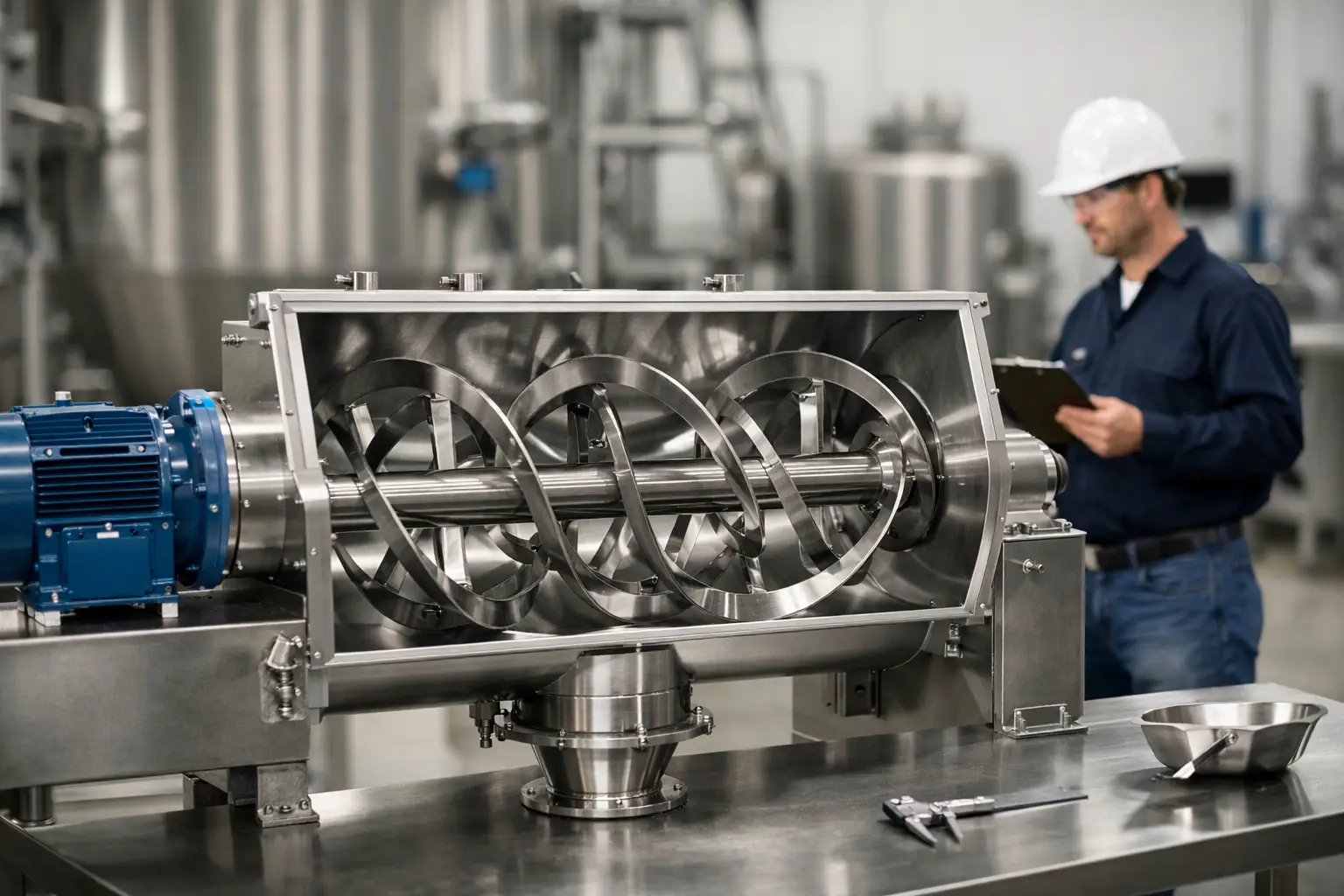
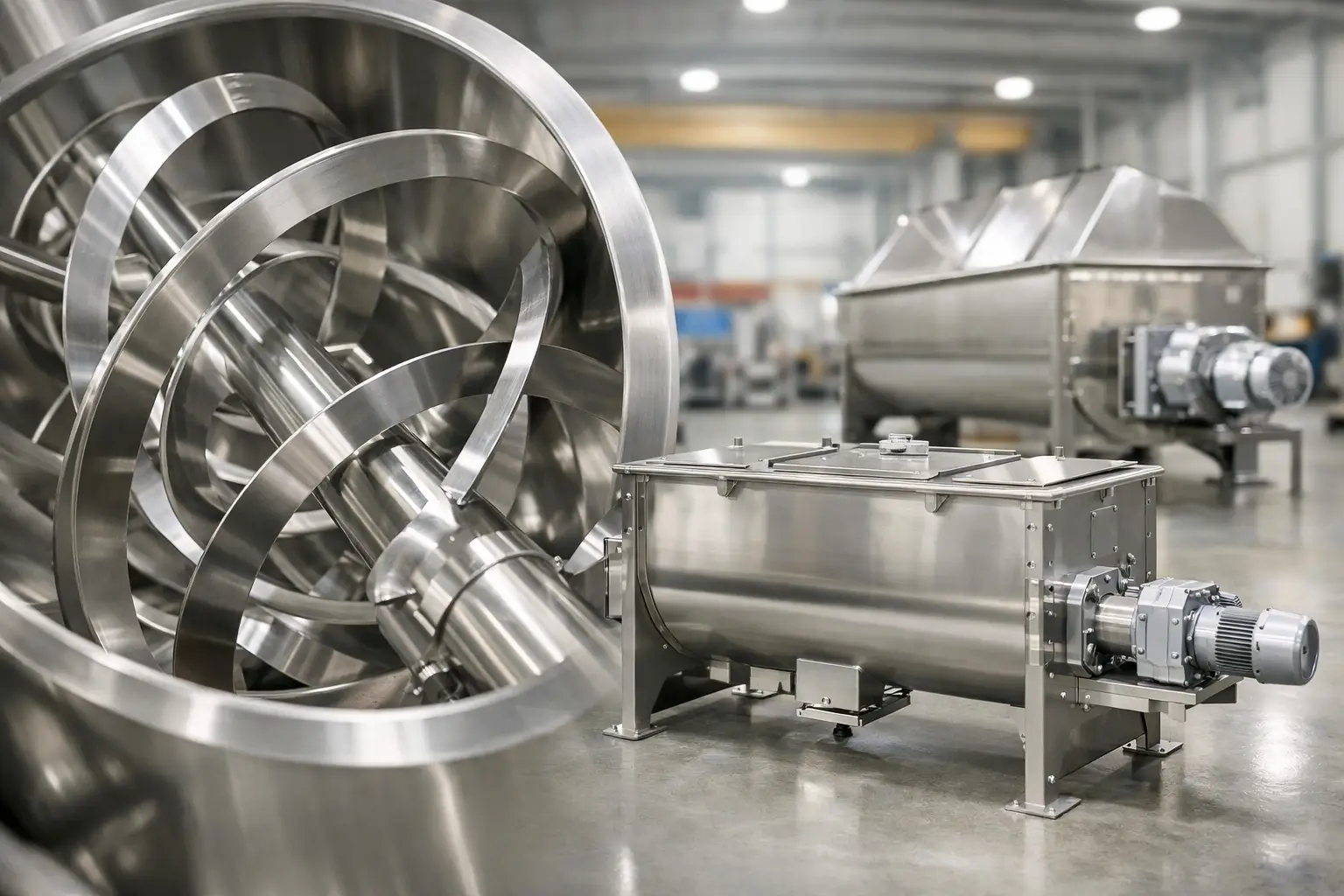
A horizontal ribbon mixer is often the preferred choice for high-throughput, repeatable batch blending of powders and granules. It provides strong convective mixing and can be configured for efficient discharge and easier cleaning. That said, not every product behaves well in the same geometry. Fragile materials, heat-sensitive ingredients, and formulations that tend to smear or cake may require specific internal finishes, reduced shear exposure, or vacuum capability.
Vertical ribbon mixers can make sense when floor space, batch size, or material movement favors a vertical design. Vacuum ribbon mixers and dryers become valuable when the process combines blending with drying or solvent removal. In those applications, a well-matched design can eliminate separate processing steps and reduce handling-related stoppages. The trade-off is that these systems require careful specification around vacuum integrity, thermal behavior, and cleanability.
The practical point is simple: the mixer should be engineered around the product, not the other way around. When the machine fits the material and the production target, uptime improves because the equipment is operating within its intended mechanical and process window.
Maintenance works better when it is designed into the machine
Preventive maintenance is essential, but it becomes much more effective when the mixer itself supports it. A durable machine with accessible components, properly selected seals, and a drive system sized for actual operating conditions gives maintenance teams a real advantage.
Bearings, gearboxes, shaft seals, and discharge valves deserve close attention because these are common downtime points in industrial mixing systems. Still, replacing parts on a calendar alone is not always the best strategy. A powder blending line in a climate-controlled pharmaceutical environment will not stress components the same way as a chemical or mineral application with abrasive fines and heavier loads. Maintenance intervals should reflect actual duty, not generic assumptions.
This is where condition-based thinking adds value. Motor load trends, vibration patterns, seal leakage, temperature changes, and batch cycle drift often reveal problems before failure occurs. Even basic tracking can help. If one mixer takes longer to discharge than it did three months ago, or cleaning time steadily increases, the equipment is already sending a signal.
Plants that reduce downtime consistently usually standardize three things: inspection points, maintenance ownership, and spare part readiness. They know which components are critical, who checks them, and what must be on hand to avoid waiting for a shipment during a production emergency.
Cleaning and changeover time are part of uptime
Many facilities measure downtime only when the mixer is mechanically unavailable. That misses a significant part of the problem. If sanitation or product changeover keeps a mixer offline for hours between batches, that is still lost production capacity.
Mixer cleanability depends heavily on design details. Internal weld quality, surface finish, shaft seal arrangement, access doors, spray systems, and discharge geometry all influence how quickly operators can remove residue. Dead zones, product traps, and difficult-to-reach surfaces extend cleaning cycles and increase the risk of cross-contamination.
For regulated sectors such as food, pharma, and cosmetics, cleanability is not simply an efficiency issue. It is also a compliance issue. The wrong design can force more manual intervention, increase validation burden, and create greater variability between operators and shifts.
A practical way to reduce industrial mixer downtime is to treat cleanout as a design parameter during equipment selection. Ask how long the mixer typically takes to clean for your material type, not for an ideal test powder. Ask what surfaces contact product, how the discharge assembly opens, and whether the machine supports washdown, dry clean protocols, or clean-in-place requirements. Real-world cleaning performance often determines the true production capacity of the line.
Operating discipline prevents avoidable stoppages
Even a well-built mixer will lose uptime if operators are left to fill process gaps on their own. Informal workarounds may keep production moving for a shift, but they usually increase long-term downtime.
Common examples include starting the mixer under excessive load, running batches outside recommended fill levels, using tools to force discharge, or skipping inspection steps to save time. These practices often begin because the process is under pressure, but they place added stress on drives, seals, and internal components.
The answer is not more rules for the sake of rules. It is better operating discipline supported by clear procedures. Batch sequencing, feed order, startup conditions, discharge timing, and cleaning steps should all be documented around how the mixer is actually meant to run. Training should explain why those steps matter, especially when processing difficult materials.
For technical buyers, this is an important distinction. Downtime prevention is not only a maintenance function. It sits at the intersection of equipment design, process engineering, and operator execution.
Why customization often pays for itself
Standard equipment can be the right choice when the application is straightforward. But many industrial mixing problems are not straightforward. They involve variable bulk density, cohesive ingredients, abrasive solids, temperature sensitivity, sanitation demands, or the need to integrate upstream and downstream systems.
In those cases, a configurable mixer often delivers better uptime than a one-size-fits-all unit. Options such as wear-resistant contact surfaces, specialized seal packages, jacketed vessels, vacuum capability, chopper integration, and discharge modifications can reduce the operating conditions that lead to failures or excessive cleaning time.
This is where an experienced manufacturing partner adds measurable value. PerMix Ribbon Mixers works with buyers to align mixer configuration with the application, production target, and maintenance reality of the facility. That engineering focus matters because downtime is rarely caused by a single component. More often, it is the result of a mismatch between the process and the machine.
The business case is bigger than repair cost
When decision-makers evaluate downtime, they often start with maintenance labor and replacement parts. Those costs matter, but they are only part of the total impact. Lost batch capacity, delayed shipments, overtime labor, product waste, quality deviations, and schedule disruption can exceed the direct repair expense very quickly.
That is why the most cost-effective strategy is usually proactive rather than reactive. A mixer with the right design, accessible maintenance points, efficient cleanout, and application-specific configuration may carry a higher upfront investment. In the right process, it can return that difference through better reliability, shorter changeovers, and more stable production scheduling.
The right question is not just how to fix a mixer when it stops. It is how to build a mixing operation that stops less often in the first place. For plants under constant pressure to improve output without adding complexity, that shift in thinking is often where real performance gains begin.
The most dependable uptime gains come from decisions made before the next failure happens – in equipment selection, process alignment, maintenance planning, and cleaning design. When those pieces work together, downtime stops being a recurring surprise and becomes a controllable part of production performance.