Vacuum Ribbon Dryer Application Guide
A vacuum ribbon dryer is usually considered when standard drying methods start creating expensive problems – scorched product, inconsistent moisture, long batch times, solvent handling issues, or material buildup that slows cleaning and changeovers. That is why a practical vacuum ribbon dryer application guide matters. For process engineers and plant managers, the real question is not whether vacuum drying works. It is whether the dryer design matches the product, the target moisture level, and the production reality on the plant floor.
Where a vacuum ribbon dryer fits best
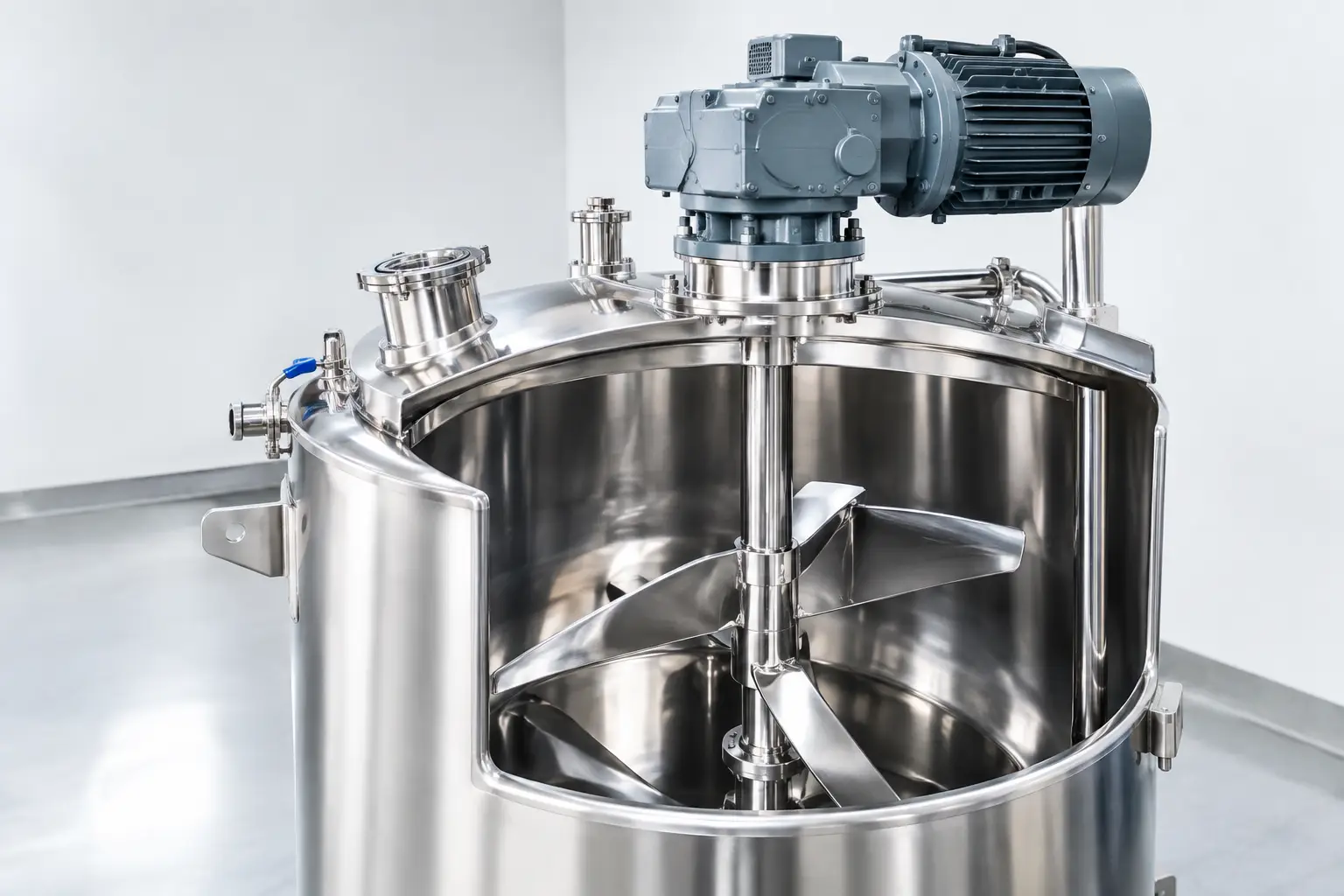
A vacuum ribbon dryer is designed for materials that need controlled heating and continuous agitation inside a sealed vessel. By lowering the pressure, the system reduces the boiling point of moisture or solvents, which allows drying at lower temperatures than atmospheric equipment. The ribbon agitator keeps product moving across the heated surfaces, improves heat transfer, and helps break up wet zones as the batch progresses.
This combination is especially useful for heat-sensitive powders, sticky cake, wet granulations, filter cake, slurries that become powders during drying, and paste-like products that would not move well in a static vacuum tray dryer. It is also a strong fit where solvent recovery, oxidation control, or closed processing is a priority.
In practical terms, the best applications are the ones where drying and mixing need to happen together. If a product clumps early in the cycle, forms a crust on heated walls, or needs uniform agitation to reach a repeatable final moisture level, a ribbon-based vacuum dryer can deliver better batch consistency than less dynamic options.
Vacuum ribbon dryer application guide for key industries
The most successful installations start with application fit, not with a generic equipment spec.
Pharmaceuticals and nutraceuticals
In pharmaceutical and nutraceutical production, low-temperature drying is often tied directly to product stability. Active ingredients, excipients, and formulated blends may degrade if exposed to excessive heat or oxygen. A vacuum ribbon dryer helps processors remove moisture gently while maintaining controlled, enclosed handling. That supports both quality targets and cleaning expectations in regulated environments.
The trade-off is that pharmaceutical applications usually demand tighter validation, smoother contact surfaces, and more attention to cleanability, discharge design, and material traceability. Those details affect both capital cost and project timeline.
Food and ingredients
Food processors use vacuum ribbon dryers for products where flavor, color, texture, or nutritional value can be affected by aggressive drying temperatures. This can include protein concentrates, specialty starches, fruit and vegetable derivatives, seasoning bases, and heat-sensitive ingredient blends. Lower-temperature drying can reduce thermal damage while the ribbon agitator keeps the product from packing into dense, slow-drying masses.
That said, not every food product belongs in this style of dryer. Free-flowing materials with simple moisture removal needs may be better served by continuous systems if throughput is the main driver. Batch vacuum drying tends to make more sense when product value, sensitivity, sanitation, or recipe flexibility outweigh raw volume alone.
Chemicals, specialty materials, and polymers
Chemical processors often need vacuum ribbon drying for filter cakes, precipitates, resins, pigments, catalyst intermediates, and specialty compounds that move through several physical states during drying. A material may start wet and heavy, then become tacky, then transition into a dry powder. That shift is where ribbon agitation becomes valuable. It keeps the batch workable across the full moisture curve.
For solvents and sensitive chemistries, the closed system also supports safer handling and controlled vapor management. The right design depends on vapor load, corrosion risk, explosivity, and the need for inert operation. Those are not accessory decisions. They are core application decisions.
What to evaluate before selecting a unit
A dryer can look right on paper and still underperform if the product behavior is not properly defined. The most important input is not bulk density alone. It is how the material changes during the cycle.
Start with the wet feed condition. Is it a slurry, crumb, cake, granule, or paste? Does it smear on contact surfaces? Does it release free moisture early and then slow dramatically near the endpoint? Does it become dusty late in the batch? These questions shape agitator design, heating strategy, fill level, and discharge approach.
Moisture target matters just as much as starting moisture. Drying from 30 percent to 10 percent is a very different duty than drying from 10 percent to less than 1 percent. The final stage often takes the most time, so equipment sizing based only on water removal per hour can be misleading.
Thermal sensitivity is another major factor. Some materials can handle moderate jacket temperatures under vacuum with no issue. Others need narrow process windows to protect potency, color, or particle structure. If the product is oxygen-sensitive, the system may need inert gas integration and sealing details that go beyond a standard design.
Finally, think about how the dryer fits upstream and downstream. Batch times, loading method, condenser capacity, vacuum system performance, and discharge handling all affect real throughput. A high-quality dryer still becomes a bottleneck if feeding and discharge are not matched to the cycle.
Sizing is about more than vessel volume
Many buyers first compare units by working volume. That is useful, but it does not tell the whole story. Effective sizing depends on heat transfer area, agitation efficiency, vapor removal rate, and the actual drying curve of the product.
A larger vessel is not automatically the better choice. Oversizing can reduce ribbon effectiveness at low fill levels, increase heating surface that is not fully used, and create longer cleaning times. Undersizing creates the opposite problem – crowded batches, poor movement, and inconsistent drying near the walls or at discharge zones.
The best sizing approach is based on tested material data and realistic production targets. This includes initial and final moisture, allowable product temperature, batch frequency, utility conditions, and expected turnaround time between batches. If solvent is involved, condenser and vacuum package sizing must be treated as part of the drying system, not as an afterthought.
Process details that drive performance
In a well-matched system, the ribbon agitator does more than mix. It exposes fresh product to heated surfaces, reduces thermal gradients, and helps maintain a uniform batch condition as moisture leaves the material. That translates into more predictable drying and less operator intervention.
Heating media selection also matters. Hot water, steam, or thermal fluid may all be suitable depending on the required temperature range and plant utilities. The right choice depends on response time, control precision, and energy economics in the specific facility.
Vacuum level should be set to support the product, not simply pushed as low as possible. Deeper vacuum can accelerate moisture removal at lower temperatures, but it can also change boiling behavior, foaming tendency, or powder handling characteristics. In some applications, a controlled vacuum profile across the batch works better than a fixed setting.
Discharge design often gets less attention than it should. For sticky or partially cohesive products, discharge geometry and agitator sweep pattern can have a direct effect on yield and cleanout time. Plants focused on changeover speed should evaluate these details early.
Common application mistakes
The most common mistake is treating a vacuum ribbon dryer as a universal solution for any wet material. Some products are simply better suited to other drying technologies based on throughput, particle handling, or continuous processing needs.
Another frequent issue is relying on generic assumptions about cycle time. Two materials with similar starting moisture can dry very differently depending on structure, viscosity, and how moisture is bound within the product. Without application review or testing, projected capacity is often too optimistic.
A third mistake is underestimating maintenance and sanitation requirements. Seal selection, internal finish, access configuration, and cleaning method should all reflect the plant environment. In food, pharma, and specialty chemical operations, downtime is not just a maintenance concern. It is a production cost issue.
Why customization matters in vacuum drying
This is one category where standard equipment rarely delivers the best long-term outcome. Material characteristics, operating conditions, and compliance needs vary too much across industries. That is why a serious vacuum ribbon dryer application guide should always lead to configuration decisions, not just model selection.
For some plants, customization means heavy-duty construction for abrasive product. For others, it means sanitary finishes, explosion protection, specialized choppers, solvent recovery integration, or controls that support recipe repeatability. The right package should reduce process risk, not shift complexity back to operators.
PerMix approaches this category as an engineered process solution rather than a generic vessel with an agitator. That distinction matters when the application involves valuable product, narrow tolerances, or demanding production schedules.
Making the right decision
If your process involves heat-sensitive solids, wet cake, pastes, or solvent-bearing materials, a vacuum ribbon dryer can solve several problems at once – drying efficiency, batch uniformity, enclosed handling, and lower thermal stress. But results depend on fit. The best outcomes come from matching the dryer design to the material behavior, utility conditions, cleaning expectations, and plant throughput targets.
A good buying decision starts with honest process data and a supplier willing to challenge assumptions. When that happens, the equipment does more than remove moisture. It supports a more stable, more efficient production line with fewer surprises after startup.