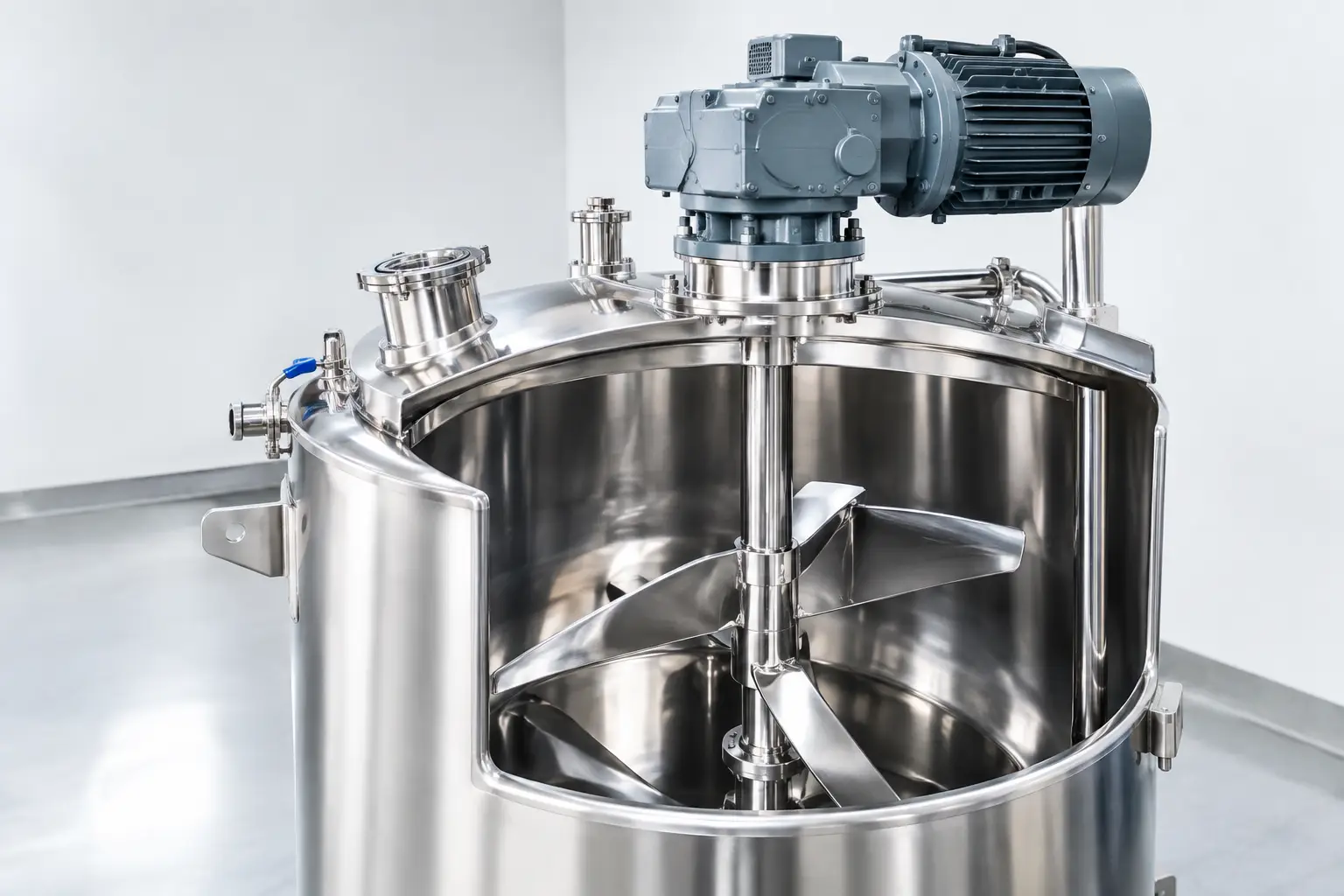
How to Choose Ribbon Mixer for Your Process
A ribbon mixer that looks right on paper can still underperform once it hits the plant floor. The reason is usually simple: buyers focus on volume and motor size first, when the real decision starts with the product, the process, and the operating environment. If you are evaluating how to choose ribbon mixer equipment for a production line, the best results come from matching machine design to material behavior, cleanability, discharge requirements, and throughput targets.
How to choose ribbon mixer based on the material
The fastest way to narrow the field is to look closely at what you are mixing. Powders, granules, fibers, flakes, slurries, and pastes do not move the same way inside a mixing chamber. A free-flowing spice blend behaves very differently from a cohesive chemical powder or a cosmetic base with added liquids. If the material is fragile, the mixer must protect particle integrity. If it tends to bridge or stick, the machine needs enough agitation and the right internal geometry to keep product moving.
Bulk density matters just as much as product form. A low-density powder may require more working volume than a dense mineral blend at the same batch weight. Particle size distribution also affects performance. When ingredients vary widely in size or density, segregation becomes a serious concern, especially during filling and discharge. In those cases, the mixer should be selected for controlled, repeatable blending rather than just fast turnover.
Moisture content changes the decision as well. Dry powders often mix efficiently in a standard horizontal ribbon configuration, while sticky or heat-sensitive products may call for a different internal finish, optional heating or cooling, or vacuum capability. If liquid addition is part of the process, the mixer must distribute that liquid evenly without creating wet pockets or buildup on the trough walls.
Start with the process, not just the machine
Many buyers ask for a ribbon mixer by capacity before defining the full operating requirement. That is backward. Capacity is important, but it should follow process analysis.
Start with the batch size you need to run consistently, not the maximum number you hope to achieve under ideal conditions. Then consider how often the mixer will run, how quickly it must discharge, and whether the line depends on one mixer or multiple units. A machine that handles the target batch size but creates delays in loading, sampling, or cleaning can reduce actual plant output.
Residence time is another factor that deserves attention. Some applications need a short, gentle blend to protect product quality. Others require more intensive mixing to break up minor agglomerates or distribute micro-ingredients uniformly. If your formulation includes actives, colors, flavors, or additives at low inclusion rates, mixing accuracy becomes more critical than raw speed.
This is where application-specific engineering makes a difference. A mixer should support the way your process really runs – including upstream feeding and downstream packaging or transfer – not just the blending step in isolation.
Horizontal, vertical, or vacuum ribbon mixer?
For many industrial dry blending applications, a horizontal ribbon mixer is the most practical choice. It offers strong mixing action, good batch consistency, and efficient operation across powders, granules, and some paste-like products. Horizontal designs are often preferred when plants need dependable performance, flexible batch handling, and relatively fast discharge.
A vertical ribbon mixer can make sense when floor space is limited or when the application benefits from a different product flow pattern. Depending on the material, vertical designs may support specific handling goals, but they are not the default answer for every production environment. Layout constraints, charging method, and maintenance access all need to be considered before choosing this route.
Vacuum ribbon mixers and dryers serve more specialized processes. If the product requires moisture removal, solvent recovery, lower-temperature drying, or controlled atmospheric conditions, vacuum capability can deliver clear process advantages. That said, a more advanced system should only be selected when the application justifies the added complexity and investment.
The right choice depends on your product and operating objective. The best mixer is not the most feature-heavy model. It is the one that solves the process requirement with the least compromise.
Capacity, fill level, and real-world throughput
Ribbon mixers are not meant to operate at every fill level with the same result. Underfilling can reduce mixing efficiency because the ribbons are not engaging enough product mass. Overfilling can restrict movement and extend blend time. That is why working capacity is more useful than total vessel volume when comparing models.
Buyers should ask what percentage of total volume represents the optimal operating range. This helps prevent a common mistake: selecting a mixer based on vessel size alone, then discovering that the desired batch weight sits outside the best-performing fill window.
Throughput should be evaluated across the whole cycle. Charging, mixing, sampling, discharge, and cleaning all affect output. A mixer with slightly longer blend time but faster discharge and easier cleaning may outperform a larger unit over the course of a shift.
How to choose ribbon mixer features for sanitation and maintenance
In food, pharmaceutical, cosmetic, and other regulated environments, sanitation is not an add-on. It is a core selection criterion. Surface finish, weld quality, shaft seals, access ports, and discharge design all influence how easily the machine can be cleaned and validated.
If the line changes products frequently, quick access and reduced product hold-up become especially important. Dead zones inside the trough can trap material and create cross-contamination risk. For allergen-sensitive or high-purity production, the internal geometry should support complete cleaning and consistent inspection.
Maintenance affects uptime just as directly. Bearings, drives, seals, and gear components should be selected for durability and service access. A mixer that delivers strong blending but requires frequent seal replacement or difficult part access can create long-term operating costs that outweigh the original purchase price.
For that reason, the equipment review should include more than mixing performance. It should include the practical demands of owning and servicing the machine over years of production.
Consider energy use and mechanical durability
Industrial buyers are under pressure to increase output without adding unnecessary operating cost. Mixer efficiency matters here. A well-designed ribbon mixer can produce superior mixing performance while keeping power consumption in check, especially when matched correctly to product type and batch load.
Durability also matters because ribbon mixers often run in demanding environments with abrasive powders, corrosive ingredients, or high-duty cycles. Material of construction should be chosen based on product chemistry and wear profile. Stainless steel may be essential in sanitary or corrosive applications, while heavy-duty carbon steel can be suitable in other settings. The right decision depends on both the process and the compliance standard.
Drive design, shaft support, and ribbon construction should all be reviewed through the lens of long-term reliability. A lower-priced machine that wears quickly or struggles with your material is rarely the more economical option.
Ask better questions during supplier evaluation
A strong supplier should be able to discuss your application in detail, not just quote a standard model. That means asking about your ingredients, target homogeneity, bulk density, moisture, batch frequency, plant utilities, and cleaning procedure. If those questions are not part of the conversation, the recommendation may be too generic.
Buyers should also ask whether the mixer can be configured for their process. Discharge valves, spray systems, jacketed troughs, vacuum operation, controls integration, and special finishes can all improve fit when they are selected for a clear reason. Customization is valuable when it supports performance, cleaning, or line efficiency. It is less valuable when it adds cost without solving a real production problem.
An experienced manufacturer should also be transparent about trade-offs. For example, a design optimized for aggressive mixing may be less ideal for fragile particles. A highly polished sanitary finish may increase investment but reduce cleaning time and contamination risk. Good guidance does not avoid these details. It addresses them early.
PerMix works with buyers in technical and regulated industries where the mixer must do more than blend material. It must support consistent product quality, reduce downtime, and fit the realities of production.
The best ribbon mixer is the one that fits your process
Choosing a ribbon mixer is really a process design decision. The material must move correctly. The batch must run consistently. The equipment must be cleanable, serviceable, and durable enough for the environment it will face. When those factors are aligned, the mixer becomes a productive asset rather than a recurring operational problem.
If you are comparing options, slow down long enough to define the application with precision. A better specification at the beginning usually leads to better performance for years after startup.