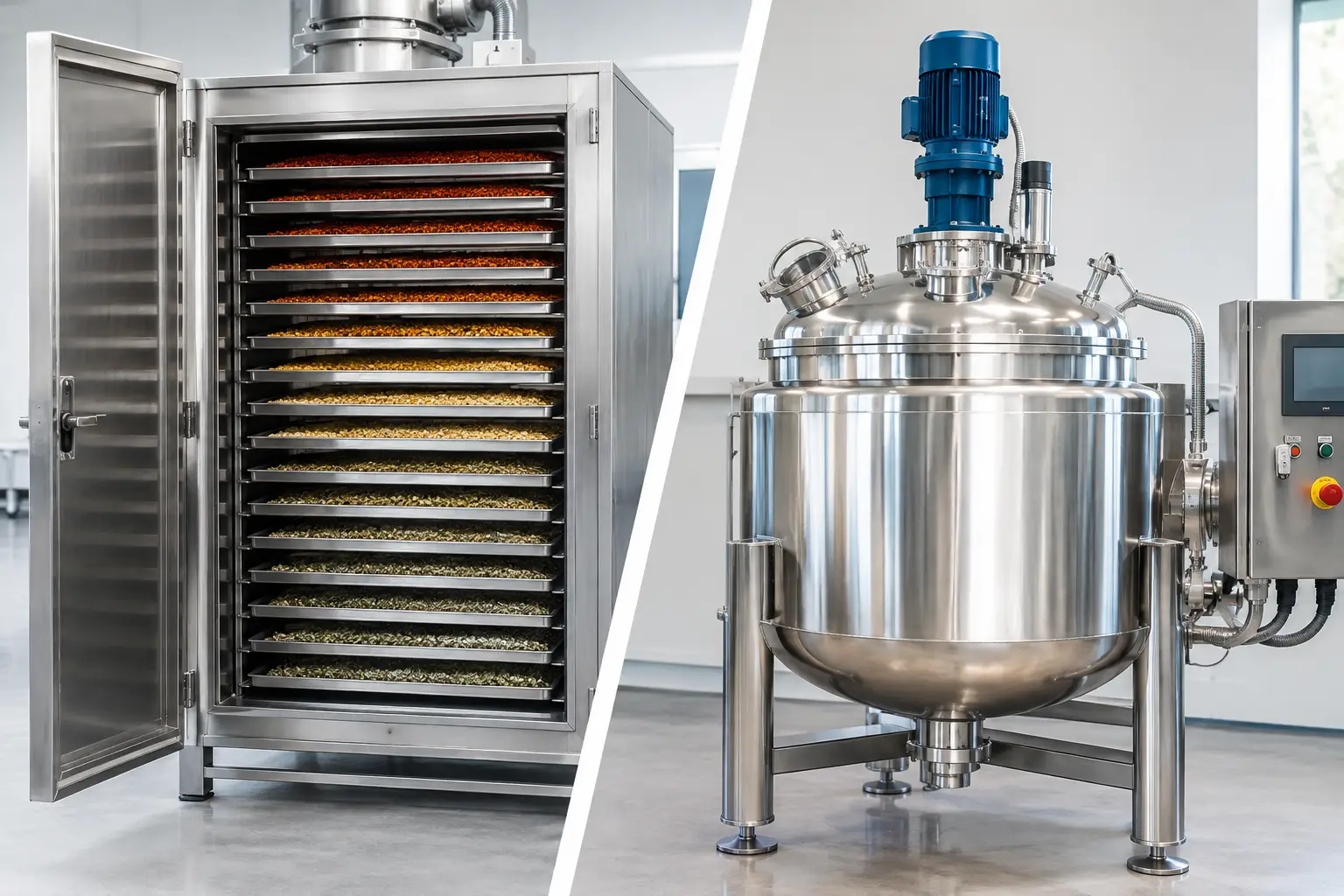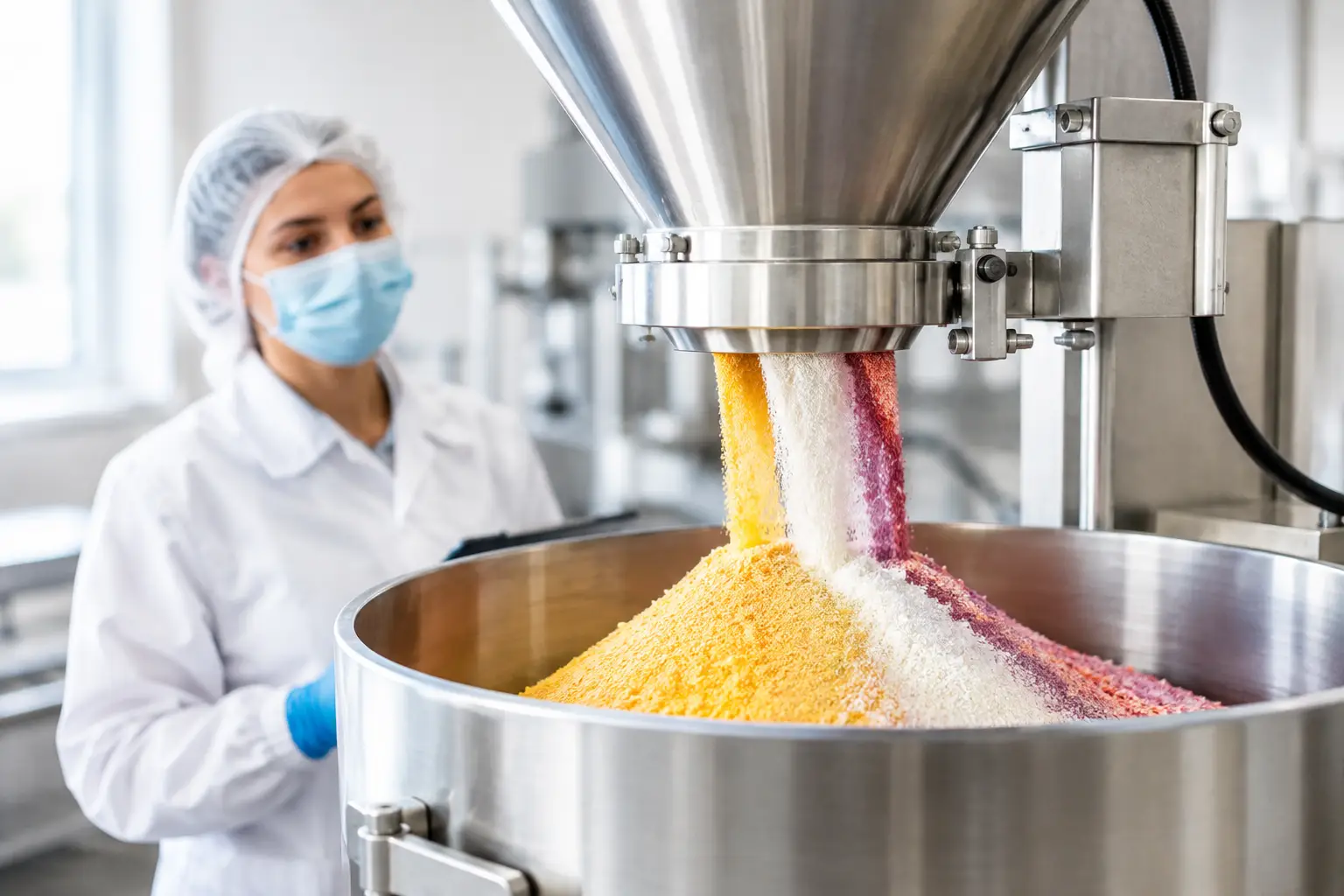
Choosing Chemical Powder Blending Equipment
A blend that looks acceptable in the lab can fail fast on the plant floor. The reason is rarely just formulation. More often, the issue is chemical powder blending equipment that does not match the material’s flow behavior, batch size, density differences, or cleaning demands.
For chemical manufacturers, that mismatch shows up in expensive ways – off-spec batches, segregation after discharge, excessive cycle times, operator intervention, and avoidable maintenance. Selecting the right mixer is not simply a matter of capacity. It is a process decision that affects quality, throughput, safety, and total operating cost.
What chemical powder blending equipment needs to do
In chemical processing, blending is expected to deliver more than visual uniformity. The equipment must distribute active ingredients consistently, handle powders with very different bulk densities, and protect fragile particles when required. In many facilities, it also has to manage liquid additions, support controlled discharge, and fit into validation or containment protocols.
That is why equipment selection should start with application requirements rather than a generic machine category. A free-flowing mineral powder behaves very differently from a cohesive additive, a moisture-sensitive formulation, or a compound that tends to smear when liquids are introduced. The more demanding the material, the more important mixer geometry and agitator design become.
Ribbon mixers remain a strong fit for many chemical applications
Among the most widely used forms of chemical powder blending equipment, ribbon mixers continue to stand out because they offer a practical balance of blending performance, versatility, and operating efficiency. In a horizontal ribbon mixer, inner and outer ribbons move material in opposing directions, creating a thorough convective mixing pattern across the vessel.
This design is especially effective for dry powders, granules, and formulations that need repeatable batch blending without excessive shear. It can also support liquid addition when the process calls for coating, wetting, or minor ingredient incorporation. For many chemical plants, that range matters because product lines often evolve faster than capital equipment budgets.
A vertical ribbon mixer may be a better fit when floor space is limited or when a specific material flow pattern suits the product better. Vacuum ribbon mixers and dryers add another level of process capability by combining blending with drying or solvent removal under controlled conditions. The right choice depends on the full process target, not just the blending step in isolation.
How to evaluate chemical powder blending equipment by material behavior
The fastest way to make a costly mistake is to choose based on nominal capacity alone. Chemical powders rarely behave like ideal test media. They bridge, compact, aerate, segregate, and react to small changes in moisture or particle size.
Start with flowability. Free-flowing materials often blend efficiently in standard ribbon configurations, but cohesive powders may require modified clearances, intensifier options, or a different mixer type entirely. If ingredients vary significantly in particle size or density, the mixer must generate enough movement to achieve homogeneity without creating conditions that encourage re-segregation during discharge.
Bulk density matters just as much. A vessel sized correctly by volume may still underperform if the material load changes the torque requirement beyond what the drive system was designed to handle. This is one reason experienced buyers ask not only how much a mixer can hold, but what specific material it can process at that fill level.
Liquid addition is another major variable. Some formulations need precise spray application to avoid lumping, while others need enough agitation to distribute a binder uniformly. If liquid introduction is part of the process, nozzle placement, droplet control, and mixing intensity all deserve attention early in equipment selection.
Design factors that affect performance and uptime
A well-designed mixer does not just produce a consistent blend. It does so with predictable batch times, manageable cleaning requirements, and minimal disruption to surrounding operations.
The first consideration is vessel and agitator design. Ribbon geometry, pitch, tip speed, and clearance influence how material moves from the ends of the trough back toward the center and from the bottom upward. Small design differences can change blend time, residue levels, and discharge efficiency.
Drive sizing should reflect real process conditions, including startup load and worst-case material behavior. Undersized systems can stall or wear prematurely. Oversized systems may add unnecessary cost and energy use. The best outcome is a balanced design engineered around the application.
Discharge configuration also deserves careful review. If blended material hangs up near the outlet or if discharge takes too long, batch efficiency suffers and segregation risk rises. Full-length or optimized bottom discharge designs can improve evacuation and reduce retained material, which is particularly valuable in multi-product environments.
Then there is cleanability. In chemical manufacturing, the right cleaning approach depends on the product and the production model. Some operations can tolerate manual cleanout between campaigns. Others need a design that minimizes dead zones, supports rapid wipe-down, or integrates with more rigorous sanitation requirements. There is no universal answer, but there is always a cost to overcomplicating or underengineering cleaning access.
Where buyers should expect trade-offs
No mixer excels equally in every scenario. A machine optimized for gentle blending may not be the fastest option for difficult dispersions. Equipment built for broad application flexibility may involve more upfront engineering than a simpler unit dedicated to a single product family.
This is where process priorities need to be explicit. If uptime and repeatability across many SKUs matter most, configurability and ease of cleaning may outweigh the lowest initial purchase price. If the process is stable and product variation is limited, a more focused design may offer a better return.
Batch size also introduces trade-offs. Large-capacity systems can improve throughput, but only if upstream feeding and downstream packaging can keep pace. Otherwise, the mixer becomes oversized relative to the line, tying up capital without delivering the expected productivity gain.
Matching equipment selection to business outcomes
Technical fit is only part of the decision. Buyers also need to know how chemical powder blending equipment will affect operating cost, labor burden, and production risk over time.
Consistent blending reduces rework and waste. Efficient agitation and drive design can lower energy use over thousands of cycles. Durable construction and quality components reduce maintenance events that interrupt production. When these factors are aligned, the mixer becomes more than a vessel with an agitator. It becomes a controllable, dependable part of plant performance.
That is particularly important in regulated and quality-sensitive industries. Whether the application involves specialty chemicals, additives, polymers, or formulated compounds, repeatability matters. A mixer that delivers the same blend profile from batch to batch supports quality targets, inventory planning, and customer confidence.
Questions worth asking before you request a quote
A serious equipment evaluation should go beyond brochure specifications. Buyers should be ready to discuss the actual formulation, ingredient proportions, expected batch size range, bulk density, required blend uniformity, and whether liquids are added during mixing.
It is also smart to define operational constraints early. Ceiling height, explosion protection requirements, cleaning procedures, automation preferences, and discharge integration all affect final machine configuration. The earlier those details are addressed, the easier it is to avoid redesigns later.
The best suppliers will ask detailed process questions because mixer performance depends on application data. That conversation is not a sales delay. It is part of getting the equipment right.
For manufacturers evaluating ribbon-based solutions, PerMix focuses on application-specific mixer design across horizontal, vertical, and vacuum ribbon systems, helping plants align blending performance with real production demands.
A better approach to selecting chemical powder blending equipment
Good equipment decisions are rarely made by comparing horsepower and vessel volume alone. The better approach is to evaluate how the mixer handles your actual material, supports your cleaning and discharge requirements, and fits the pace of your production environment.
When chemical powder blending equipment is properly matched to the application, the result is not just a uniform batch. It is a more stable process, better use of labor, fewer production interruptions, and a system that continues to perform as product demands change. That is the kind of decision that pays back long after installation.