How to Mix Cohesive Powders Effectively
A powder that looks simple in a tote can become a production problem the moment it enters a mixer. Cohesive materials cling, bridge, smear, and form stubborn agglomerates that resist uniform blending. If you are evaluating how to mix cohesive powders in a real production environment, the answer is rarely just more mixing time. The result depends on powder behavior, fill level, sequence, and the mixer design itself.
Cohesive powders behave differently from free-flowing materials because interparticle forces are stronger than gravity at the particle scale. Fine particle size, moisture, electrostatic charge, irregular particle shape, and fat or oil content can all increase cohesion. In practical terms, that means the product may not disperse evenly, and a standard blend cycle that works for one formulation may fail on another.
Why cohesive powders are difficult to blend
The core challenge is movement. Free-flowing powders circulate readily and redistribute with less resistance. Cohesive powders tend to travel in lumps or dead zones, which reduces particle-to-particle exchange. That makes uniformity harder to achieve and often increases the risk of overmixing in one region while underprocessing another.
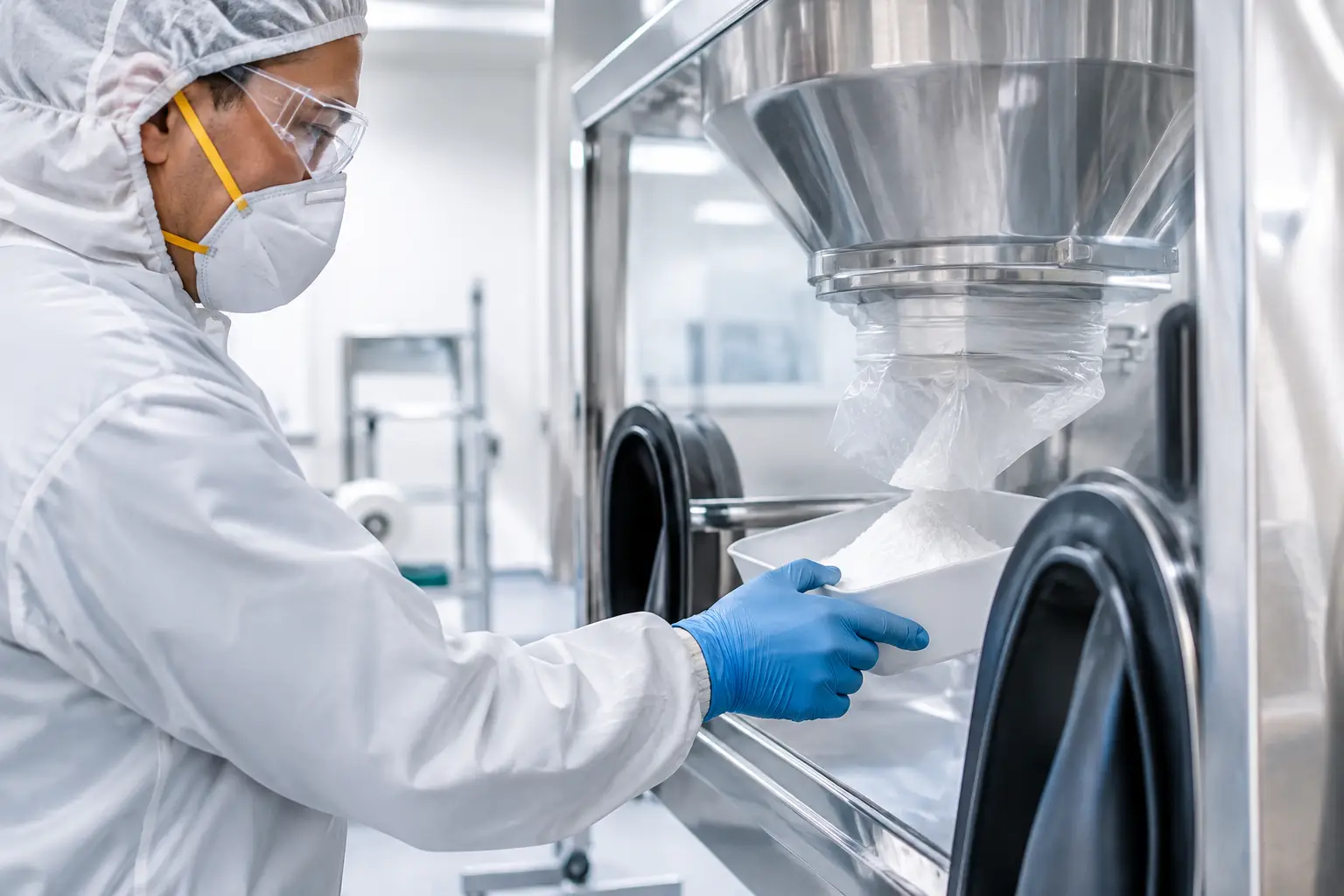
This matters well beyond lab results. Poorly blended cohesive powders can create content uniformity failures, inconsistent downstream feeding, erratic bulk density, and batch rejects. In regulated sectors such as pharmaceuticals and food processing, those issues can quickly become quality and compliance problems. In chemicals, plastics, and agriculture, the same issue often shows up as lower throughput, more cleaning time, and excess waste.
How to mix cohesive powders with better consistency
The most effective approach starts with understanding the material, then matching process conditions and mixer geometry to that behavior. Cohesive powders do not respond well to guesswork. They respond to controlled mechanical action.
Start with powder characteristics, not just the recipe
Two formulations with the same ingredient list can still mix differently if particle size distribution, moisture content, or storage conditions change. Before setting a cycle, review the material’s angle of repose, bulk density, compressibility, and tendency to form lumps. If the powder compacts during storage or transport, the mixer must do more than blend – it must also deagglomerate.
This is where many production teams lose time. They assume a mixing issue is caused by batch duration, when the real cause is feed condition. If material enters the mixer already bridged or compacted, blending alone may not fully correct it. Pre-screening, controlled feeding, or adding a chopper or intensifier can make a measurable difference.
Control the order of ingredient addition
Sequence has a strong effect on cohesive powder performance. Minor ingredients added too early can adhere to vessel walls or attach unevenly to larger particles. Liquids introduced too quickly can create wet clumps that are difficult to break down. Fine additives may need to be dispersed into a larger moving powder bed rather than charged into a stagnant mass.
In many applications, it is better to establish bulk movement with the primary powder first, then meter in fines or binders under active mixing. If a liquid is required, spray distribution is usually more effective than localized pouring. The right sequence reduces lump formation and improves coating uniformity across the batch.
Avoid the wrong fill level
Underfilling and overfilling can both reduce performance. Too little product may not engage the full mixing zone, while too much product can limit circulation and compress the bed. Cohesive powders are especially sensitive to this because they already resist movement.
A ribbon mixer, for example, depends on predictable axial and radial flow patterns. If the vessel is loaded outside its effective working range, those patterns become less efficient. The practical result is longer cycles, greater energy use, and less consistent blend quality. Fill level should be set around the machine’s intended operating envelope, not simply the maximum vessel volume.
Equipment selection matters more with cohesive materials
If cohesive powders are central to your process, mixer selection has a direct impact on yield, cycle time, and cleaning requirements. The machine must create enough mechanical action to move and separate the material without damaging the formulation.
Why ribbon mixers are often the preferred choice
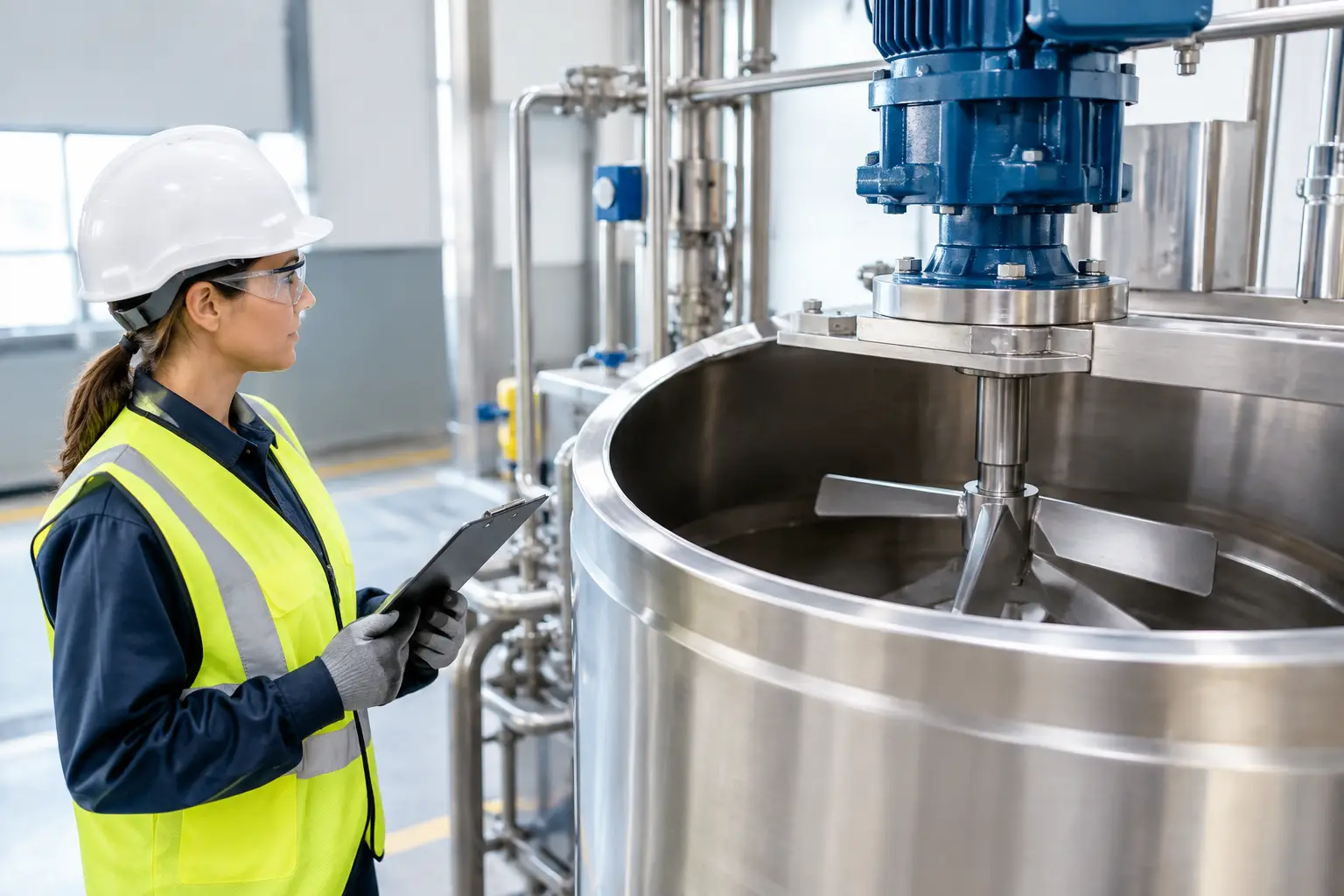
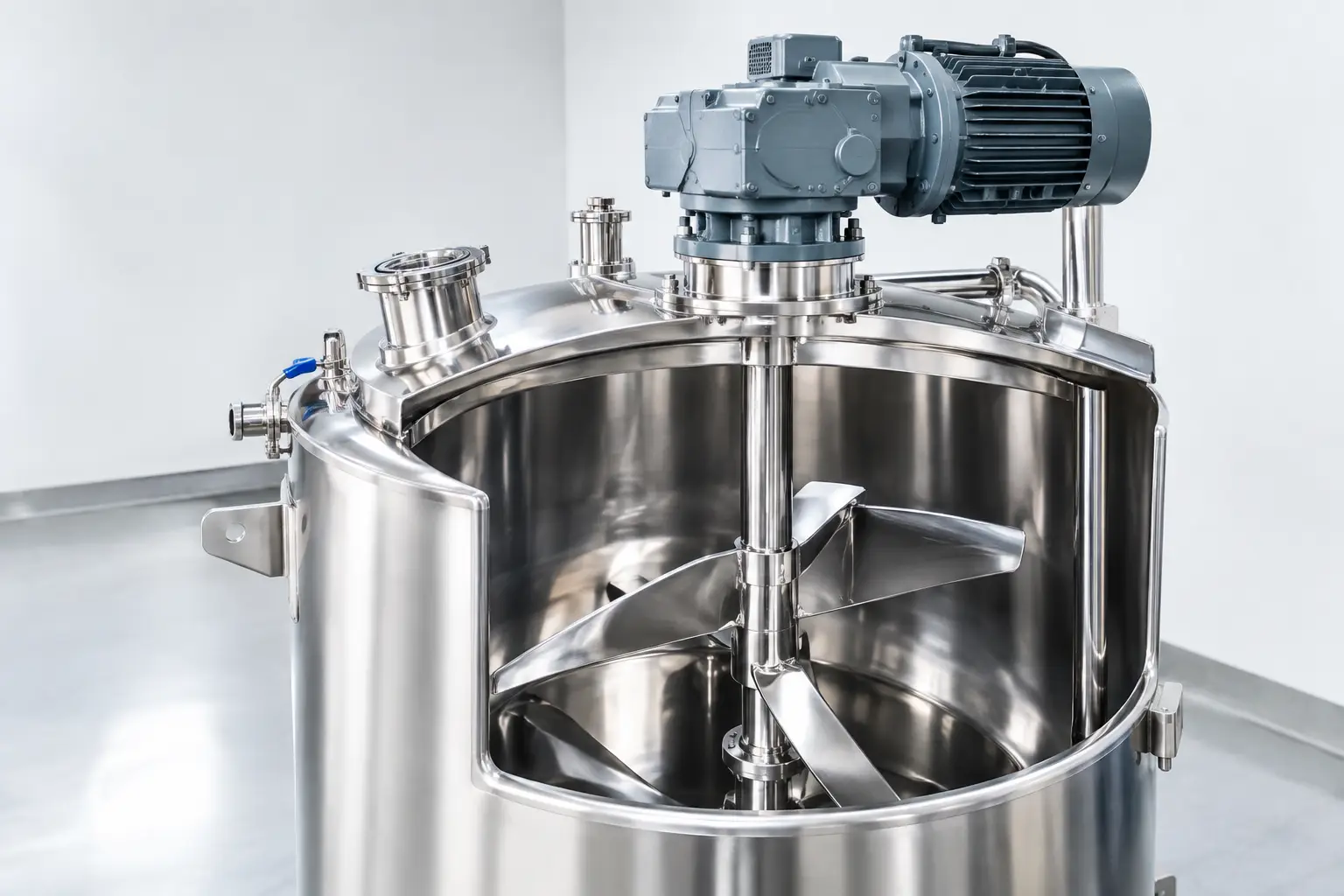
For many industrial applications, ribbon mixers are well suited to cohesive powders because they generate a combination of convective movement and shear. The inner and outer ribbons move material in opposing directions, helping renew the powder bed and reduce stagnant zones. With the right ribbon geometry and rotational speed, this can deliver strong blending performance across a wide range of powder characteristics.
Horizontal ribbon mixers are commonly selected when throughput, batch consistency, and discharge efficiency are priorities. They are especially effective where cohesive powders require reliable turnover and repeatable cycles. Vertical ribbon mixers can also be valuable, particularly when floor space, batch sensitivity, or application-specific handling requirements influence system design. Vacuum ribbon mixers and dryers add another level of process control for applications involving moisture removal, solvent recovery, or temperature-sensitive materials.
The trade-off is that no single design fits every formula. A highly cohesive, smear-prone powder may require different ribbon pitch, vessel finish, drive sizing, or intensifier placement than a dry chemical blend with moderate cohesion. That is why application-specific engineering usually outperforms generic equipment selection.
Process variables that improve mixing performance
Even the right machine can underperform if process settings are not tuned to the material.
Mixing time is important, but not unlimited
Longer mixing does not always improve uniformity. With cohesive powders, extended cycles can sometimes increase compaction, heat buildup, or attrition. In some formulations, overmixing can also promote segregation after discharge by changing particle size distribution.
The better approach is to validate the shortest cycle that achieves the target uniformity. That reduces energy consumption, protects product integrity, and supports higher throughput.
Rotor speed and shear should match the formulation
More speed creates more shear, but excess shear is not automatically better. Some cohesive powders need aggressive mechanical action to break agglomerates. Others are heat sensitive or fragile and will degrade if mixed too intensely. The right setting depends on whether your process priority is deagglomeration, coating, dispersion, or gentle homogenization.
Variable speed capability can be valuable here. It allows operators to use a stronger initial phase to condition the powder, then transition to a lower speed for final blending.
Wall buildup and discharge behavior cannot be ignored
Cohesive powders often stick to contact surfaces, especially if moisture, fat, or static is present. That buildup reduces effective batch volume and creates a sanitation issue in regulated environments. Surface finish, clearances, seal design, and cleanout access all influence how well the system handles this behavior.
Discharge is equally important. A blend that looks acceptable in the vessel but hangs up at outlet transition points can still create line inefficiency and batch inconsistency. For cohesive products, reliable discharge design is part of the mixing solution, not a separate consideration.
How to reduce risk during scale-up
A blend that performs well in a pilot mixer may change significantly at production scale. Cohesive powders are particularly prone to this because bulk pressure increases with scale, and that can alter flow behavior, lump formation, and energy input.
When scaling up, maintain attention to geometry, tip speed, fill level, and ingredient addition timing. Do not assume that matching mixing time alone will preserve results. Production validation should confirm uniformity, discharge performance, cleaning time, and batch repeatability under actual operating conditions.
For manufacturers running multiple SKUs, flexibility also matters. A system optimized only for one difficult formula may become inefficient across the broader product range. The best investment is often a configurable mixer platform that can be tailored to the toughest material while still supporting other batches efficiently.
Common mistakes when mixing cohesive powders
The most common mistake is trying to solve a material behavior problem with cycle time alone. Others include charging ingredients in the wrong sequence, running outside the recommended fill range, selecting equipment based on vessel volume instead of application fit, and overlooking the need for deagglomeration.
Another frequent issue is treating all cohesive powders as the same. A hygroscopic food ingredient, a fine active pharmaceutical powder, and a polymer additive may all be cohesive, but they do not respond the same way to shear, temperature, or dwell time. Process reliability comes from matching the system to the formulation, not forcing every product through one operating recipe.
For plants that need dependable results, this is where a specialized equipment partner adds value. PerMix works with manufacturers to align mixer configuration with real material behavior, production targets, and cleaning demands so the process performs consistently at scale.
When cohesive powders are involved, the goal is not just to get a batch mixed. It is to achieve uniformity, protect product quality, and keep the line moving without wasted time, rework, or maintenance. The right process and the right mixer make that possible.