How to Choose a Powder Mixer Machine
A powder mixer machine can solve a production problem fast – or create a bigger one if the design does not match the material. That is the real issue plant teams face when blends drift out of spec, batch times stretch, cleaning takes too long, or ingredients segregate after discharge. The right machine is not simply the one with the highest capacity. It is the one built around your product behavior, process target, and operating environment.
What a powder mixer machine needs to do
In industrial production, mixing is rarely just about combining ingredients. The mixer must deliver a repeatable level of homogeneity within a practical cycle time, handle the bulk density and flow characteristics of the material, protect sensitive components, and fit into upstream and downstream operations. In regulated sectors, it also has to support validation, cleaning requirements, and documented consistency.
That is why two powders that look similar on paper can behave very differently in the mixer. Fine cohesive materials may resist movement and form agglomerates. Free-flowing powders can blend quickly but separate just as quickly during discharge or transfer. Fragile granules may break down under excessive shear. Lightweight additives may float, while denser components settle. A good equipment decision starts with these realities, not with a generic capacity chart.
Powder mixer machine types and where they fit
Several mixer designs can process powders, but they are not interchangeable. The best choice depends on how your material moves, how clean the process must be, and what level of mixing intensity the application requires.
Horizontal ribbon mixers
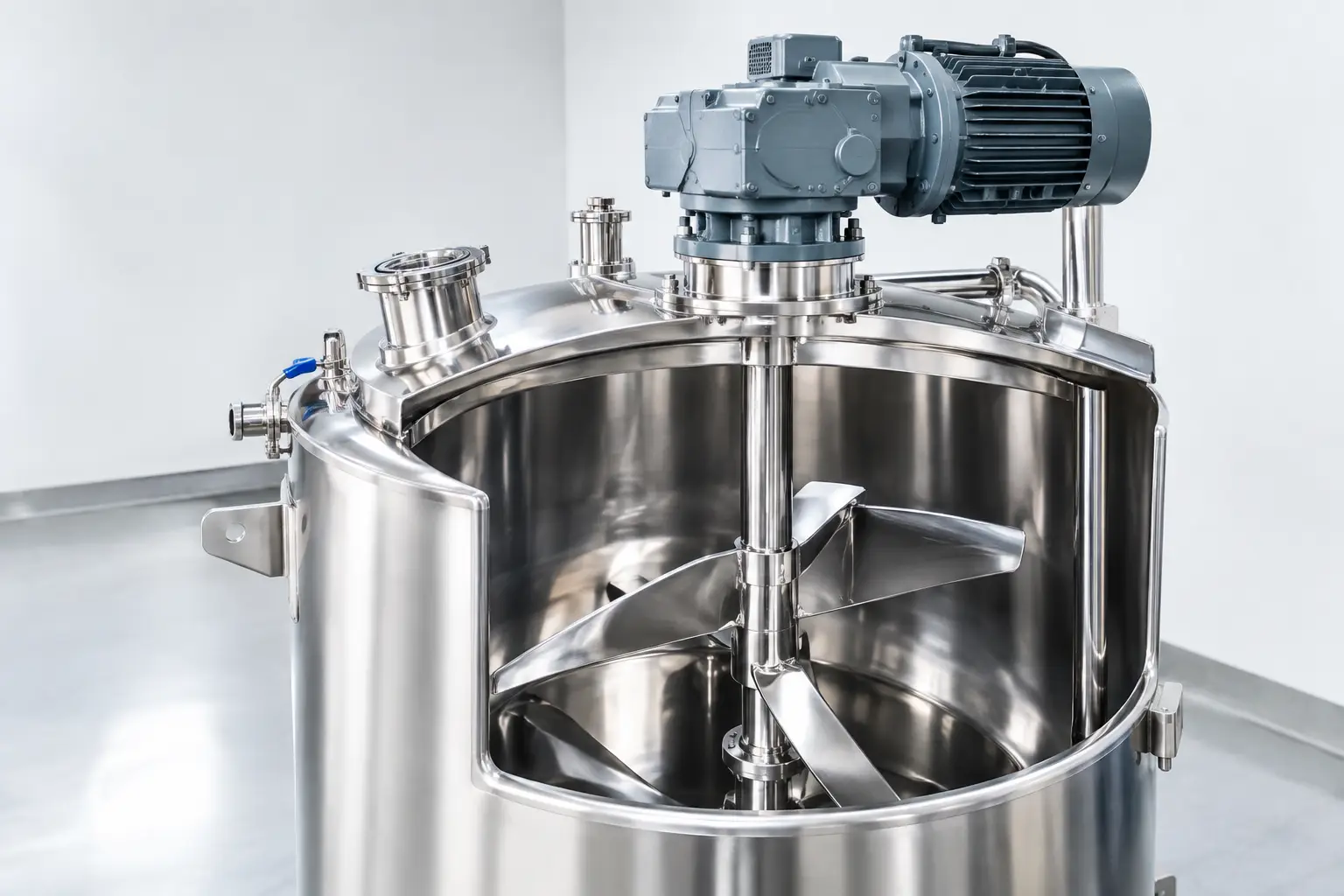
Horizontal ribbon mixers are often the first choice for bulk powder blending because they combine strong convective movement with high batch efficiency. The inner and outer ribbons move material in opposing directions, creating a consistent turnover pattern across the trough. This design is well suited for dry powders, granules, and many powder-to-powder applications where fast, uniform blending is the goal.
They also offer practical advantages on the plant floor. Horizontal ribbon mixers can be configured for high fill efficiency, relatively short mixing cycles, and dependable discharge performance. For many food, chemical, agriculture, and building material applications, they provide an effective balance of throughput, mixing quality, and operating cost.
The trade-off is that not every product responds the same way. Very fragile ingredients, highly adhesive materials, or applications requiring extremely gentle treatment may call for a different geometry or additional process features.
Vertical ribbon mixers
Vertical ribbon mixers are a strong option when floor space, batch style, or product behavior favors vertical circulation. They lift material from the bottom and redistribute it through the vessel, supporting thorough blending while often reducing the equipment footprint. This can be useful for certain specialty powders and lower-density materials that benefit from a different flow pattern than a horizontal system provides.
Vertical designs can also simplify loading and batch handling in some facilities. Still, cycle time, discharge behavior, and cleaning access should be evaluated carefully. A vertical mixer is not automatically better for every powder. It depends on the process and the production constraints.
Vacuum ribbon mixers and dryers
When the application requires mixing with drying, solvent removal, or processing under controlled pressure, a vacuum ribbon mixer becomes a more specialized solution. These machines support operations where thermal sensitivity, moisture control, or process containment matters. Pharmaceutical, fine chemical, and high-value specialty applications often benefit from this approach because it combines multiple process steps in one system.
The added capability comes with more complexity. Vacuum systems require tighter engineering control, closer attention to seals and finishes, and a clearer understanding of the thermal and mechanical demands of the product.
The material questions that matter most
A powder mixer machine should be selected around the material first. Capacity matters, but the details of the powder usually determine whether the machine will perform consistently over time.
Particle size distribution is one of the first points to review. Wide variation between coarse and fine particles increases the risk of segregation both during mixing and after discharge. Bulk density matters just as much. If one ingredient is significantly heavier than another, the mixer needs to create enough product movement to overcome natural separation.
Flowability is another major factor. Cohesive powders often need a mixer that can break lumps and maintain circulation without creating dead zones. Free-flowing materials may blend quickly, but they can also overmix in the sense that a good blend inside the vessel separates during transfer to packaging or downstream processing. In those cases, the discharge method and line layout are part of the mixer decision.
Moisture content also changes the picture. A slightly damp powder may behave very differently from a dry one, especially when it comes to wall build-up and cleanout time. If the product tends to smear, cake, or adhere to contact surfaces, the mixer should be engineered to reduce retention and support effective cleaning.
Process requirements shape the right design
The best powder mixer machine for one facility may be the wrong fit for another because process expectations are different. Some plants prioritize maximum batch throughput. Others care more about blend precision, dust containment, sanitation, or flexible changeovers across multiple SKUs.
Mixing time is one example. Short cycles sound attractive, but speed alone is not the real target. What matters is how quickly the machine reaches the required level of uniformity without damaging ingredients or consuming excessive energy. A properly engineered ribbon mixer often delivers superior mixing performance because it balances intensity with controlled product movement.
Fill level is another point that buyers sometimes underestimate. Mixers do not perform the same way across every loading condition. If your operation routinely runs partial batches, campaign production, or variable formulas, the machine should be sized and configured for that reality. A unit optimized for full-batch operation may not give the same results at lower working volumes.
Then there is discharge. If material hangs up in the vessel, remains in the outlet zone, or segregates on the way out, the quality of the blend inside the mixer becomes less meaningful. Discharge design, valve selection, and integration with conveyors or hoppers all affect final product consistency.
Sanitation, maintenance, and uptime
For industrial buyers, the true cost of a powder mixer machine extends well beyond purchase price. Cleaning time, wear life, seal reliability, and maintenance access directly affect production availability.
In food, pharmaceutical, and cosmetic operations, sanitary design is often a decisive factor. Surface finish, weld quality, access for inspection, and residue reduction all influence how quickly a machine can be cleaned and returned to service. In chemical and mineral applications, durability and wear resistance may be the bigger concern, especially when abrasive ingredients are involved.
Maintenance should be straightforward, not an afterthought. Bearings, drives, seals, and internal components need to be accessible enough to reduce downtime during routine service. A lower-priced machine can become expensive quickly if it creates repeated stoppages or requires frequent replacement parts.
This is where application-specific engineering matters. A tailored solution can improve uptime, support sustainable and cost-effective operation, and reduce the long-term burden on maintenance teams.
Why testing and consultation matter
Specifications alone rarely tell the full story. The most reliable way to evaluate a powder mixer machine is through application review and, when possible, product testing. That process helps confirm mixing time, achievable homogeneity, fill behavior, discharge performance, and any issues related to heat, shear, or segregation.
It also gives procurement and engineering teams better confidence in scale-up. A mixer that performs well in theory but has not been matched to the actual formulation can introduce expensive risk during installation and startup.
For this reason, experienced manufacturers do more than quote a standard unit. They evaluate the product, the batch target, the cleaning standard, and the line requirements before recommending a configuration. PerMix approaches ribbon mixing this way because reliable performance starts with the application, not the brochure.
Choosing with the full process in mind
A powder mixer machine should fit the process as a system, not as a stand-alone asset. It needs to work with your ingredient handling method, batch size strategy, dust control measures, validation requirements, and downstream packaging or processing steps. When those pieces align, the mixer becomes a driver of consistency, labor efficiency, and lower operating cost.
The strongest buying decisions usually come from asking better questions early. How does the material behave across a full batch cycle? What level of blend uniformity is truly required? How fast must the line turn? How often will the machine be cleaned? Where can segregation occur after mixing? Those answers lead to better equipment selection than horsepower or vessel volume alone.
If you are evaluating options, treat the mixer as a process decision, not just a capital purchase. The right design will do more than blend powder. It will support product quality, protect uptime, and give your operation a more dependable foundation for growth.