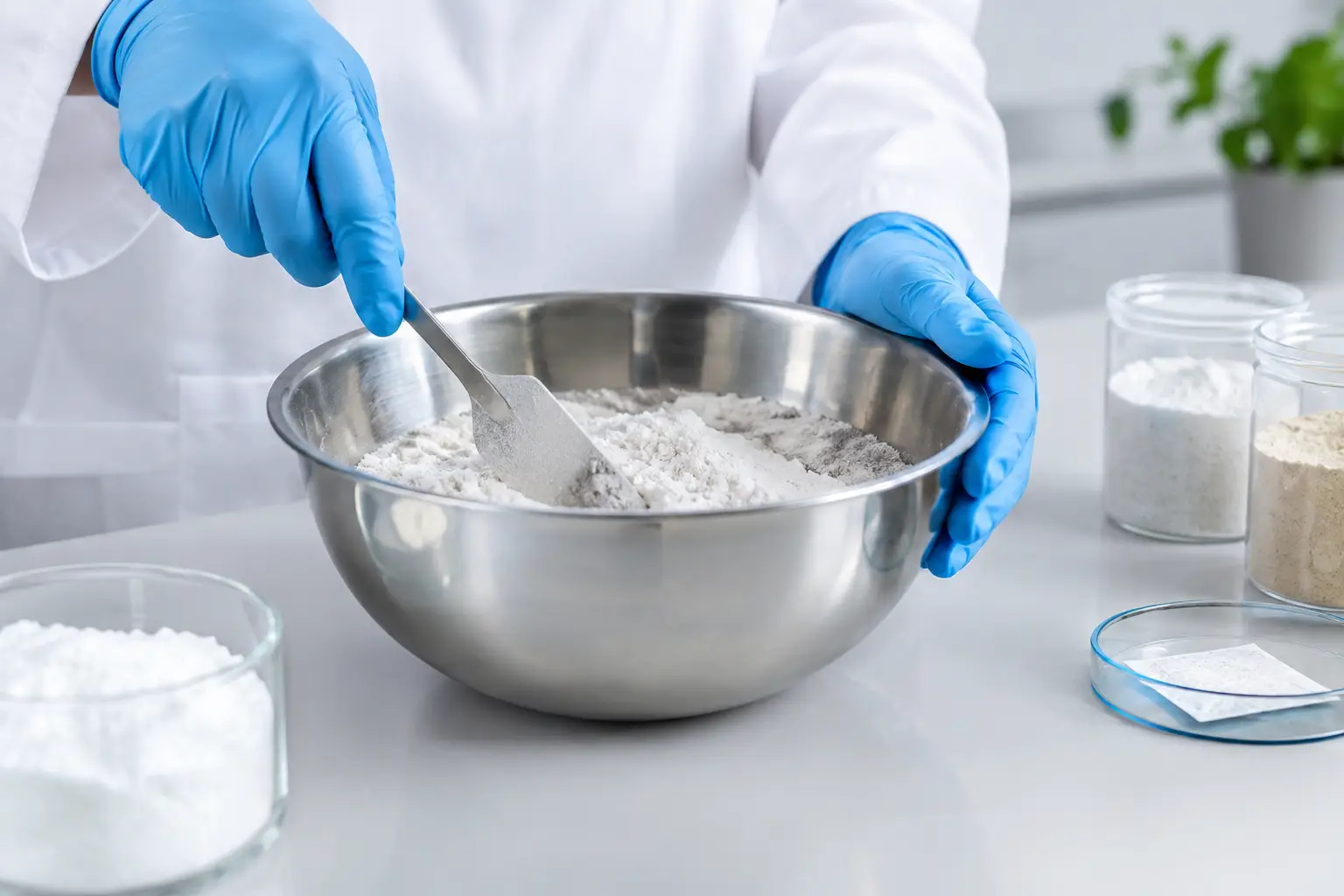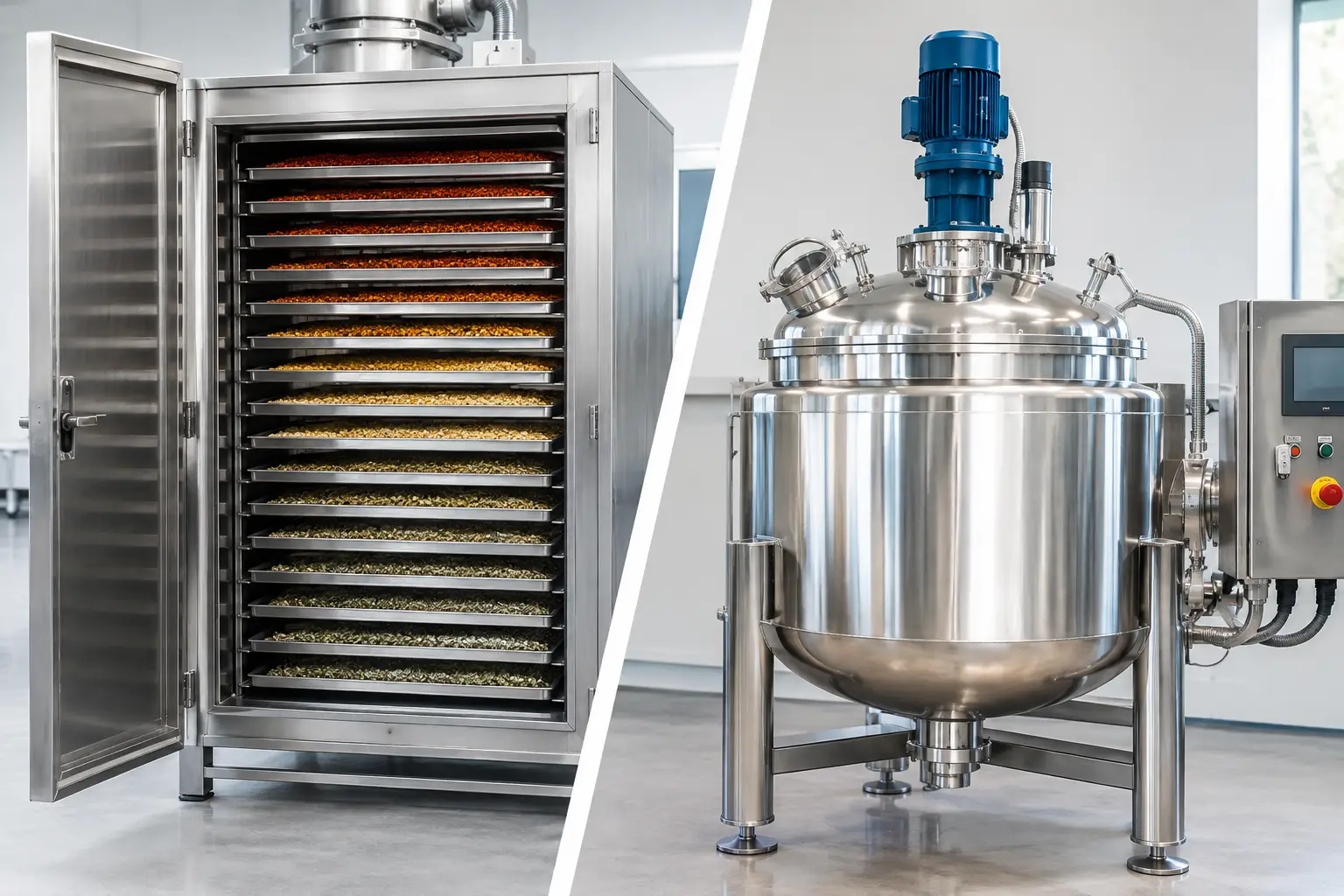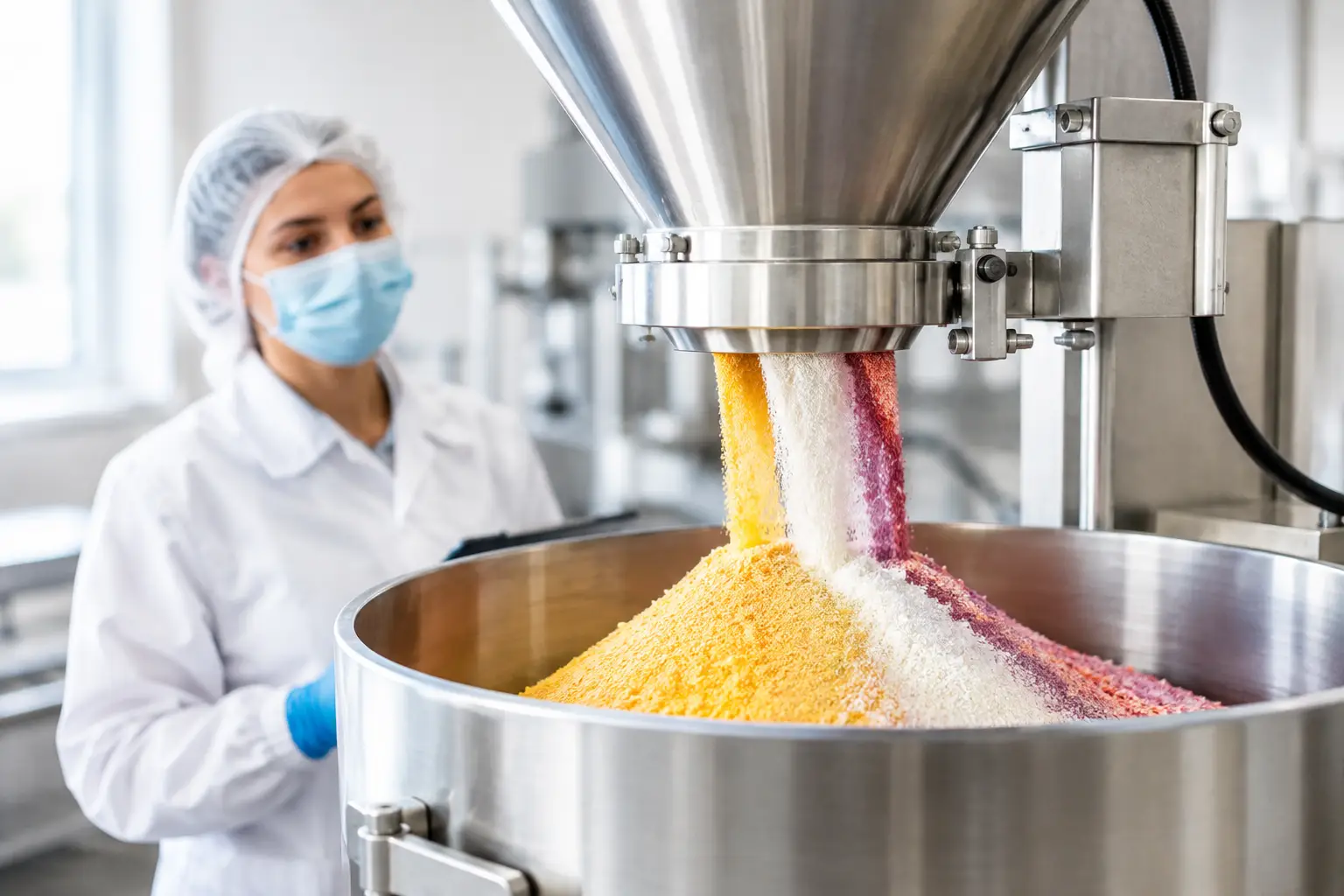
Sanitary Powder Mixing Equipment Explained
A sanitary mixer that looks acceptable on a spec sheet can still create problems on the plant floor. Powder retention in weld seams, hard-to-access internal surfaces, product carryover between batches, and long cleaning cycles all affect throughput, compliance, and operating cost. That is why sanitary powder mixing equipment should be evaluated as a process asset, not just a vessel with an agitator.
In regulated and hygiene-sensitive production, the mixer has to do more than blend. It must support repeatable product quality, protect against contamination, reduce cleaning burden, and fit the realities of your material behavior. For processors working with food ingredients, nutraceuticals, pharmaceuticals, cosmetics, specialty chemicals, and other sensitive dry products, equipment design has a direct effect on both product integrity and production efficiency.
What sanitary powder mixing equipment actually needs to do
Sanitary design starts with cleanability, but it should not stop there. The equipment also has to deliver uniform mixing across varying batch sizes, ingredient densities, and particle characteristics. A machine that is easy to wash down but produces inconsistent blends is still a process risk.
Effective sanitary powder mixing equipment is built around smooth product-contact surfaces, controlled internal geometry, reliable discharge, and access for inspection and cleaning. Material selection also matters. Stainless steel construction, properly finished surfaces, and carefully executed welds help reduce retention points where powder can accumulate. When the process requires it, seals, covers, valves, and shafts must be selected to maintain product protection without creating maintenance issues.
For many operations, sanitary performance is closely tied to downtime. If sanitation takes too long or requires partial disassembly after every batch, labor costs rise and production flexibility drops. In high-mix manufacturing environments, cleanability is not only about compliance. It is about recovering more productive hours from each shift.
Why mixer design matters as much as sanitation
Buyers sometimes treat sanitary requirements and mixing performance as separate decisions. In practice, they are linked. A poorly matched mixer can create dead zones, segregation, overmixing, or excessive shear, any of which can undermine the final product even if the machine is built to hygienic standards.
Ribbon mixers remain a strong choice for many sanitary dry blending applications because they can provide fast, efficient movement of powder through a horizontal trough while maintaining good batch consistency. Inner and outer ribbons move material in opposing directions, which helps create a thorough convective mixing pattern. For free-flowing powders, moderate-density blends, and formulations that need minor liquid additions, this design often delivers an effective balance of blend quality, throughput, and practical sanitation.
That said, it depends on the product. Fragile particles, sticky ingredients, or formulations prone to buildup may require changes in agitator design, surface finish, discharge configuration, or access features. Some applications benefit from vertical designs where footprint or product flow characteristics make that format more suitable. Others may require vacuum-capable systems to support drying, solvent removal, or controlled atmosphere processing alongside mixing.
Key features to evaluate in sanitary powder mixing equipment
The most useful equipment discussions move beyond general claims and focus on design details. In sanitary processing, small construction choices have large operational consequences.
Surface finish is one of the first areas to review. Smooth product-contact surfaces help reduce powder adherence and support more reliable cleaning. Weld quality matters just as much. Continuous, properly finished welds are preferred over rough or interrupted joins that can trap material.
Access is another major factor. Sanitary powder mixing equipment should allow operators and maintenance teams to inspect critical internal areas without unnecessary delay. Covers, doors, and cleanout access points need to be positioned for real use, not just for brochure appeal. If a mixer is technically accessible but difficult to open safely or repeatedly, the sanitation advantage is reduced.
Discharge performance deserves close attention. Poor discharge leaves heel material in the trough, increases waste, and creates carryover risk. A sanitary design should support thorough evacuation with minimal retention. This is especially important in facilities running allergen-sensitive formulas, high-value actives, or frequent product changeovers.
Seal design is often overlooked until maintenance becomes a problem. Shaft seals and related components have to protect the product zone while standing up to washdown, cleaning agents, and repeated operation. The right seal arrangement depends on the process, cleaning method, and material characteristics.
Finally, consider how the mixer integrates into the broader line. Feeding, dust control, downstream discharge, automation, and cleaning procedures all affect the sanitary outcome. A well-designed mixer can still underperform if it is forced into a poorly matched system layout.
Matching equipment to industry requirements
Different industries use the same language around sanitary processing, but their practical priorities are not identical. That is why equipment selection should be grounded in the actual production environment.
In food and beverage applications, sanitary design is often driven by allergen control, flavor carryover prevention, and shorter changeover windows. Processors may need rapid cleaning between seasoning blends, baking mixes, dairy powders, or functional ingredients. Here, efficient discharge and easy access can be just as important as the internal finish.
In pharmaceutical and nutraceutical production, validation, traceability, and contamination control typically take center stage. Blend uniformity is critical, but so is confidence that the mixer can be inspected and cleaned to a defined standard. Material compatibility, documentation, and repeatable process behavior carry more weight in this environment.
Cosmetics manufacturers often work with fine powders that are sensitive to dusting and appearance variation. A mixer must maintain consistency while supporting careful material handling. Specialty chemical producers, meanwhile, may need sanitary features alongside corrosion resistance, vapor control, or vacuum operation depending on the formulation.
The trade-offs behind cleaning methods and productivity
There is no single best sanitation strategy for every plant. Some facilities rely on dry cleaning because water introduces its own risks, especially with hygroscopic or hard-to-dry materials. Others require wet washdown or full clean-in-place capability to meet internal standards or process demands.
Each approach affects equipment design. Dry-cleaned systems benefit from easy access, minimal crevices, and thorough discharge. Wet-cleaned systems place more emphasis on drainage, seal protection, and resistance to repeated exposure to cleaning solutions. If clean-in-place is required, spray coverage, internal geometry, and verification methods become part of the equipment discussion from the start.
This is where application-specific engineering matters. The most sanitary option on paper may not be the most practical if it extends cycle time, increases utility usage, or complicates maintenance. Buyers should weigh sanitation performance against throughput targets, labor availability, and the actual cleaning frequency required by the production schedule.
Why configurable mixer design delivers better results
Off-the-shelf equipment can work for simple applications, but sanitary powder processing often benefits from a more tailored approach. Product characteristics, batch size, plant layout, and compliance expectations all shape what the right mixer should look like.
Configurable features may include vessel geometry, ribbon design, spray systems, jacketed construction, vacuum capability, discharge valves, controls, and loading methods. The goal is not customization for its own sake. It is to align the machine with how the process really operates.
A manufacturer with experience across horizontal ribbon mixers, vertical ribbon mixers, and vacuum ribbon mixers and dryers can evaluate those variables more effectively. In many cases, the best solution is the one that reduces compromise: good blend uniformity without excessive cycle time, sanitary access without maintenance complexity, and strong throughput without sacrificing cleanability. That solution-focused approach is where a company like PerMix can add value beyond simply supplying equipment.
What buyers should ask before requesting a quote
A productive quote process starts with process detail, not just capacity. Buyers should be ready to discuss powder characteristics, bulk density range, target batch size, cleaning method, changeover frequency, required surface finish, and whether liquid addition, vacuum, heating, or drying is part of the application.
It is also worth asking how the equipment handles partial batches, what internal areas require routine inspection, how seals are serviced, and what level of discharge efficiency can be expected. Those answers often reveal more about long-term operating cost than the initial machine price.
For sanitary applications, the strongest equipment decision is usually the one that improves product consistency and reduces avoidable downtime at the same time. That is the real business case. Better sanitation supports compliance, but it also supports output, labor efficiency, and confidence on every batch.
If your process depends on reliable hygiene and repeatable blending, the right mixer should make both easier. The best sanitary powder mixing equipment is not simply clean by design. It is engineered to keep production moving with fewer compromises.