Energy Efficient Powder Mixing That Performs
A mixer that clears the batch in eight minutes but burns excess horsepower every shift is not efficient. Neither is a machine that saves power on paper but leaves dead zones, longer cycles, and inconsistent blends. In real production, energy efficient powder mixing means reaching the required blend quality with the lowest practical total energy input, the fewest interruptions, and the least waste.
For plant managers and process engineers, that definition matters because energy use is tied directly to throughput, maintenance, sanitation time, and product quality. The right mixer does more than trim utility costs. It helps stabilize production, reduce rework, and support a more sustainable operation without sacrificing performance.
What energy efficient powder mixing really means
Energy consumption in powder blending is often treated as a motor specification problem. In practice, it is a system problem. Motor size matters, but so do mixer geometry, ribbon design, fill level, bulk density, flow behavior, discharge efficiency, and the time required to achieve homogeneity.
A larger drive is not automatically inefficient if it completes the batch faster and more consistently. A smaller drive is not automatically better if it extends cycle time, creates poor movement at the vessel ends, or forces operators to run repeat batches. The real benchmark is specific energy per successful batch – how much energy is required to produce a compliant, repeatable blend ready for the next step.
This is why industrial buyers should evaluate energy use against process results. The lowest connected load does not always produce the lowest operating cost.
Why mixer design has the biggest impact
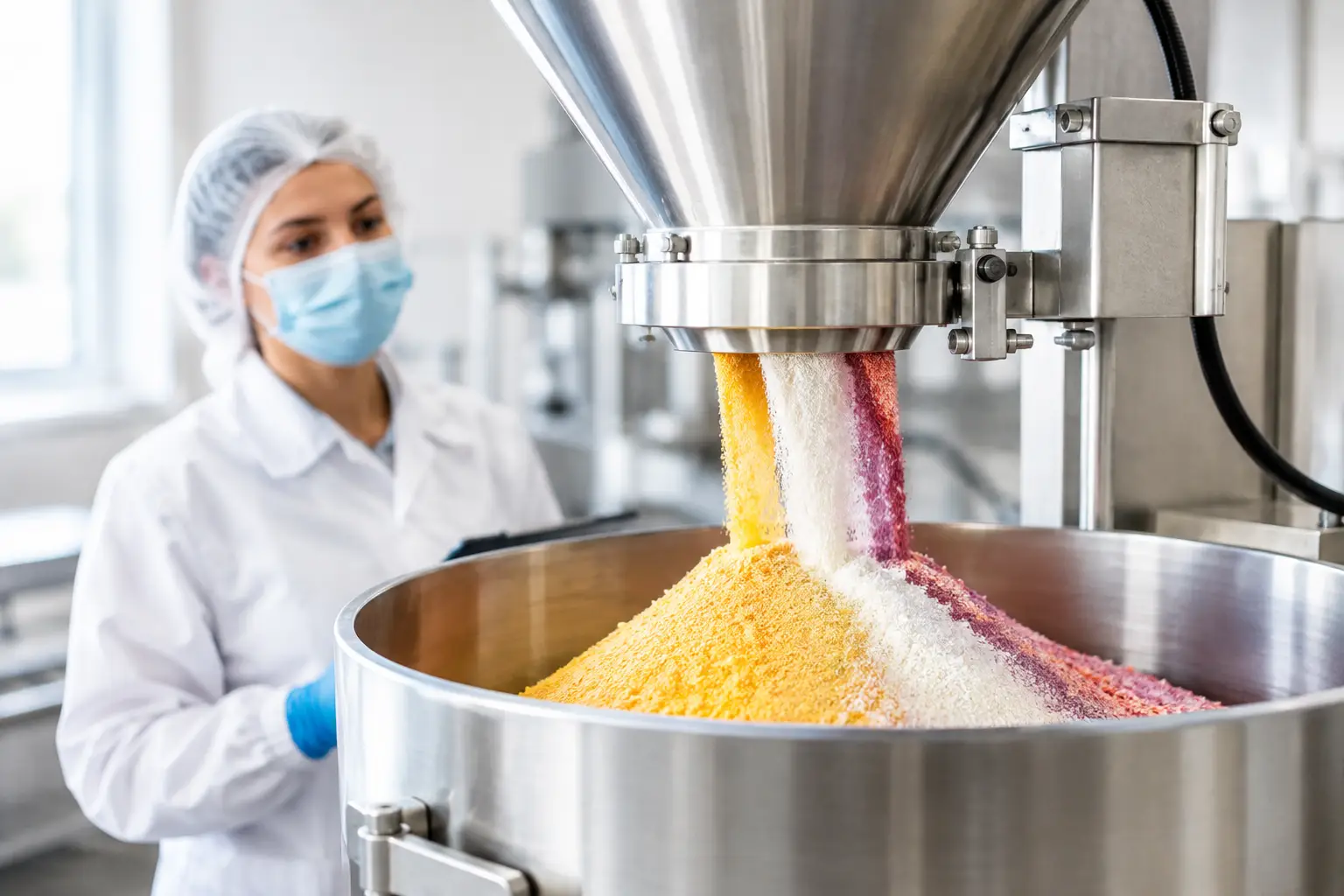
The mechanical design of the mixer largely determines how effectively input power is converted into material movement. In ribbon mixers, the inner and outer ribbons generate a controlled counter-flow pattern that moves material axially and radially through the trough. When that flow is well engineered, the mixer reaches target uniformity faster, with less wasted motion and fewer stagnant regions.
That is where design quality separates a purpose-built industrial mixer from a generic machine. Ribbon pitch, ribbon clearance, trough shape, shaft support, and agitator speed all affect mixing efficiency. If the geometry is poorly matched to the product, the machine may need longer runs, higher speed, or more operator intervention to compensate.
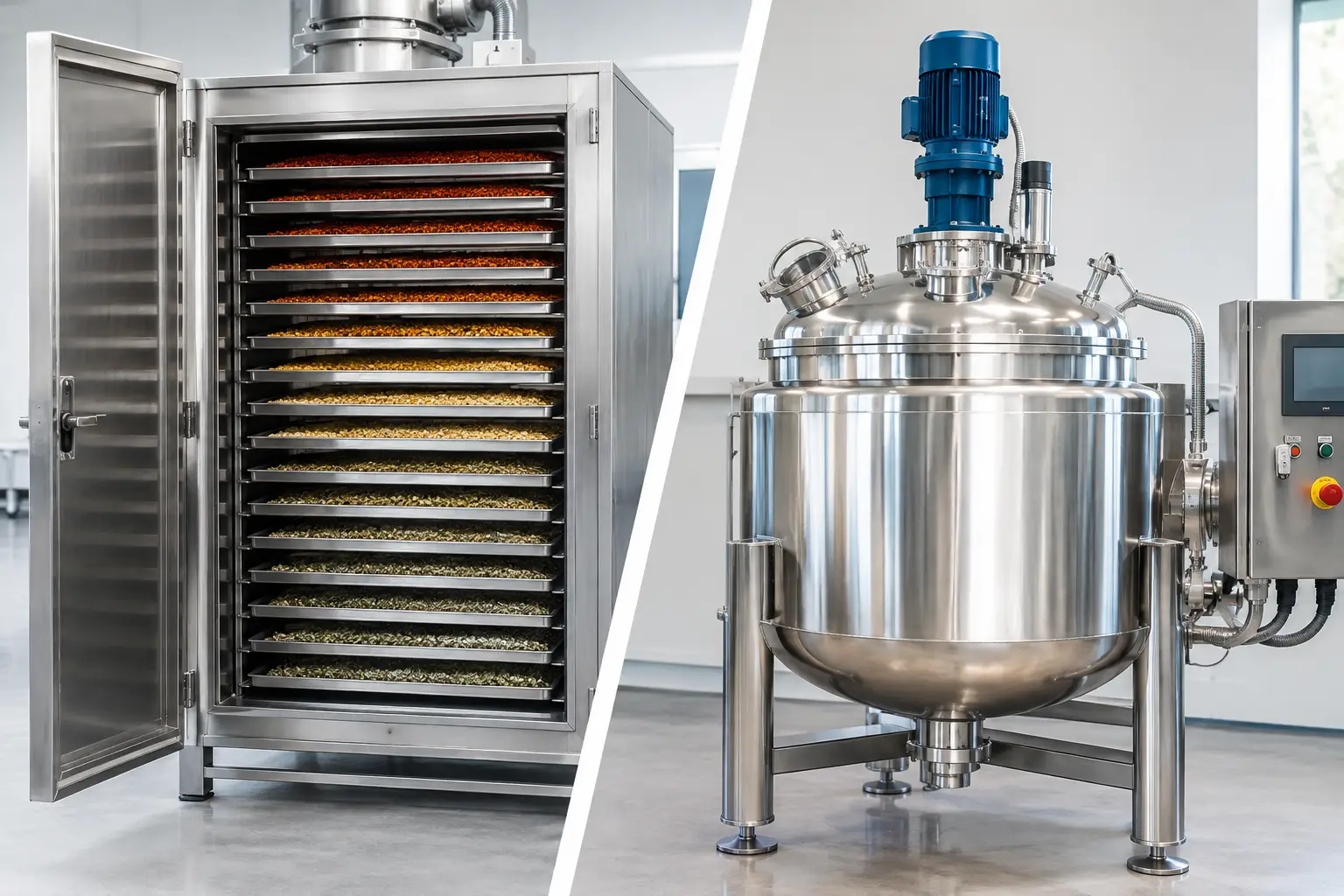
For many dry powders and granules, a horizontal ribbon mixer offers a strong balance of mixing performance and energy economy because it can handle large working capacities with predictable batch movement. Vertical ribbon designs may be a better fit where floor space is limited or product behavior favors vertical circulation. Vacuum ribbon mixers and dryers add process integration benefits when drying, solvent removal, or closed-system handling is required, but the energy calculation shifts because thermal performance becomes part of the equation.
Batch time, not just motor size, drives cost
One of the most common purchasing mistakes is comparing machines by installed horsepower alone. Operations teams should be asking a different question: how long does the mixer need to achieve the target blend under actual product conditions?
A mixer with a modest power draw but a long cycle can consume more energy over the full batch than a properly sized mixer that blends quickly and discharges cleanly. Longer cycles also reduce line capacity, increase operator exposure time, and create scheduling pressure upstream and downstream.
This trade-off is especially important in regulated and high-value applications. In pharmaceuticals, nutraceuticals, specialty chemicals, and functional food ingredients, insufficient mixing is expensive. If operators extend cycles because they do not trust the blend, the plant pays twice – first in direct energy use and then in lost productivity.
The role of fill level and product characteristics
Even a well-designed mixer can perform inefficiently when it is operated outside its intended range. Underfilling reduces contact between material streams and can limit the circulation pattern needed for uniform blending. Overfilling can overload the agitator, increase resistance, and create poor turnover. Both conditions raise the energy required per acceptable batch.
Powder properties also change the picture. Free-flowing granules behave very differently from cohesive powders, fine actives, fragile particulates, or materials with widely different bulk densities. Some products mix quickly with low shear. Others need more deliberate mechanical action to break agglomerates and distribute minor ingredients.
That is why energy efficiency cannot be separated from application matching. A mixer that performs well for salt and seasoning may not be the right choice for a dense mineral blend or a fine cosmetic powder. The most efficient solution is the one engineered around the actual product, not the one with the most attractive generic specification.
How discharge, cleaning, and downtime affect efficiency
Energy use does not begin and end with the mixing cycle. Plants should also look at the hidden costs around the batch.
A mixer that discharges poorly leaves product behind, reduces yield, and increases cleaning labor. A machine that is difficult to access or sanitize extends changeover time and delays production. If seals, bearings, or drives require frequent service, the operational cost of ownership rises even if the machine itself appears energy conscious.
This is where a durable, low-maintenance design supports efficient production. Reliable mechanical components, proper clearances, and cleanable surfaces reduce unplanned downtime and keep each batch moving through the system with less wasted effort. In many facilities, these indirect gains are as valuable as the direct reduction in power consumption.
Choosing the right mixer for energy efficient powder mixing
The best selection process starts with the product and the production target. Buyers should define the required batch size, desired throughput, blend uniformity target, material behavior, ingredient addition sequence, and cleaning requirements before comparing equipment.
Horizontal ribbon mixers
For a wide range of powders and bulk solids, horizontal ribbon mixers provide superior mixing performance with efficient material movement. They are often the preferred choice when plants need consistent, repeatable blending at production scale with practical energy use. Their geometry supports fast circulation across the full trough length, which helps shorten batch times when properly sized.
Vertical ribbon mixers
Vertical ribbon mixers can be a cost-effective choice where plant layout, batch size, or product handling considerations favor a more compact footprint. Depending on the application, they can deliver efficient blending with a smaller installation area. The trade-off is that product behavior and discharge expectations need close review, since not every powder responds equally well to vertical flow patterns.
Vacuum ribbon mixers and dryers
When the process requires blending under vacuum, moisture removal, or solvent management, integrated vacuum ribbon systems can improve total process efficiency by combining steps in one machine. The energy discussion here is broader than drive power alone. Thermal transfer efficiency, vacuum performance, and reduced material handling can outweigh the added system complexity.
What to ask before you request a quote
A serious energy review should go beyond brochure data. Ask how the machine performs with products similar to yours. Ask what fill level range delivers the best results. Ask how long it typically takes to reach target uniformity and how discharge performance is verified.
It is also worth discussing agitator speed, control options, jacketed configurations, sanitary construction, and any features that affect cleaning time or maintenance access. For many operations, the most valuable supplier is not the one selling the cheapest mixer. It is the one that can align equipment design with the realities of your process.
PerMix Ribbon Mixers approaches this as an application engineering decision, not a commodity purchase. That matters because sustainable and cost-effective mixing depends on fit, not guesswork.
A smarter way to evaluate return on investment
If you are building the business case for a new mixer, calculate more than utility savings. Include shorter batch cycles, improved blend consistency, lower rework, reduced product loss, easier cleaning, and less maintenance downtime. Those factors often produce a stronger ROI than energy cost alone.
For example, a mixer that trims five minutes from every batch may create enough additional capacity to delay a capital expansion. A design that improves discharge and cleaning may recover labor hours every day. In high-value formulations, one avoided out-of-spec batch can justify careful equipment selection by itself.
That is why the best energy strategy is rarely about chasing the smallest motor. It is about selecting a mixer that converts power into dependable mixing performance with minimal waste across the full production cycle.
The most efficient powder mixing operation is the one that delivers the right blend, at the right speed, with the fewest compromises. When the equipment is matched correctly, lower energy use becomes part of a larger advantage – better throughput, better control, and a production line that works harder without working against itself.