How to Evaluate Ribbon Mixer Manufacturers
A ribbon mixer that misses blend uniformity by a few percentage points can create much bigger problems downstream – failed QA checks, longer batch times, ingredient waste, and avoidable production delays. That is why evaluating ribbon mixer manufacturers is not just a sourcing exercise. For most plants, it is a process decision that affects throughput, consistency, maintenance workload, and total operating cost.
Industrial buyers usually start with capacity, price, and lead time. Those matter, but they rarely tell the full story. Two mixers may look similar on paper and perform very differently once they are handling cohesive powders, fragile granules, heat-sensitive materials, or higher-viscosity pastes. The right manufacturer should be able to explain not only what machine it builds, but why that design fits your product, your plant, and your production targets.
What separates strong ribbon mixer manufacturers
The best ribbon mixer manufacturers do more than fabricate standard equipment. They engineer around application variables that directly affect performance. Material bulk density, particle size distribution, moisture content, abrasiveness, fill level, and discharge requirements all influence how a ribbon mixer should be configured.
That distinction matters in regulated and high-volume environments. A food processor may need sanitary design and fast changeovers. A pharmaceutical producer may need tighter control over cleanability and batch repeatability. A chemical manufacturer may prioritize wear resistance, containment, and compatibility with aggressive materials. In each case, the mixer is only part of the solution. The manufacturer’s ability to translate process requirements into a practical machine design is what reduces risk.
A capable supplier should also be comfortable discussing trade-offs. A highly polished interior may support easier cleaning, but it can raise cost. A heavier-duty drive may improve long-term durability, but it must be matched to actual load conditions. Larger equipment can increase throughput, but oversized systems can hurt mixing efficiency at lower fill levels. Good manufacturers do not avoid these conversations. They use them to help buyers make better decisions.
Ribbon mixer manufacturers and machine design
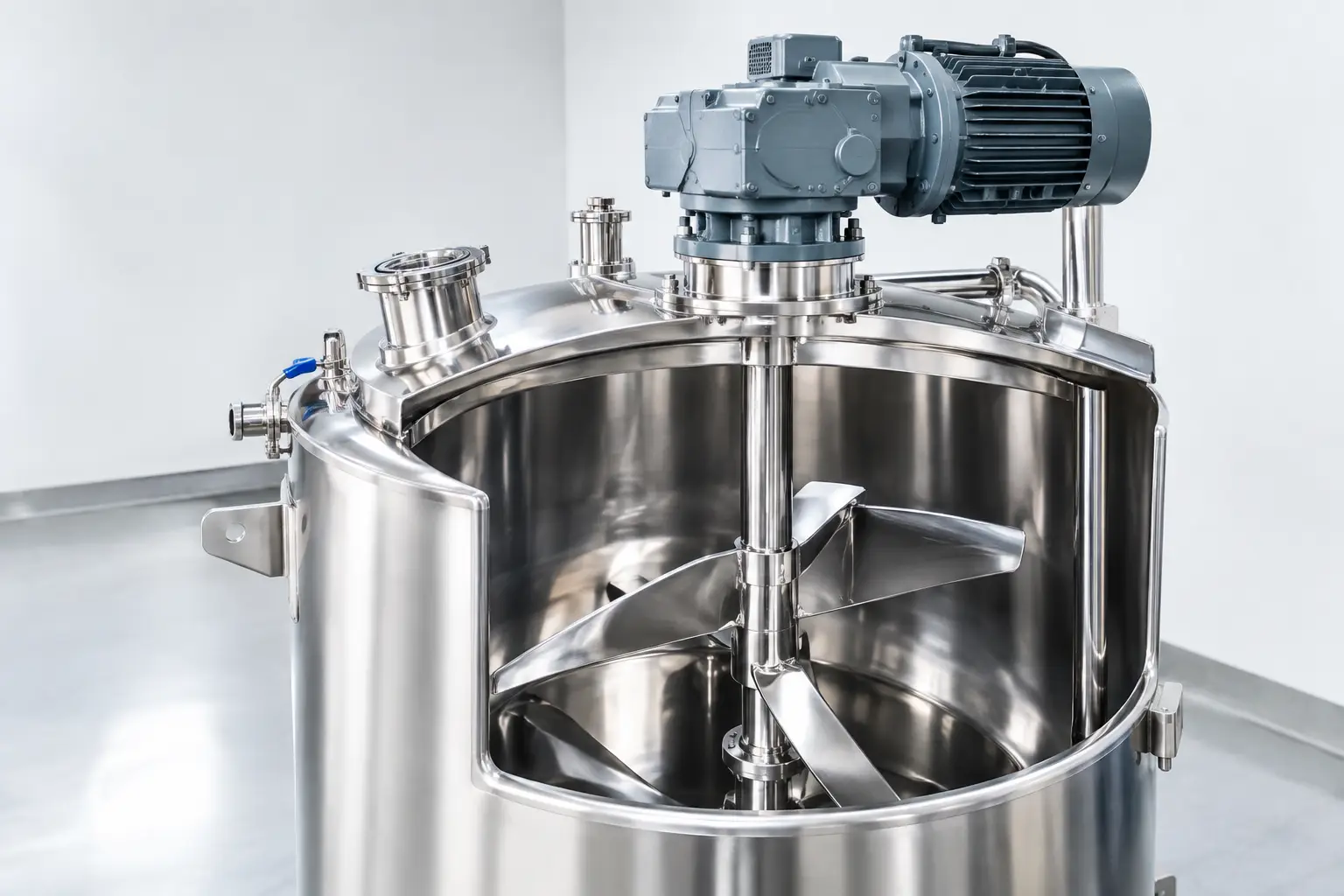
At the design level, the core question is simple: how effectively does the mixer move material to achieve a consistent blend without damaging the product or slowing the line? In ribbon mixers, this depends on the relationship between the trough geometry, the inner and outer ribbons, shaft design, rotational speed, and discharge method.
Horizontal ribbon mixers are often the first choice for free-flowing powders, dry blends, granules, and some paste-like products. They provide efficient convective mixing and can be adapted for a wide range of batch sizes and process demands. Vertical ribbon mixers can be a better fit where floor space, product behavior, or feed patterns favor a different material flow pattern. Vacuum ribbon mixers and dryers serve applications that require controlled atmospheres, drying capability, or handling of sensitive materials under reduced pressure.
Not every manufacturer has equal depth across these configurations. Some build one standard platform and apply it broadly. Others support a more focused but better-engineered range with options tailored to specific applications. That is often the better route for buyers who need reliable performance rather than a generic machine with limited process fit.
Performance claims should be specific
Many suppliers promise uniform mixing. The question is how they define it and under what conditions. A serious manufacturer should be able to discuss expected mixing time ranges, fill level effects, coefficient of variation targets where applicable, and how material characteristics may change performance.
This is especially important when handling challenging products. Cohesive powders may form agglomerates that need more than standard ribbon action. Fragile materials may degrade if tip speed is too aggressive. Products with trace ingredients may require more precise blending and stricter discharge behavior to avoid carryover. If a manufacturer cannot discuss these issues in practical terms, the equipment may not be optimized for your process.
Application knowledge is often where engineering value becomes visible. PerMix, for example, approaches ribbon mixing as a process-specific solution rather than a one-size-fits-all machine category. That mindset is critical when blend quality directly affects compliance, product performance, or downstream packaging efficiency.
Sanitation, maintenance, and uptime are purchasing factors
For many plants, the real cost of a mixer shows up after installation. Poor access for cleaning, difficult seal replacement, excessive residue buildup, or slow discharge can quietly reduce line efficiency. That is why experienced buyers look closely at sanitation and serviceability before they compare quotes.
A well-designed ribbon mixer should support practical maintenance without unnecessary disassembly. Bearings, seals, drives, and inspection points should be accessible. Interior finishes and weld quality should match the sanitation level your industry requires. Discharge valves should empty the batch effectively and minimize retained material.
There is no universal best design here. Sanitary features that are essential in food or pharmaceutical production may be less critical in some industrial chemical applications, where wear resistance or heavy-duty construction takes priority. The key is whether the manufacturer can align the machine to your operating reality instead of forcing your process into a standard specification.
Customization matters, but only when it solves a real problem
Industrial buyers are right to be cautious about the word custom. Sometimes it means genuine application engineering. Other times it means a longer lead time and a higher price for features that offer little operational benefit.
The right level of customization depends on the process. Jacketed troughs can help with temperature-sensitive products. Choppers may improve performance with agglomerates. Vacuum capability may be necessary for drying or oxygen-sensitive materials. Special finishes, materials of construction, and feeding or discharge arrangements may also be justified.
But customization should follow the application, not marketing language. Strong manufacturers will explain what is standard, what is optional, and what is necessary. They will also tell you when a simpler configuration can meet the target. That kind of technical honesty is usually a sign of a reliable long-term partner.
Evaluating manufacturer support before and after the sale
A ribbon mixer is a long-life capital asset, so support capability matters. Buyers should look at responsiveness during the quoting stage because it often reflects post-sale experience. If technical questions are answered slowly or vaguely before the order, service may be difficult later.
A dependable manufacturer should be able to help with machine sizing, product testing where appropriate, construction material recommendations, controls integration, and installation planning. After startup, spare parts availability, documentation quality, and service access become just as important.
Global production capacity can also be an advantage for companies operating across regions or sourcing for multiple facilities. It can improve lead times and service continuity, but only if quality standards are consistent. A broad manufacturing footprint is useful when it strengthens delivery and support, not when it creates specification drift between locations.
Cost should be measured over the life of the mixer
The lowest initial quote is not always the lowest-cost decision. Ribbon mixer manufacturers vary widely in build quality, drive sizing, fabrication standards, and engineering support. Those differences affect energy use, maintenance frequency, spare parts consumption, cleaning time, and service life.
For procurement teams, that means cost should be evaluated in context. A lower-priced machine may be acceptable for simple, low-risk applications with forgiving materials and light duty cycles. In more demanding environments, underbuilt equipment can lead to higher operating costs very quickly. Lost production time usually outweighs the savings from a cheaper purchase price.
A better purchasing approach is to compare total value: expected blend performance, uptime contribution, sanitation fit, maintenance burden, and supplier support. That framework is more useful than a side-by-side price comparison alone.
Questions worth asking ribbon mixer manufacturers
When you speak with suppliers, the most useful questions are usually process-based rather than feature-based. Ask what similar materials they have handled. Ask how they determine ribbon design, horsepower, and operating speed. Ask what fill range the mixer performs best at and how completely it discharges. Ask what maintenance items typically require attention over the first few years.
You should also ask where the design may need adjustment for your product. An experienced manufacturer will rarely say every application fits the same machine equally well. That is a positive sign. It shows they understand mixing as an engineered process, not just a catalog item.
The strongest choice is usually the manufacturer that can connect equipment design to measurable plant outcomes – better batch consistency, lower downtime, easier cleaning, and more predictable production. When those answers are clear, the buying decision becomes far less about claims and far more about fit.
If you are reviewing ribbon mixer manufacturers, focus on the supplier that asks the smartest questions about your material, your throughput, and your operating constraints. That is often where better performance starts.